Are Outlet Stores Worse Quality? I Read What Coach, Gap and J.Crew Told the SEC
The tag on the outlet rack says 'Comparable Value.' The annual report says something else. I pulled a decade of filings from three outlet chains, and one of them quietly deleted the sentence that answers this question.
 ·
· 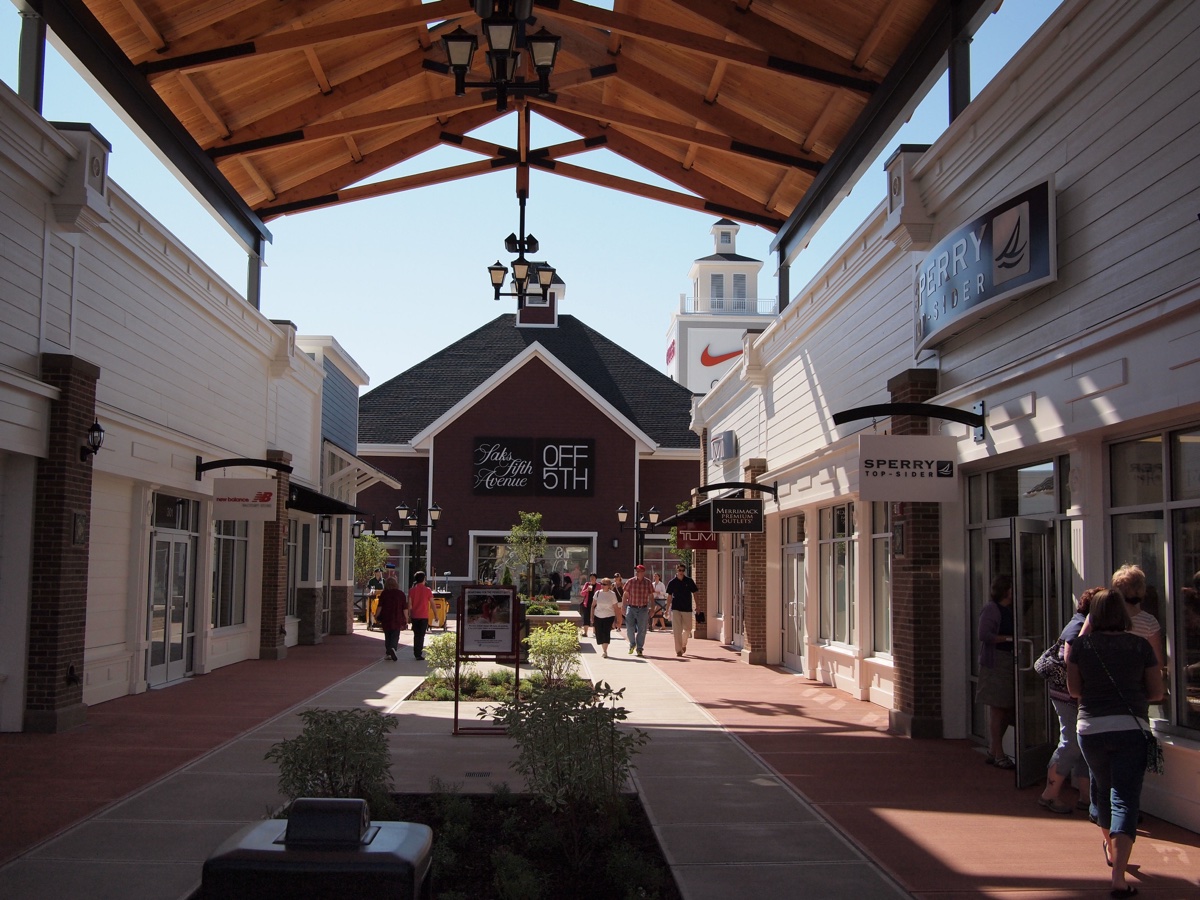
Every outlet mall has the same little theater at the register. The receipt prints a “you saved” line, the number is large, and for a second you feel like you got away with something. I’ve never bought a thing at an outlet without that feeling, and I’ve never gotten home without wondering, a week later, why the sweater felt thinner than the one in the mall store with the same name over the door.
So this is a desk audit, and a strange one: instead of the price tags, I read the paperwork. Publicly traded companies have to describe their business to the Securities and Exchange Commission once a year, in a document called a 10-K, and lawyers write those. Nobody in that room is trying to sell you a tote. Three outlet chains, three filings, plus a nonprofit that spent three months this year walking through 40 outlet stores with a tape measure and a skeptical face. This is what the paperwork says when it isn’t talking to you.
What the companies say when a lawyer is reading
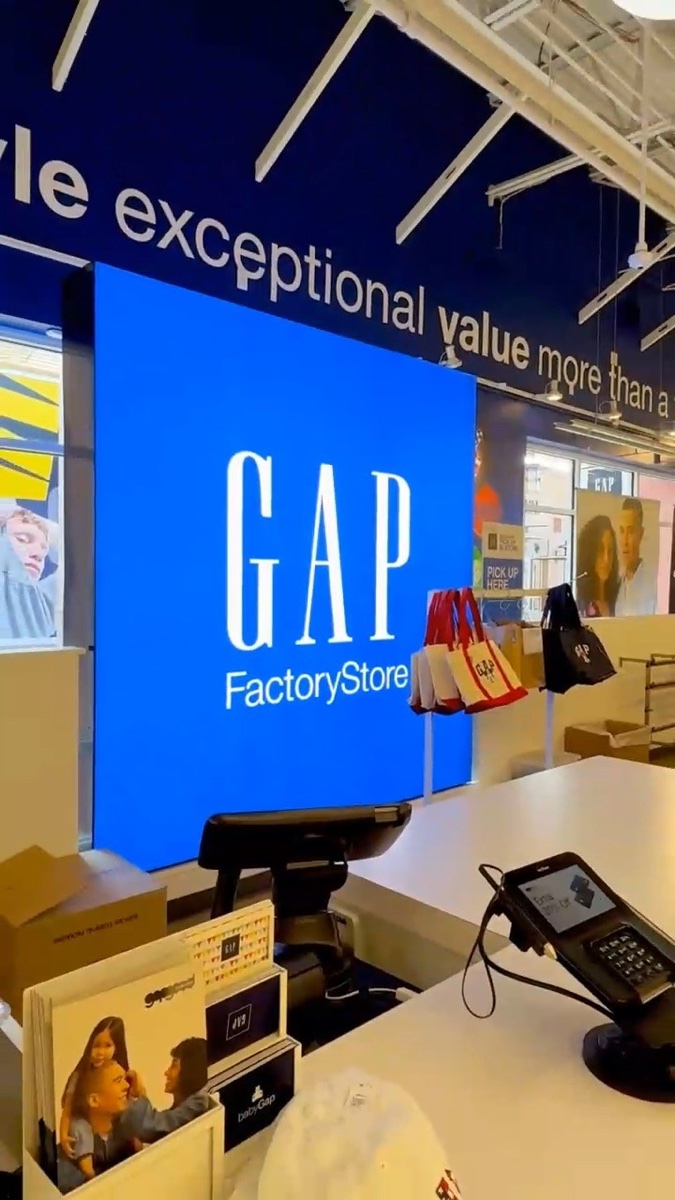
Gap Inc.’s most recent annual report, filed March 17, doesn’t dodge. The Gap brand, it says, “also serves value-conscious customers with exclusively designed collections for Gap Outlet and Gap Factory Stores.” Exclusively designed. Which is a different animal from leftovers, or last season, or the overstock your aunt still believes it is. A separate line, drawn for a separate price.
J.Crew hasn’t filed anything since it went private in 2020, but its last public 10-K, from March 2019, is even plainer: “We design and develop a dedicated line of value-driven merchandise for our J.Crew factory stores, J.Crew Mercantile stores and jcrewfactory.com, inspired by classic J.Crew style.” Inspired by. That’s the whole business model in two words, and I sort of admire the candor. The Factory cardigan is a cover version.
Coach gets its own section, because a sentence went missing.
There’s a bigger tell in the paperwork than any single quote, though, and it’s the store counts. Consumers’ Checkbook, the nonprofit that ran the 40-store study, pulled the numbers: Ann Taylor runs 96 regular stores and 122 factory stores. Nordstrom has 93 department stores and 269 Racks. You cannot stock 122 outlets with the leftovers of 96 stores. The math doesn’t allow it. At that ratio the outlet is most of the brand, and the mall store is the showroom.
The sentence Coach deleted
I searched every Tapestry annual report on EDGAR (Tapestry owns Coach and Kate Spade) for one phrase, “manufactured-for-outlet.” It’s there in the 2020 filing: “Coach outlet stores serve as an efficient means to sell manufactured-for-outlet product and discontinued retail inventory outside the retail channel.” Same sentence for Kate Spade, one paragraph down. It’s there in 2014, 2015, 2016, 2017, 2018, 2019, 2021, 2022 and 2023. Ten years, word for word.
Then it’s gone. The 2024 report describes the stores’ locations and square footage and says nothing about what’s on the shelves. And the newest one, filed August 13, four days before I’m writing this, replaces the old admission with a new project: the company is working “to harmonize the customer experience between our retail and outlet channels, by bringing select full price products into the outlet channel.” Read that twice. Bringing full-price product into the outlet is presented as a new initiative, which is the closest a filing will ever come to telling you what wasn’t there before.
I don’t know why the phrase was cut, and Tapestry didn’t answer Checkbook’s questions either (one of 40 companies did). Maybe the lawyers thought “manufactured-for-outlet” had started to sound like a confession. Maybe the mix really is changing. Either way, the plain-English description of the Coach Outlet rack existed for a decade and no longer does, and you can’t get that from a price tag. You can get it from a government website, for free, in an afternoon. I did.
.jpg)
Is the “Comparable Value” price real?
Now the tag. Outlet tags rarely say “was” or “originally.” They say “Comparable Value” (J.Crew Factory, Coach Outlet, Kate Spade Outlet) or “Compare at” (Nordstrom Rack). The wording is careful because the number was never a price this item sold at. Coach’s outlet FAQ, as it gets quoted around the deal blogs, defines the term as an indication of value based on materials and “initial prices charged for similar products in the market.” Similar products. Not this one.
That distinction is the entire lawsuit. In January 2023, two California shoppers sued J.Crew Group over exactly this, arguing that Factory products “have uniformly never been offered at the fictitious ‘comparable value’ prices,” and that even if the comparison pointed at the mainline J.Crew item, it was still misleading, because the Factory item is a lower-quality, lower-cost product. J.Crew called the claims meritless. The case never got a ruling on the merits: in November 2023 a judge sent the remaining plaintiff to arbitration, because the plaintiff had clicked through the site’s terms of use. So there’s no legal verdict here, and I’m not pretending there is. But notice what nobody disputed in that fight. Nobody argued the Factory sweater was the same sweater.
The FTC, for its part, has been mild about it. Its 2014 consumer alert says outlet merchandise “can be manufactured exclusively for them, and may differ in quality,” and its advice is to ask the staff. Twelve years later that’s still the guidance. Ask the staff.
How to tell on the rack, without asking the staff
Checkbook’s team did the asking, and the answers were mostly shrugs, so they went to the labels. What follows is their list, condensed, with the company filings layered on top, and it’s the part worth screenshotting before your Labor Day trip.
| Brand | Outlet-only? | The label tell |
|---|---|---|
| J.Crew Factory | All of it | Two small diamonds under the brand name |
| Banana Republic Factory | All of it | Three diamonds under the brand name |
| Talbots Outlet | All of it | White label with three dots under “Talbots” (mainline is blue-black) |
| Gap Factory, LOFT Outlet, Ann Taylor Factory | All of it | Separate lines by the company’s own description |
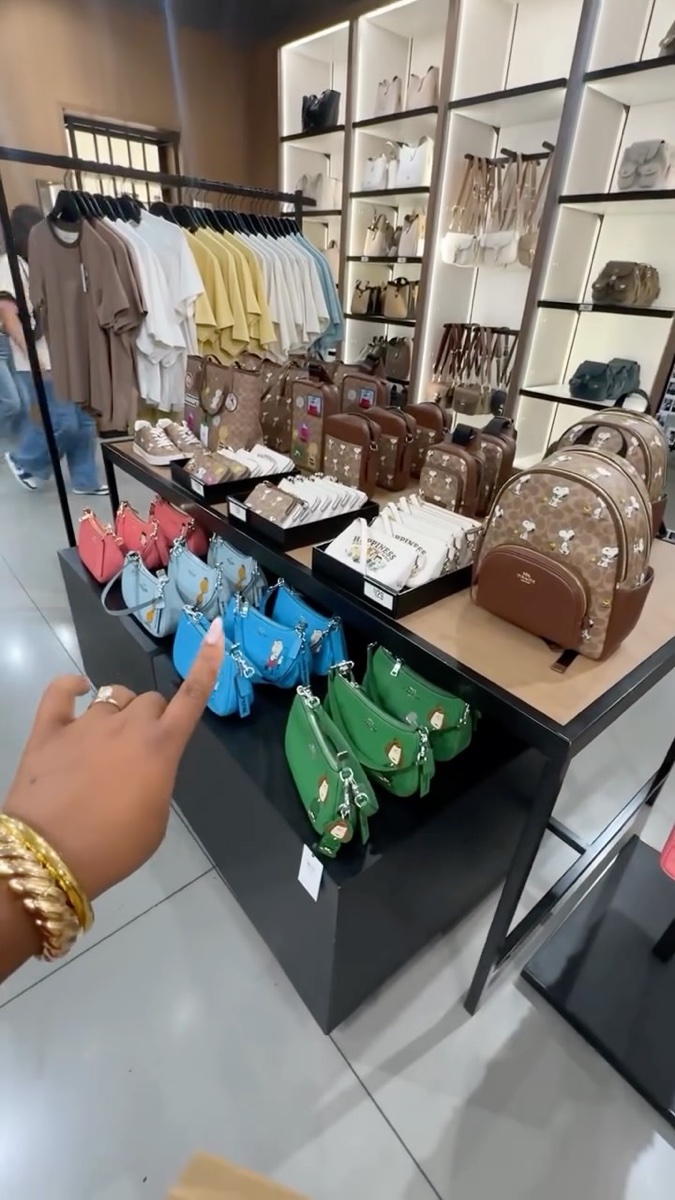
| Coach Outlet | Mixed | Raised “COACH” with horse and carriage; mainline stamps a plain “COACH” |
| Kate Spade Outlet, Tory Burch | Mixed | Check the sole: the $120 outlet Tory flat had a man-made sole, the $220 store flat had leather |
| Cole Haan | Mostly | Rubber sole at the outlet, leather sole (resoleable) at the department store |
| Nordstrom Rack | Mixed | “Compare at” tags; 269 Racks against 93 stores tells you the ratio |
The quality gap, when there is one, hides in the boring places. Checkbook’s clearest example was a Banana Republic striped dress: $75 at Factory in a synthetic blend, $198 at the mainline store in 100 percent cotton with a fuller skirt and a removable belt. Same idea across the aisle, and a different garment once you’re at the seam. Gonca Soysal, a marketing professor at the University of Texas at Dallas who has studied what outlets do to a brand’s other stores, put it to a Seattle TV station this way: “Companies are subtle about branding and labels for outlets because they don’t want to lose their magic.” Two diamonds is about as subtle as it gets.
So is the outlet cheaper than the mainline sale?
Sometimes not, and that’s the answer I didn’t expect. Checkbook found that regular-store sales, the ones on the rolling calendar any given month, sometimes beat outlet prices for a comparable item, once you stop comparing to the “compare at” number and start comparing to what the mainline store is actually charging this week. Gap is 40 percent off everything as I write this, denim included, per the banner on its own homepage. That’s the real garment, cotton and all, at a number the Factory tag can only gesture at.
So my rule for outlets, and I’ve been preaching timing all month, is short. Buy the outlet thing as the outlet thing. A $75 dress in a poly blend is a perfectly fine $75 dress. What it can’t be is a $198 dress that got lucky, because it never was one, and every filing I read this week says so in its own dry way. If you’re driving to the outlets over Labor Day for the sale-on-top-of-sale, ignore the crossed-out number, turn the label over, count the diamonds, and price the real store’s sale on your phone in the parking lot.
And if you want the mainline sweater, the one that gets asked about, it’s not at Factory, and by the company’s own account it never was. The lawyers already told you.