Are Puffer Jackets Waterproof | 55 Product Pages, Two Vocabularies, and No Down in the Ones That Say Yes
Eddie Bauer's down racks print water-repellent and shed-the-drizzle on 41 pages and save waterproof for six. Rains prints waterproof on all 14 of its puffers, plus a pressure number, and fills them with polyester. The sentence about what rain does to down isn't printed on any of the 55.
 ·

Zero out of twenty-one.
That’s how many product pages in Eddie Bauer’s women’s down collection printed the word waterproof on October 4, 2026. Twenty-one down jackets and parkas, from a $79.97 hoodie to a $299 duffle, and not one page is willing to say it. What the pages say instead is a careful little weather report: a StormRepel finish “sheds light moisture,” “turns back the drizzle,” “sheds light rain and snow,” “sheds the damp.” The brand’s bestselling CirrusLite page promises “a smooth nylon shell with a durable water-repellent finish, making it a great companion for adventures in chilly weather.” Chilly. Not wet.
It isn’t shyness. The same retailer’s men’s down collection prints waterproof six times in 20 pages, and the word never travels alone.
Four of the six pages bolt a pressure rating to it, 5K/5K up to 10K/10K, and the others lean on “waterproof/breathable” shells and “fully seam-sealed construction.” Those are different garments, built around a membrane, and the cheapest of them entered the rack at $195.97 while the water-repellent crowd starts under $60. One company, one fabric budget, two vocabularies that don’t mix.
October is when this stops being trivia. The first cold rain of the season is falling on people who bought a puffer as their only coat, and the autocomplete box fills in the rest: are puffer jackets waterproof, are puffer jackets good for rain, how waterproof are puffer jackets. Real questions, typed before real checkouts.
I should say what this is and isn’t. I read 55 product pages, plus the guides and blogs around them, from a desk on October 4, and I haven’t stood in rain wearing any of these jackets, so nothing here is a wear test. The desk also sits in Korea, which matters for retail reads, though both racks here served their US storefronts with US dollar prices. What a desk can do is count, and the counting turns out to answer the question better than the adjectives do.
What do down jacket pages say about rain?
Eddie Bauer’s two down collections held 41 product pages on October 4, 2026, and six of them print the word waterproof, all on styles built around a separate shell technology rather than a sprayed finish. The other 35 pages use water-repellent, StormRepel, or, exactly once, water-resistant, and they qualify nearly every promise down to the lightest forms of weather a sky can produce.
Line the qualifiers up and the pattern is hard to unsee. Light moisture. Light rain and snow. The drizzle, three times. The damp, twice. A $199 camp suit offers the most honest hedge on the rack: “A water-resistant finish handles the damp.” Nobody’s finish handles the rain. On the one page where waterproof and StormRepel appear together, a $349 women’s parka, the brand also prints a seam-sealed membrane spec, “waterproof and breathable to 5K/5K,” and names the coating level “StormRepel Super, our longest-lasting moisture-shedding finish.” Even the upgrade vocabulary sheds. It doesn’t block.
| Rack, read Oct 4, 2026 | Pages | Prints “waterproof” | Number attached | Fill | What the water line says |
|---|---|---|---|---|---|
| Eddie Bauer women’s down | 21 | 0 | none | 650-fill down | “sheds light moisture,” “turns back the drizzle” |
| Eddie Bauer men’s down | 20 | 6 | 5K/5K to 10K/10K on 4 of 6 | down behind a membrane | “waterproof/breathable,” “fully seam-sealed” |
| Rains US puffers | 14 | 14 | 5,000 mm water column | 100% polyester | “is a waterproof winter jacket” |
So that’s fact one: on a down rack, waterproof isn’t a compliment, it’s a product boundary. The word appears only where the shell is a sealed system, it usually brings a test number with it, and it costs more.

Who prints waterproof on a puffer, and what’s inside it?
Rains, the Danish rainwear label, runs the only puffer rack we found where every single page commits to the word: 14 puffer styles on the US storefront, $425 to $550, each one introduced flatly, as in “Alta Longer Puffer Jacket is a waterproof winter jacket.” The product page backs the word with numbers a down page never shows you: “Composition: 100% PES (Polyester),” a water column pressure of 5,000 mm, a breathability figure, “signature PU fabric with double welded seams.”
Now search those 14 pages for the word down. Zero hits. Not in the descriptions, not in the composition lines. The one brand happy to print waterproof across an entire puffer collection has quietly removed the thing most people assume a puffer contains, and replaced it with polyester batting inside a coated, welded shell.
That’s fact two, and it’s the loudest one: the jackets that say yes to the question aren’t down jackets. The puffer silhouette and the down fill came apart somewhere between the factory and the adjective, and the adjective followed the welded seams, not the quilting.
A sidebar, before fact three. In US customs law there’s an actual printed test behind “water resistant,” a 600 mm pressure test that decides tariff rates, and almost no hangtag ever cites it. We pulled those documents in September in our read on waterproof versus water-resistant jackets. Rains’ 5,000 mm column is the same kind of measurement, just set about eight times higher, which is what it takes before a marketing department will print the stronger word.
Where is the wet-down sentence actually printed?
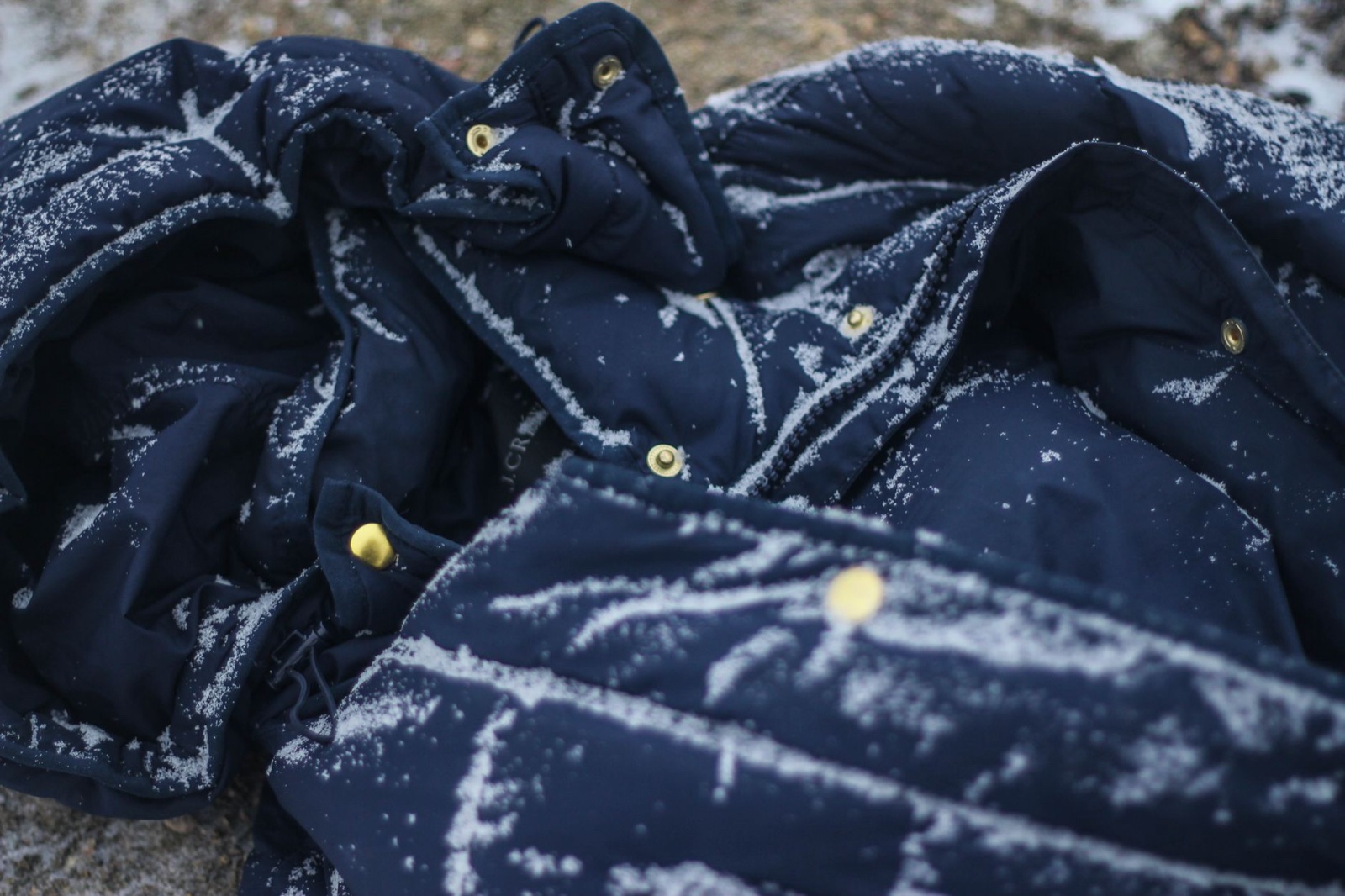
Outdoor Research’s buying guide prints the sentence that none of the 55 product pages will. Its down-versus-synthetic explainer says of down: “In fact, it loses many of its insulating properties when it gets wet and is often slow to dry.” Across all 41 Eddie Bauer down pages, the phrase “when wet” appears zero times. The risk that defines the whole category lives in the retailer’s aisle literature, never on the shelf tag, and that absence is the most consistent finding in this entire read.
Who else prints it? Sellers of the alternative. Search the exact question and the top answers aren’t newsrooms, they’re brand blogs. Heat Holders, which makes synthetic-lined puffers, hosts a long explainer that defines the terms fairly enough, “true waterproof materials prevent water from penetrating the fabric, while water-resistant fabrics allow some moisture to pass through,” credits synthetic fill with “better performance in wet conditions,” and lands, four scrolls later, on its own product line. Columbia hosts its own page titled with the exact question, though in our reader it loaded as navigation with no article body, so we can’t tell you what it says.
Fact three, then: the question’s answer is distributed by interest. Down sellers print qualifiers, synthetic sellers print the warning, and no seller prints both halves on the same page.
Here’s where the count runs out, and it’s worth being plain about the edges. Six doors didn’t open for this read: REI, The North Face, Columbia’s US site, Marmot, Lands’ End’s category pages, and the independent guide at Switchback Travel all refused or blanked our reader, so the panel above is the panel that opened, not the whole market. Hydrophobic-down treatments exist and may be printed on racks we couldn’t reach. And a water-repellent down jacket under an umbrella, in drizzle, for twenty minutes, is doing exactly the job its page described. The gap is between that sentence and the one you typed into the search box.
How do you read a puffer page before you pay?
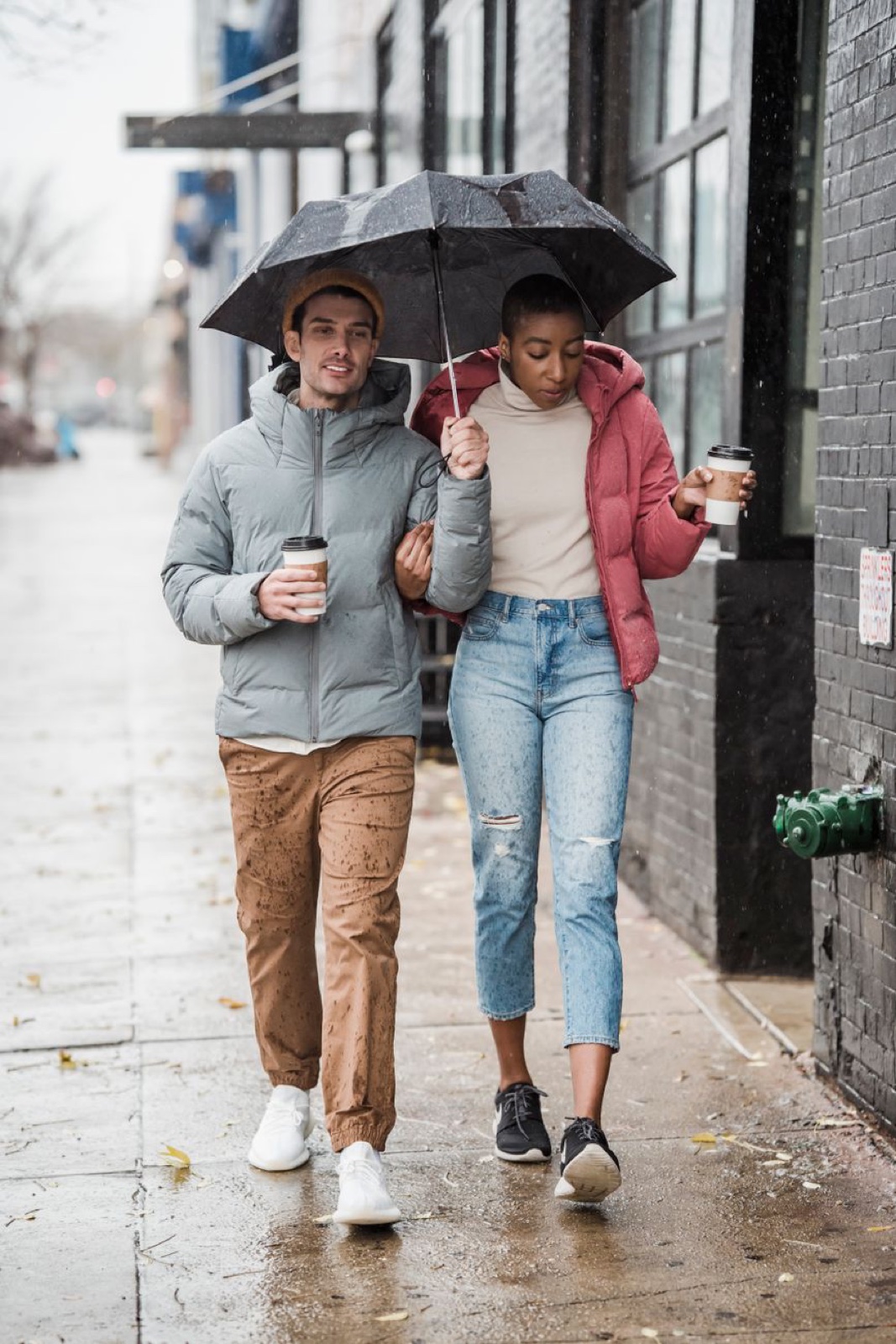
Three checks cover most racks, and they’re all vocabulary, not fabric science. First, look for a number next to the water word: a column rating in mm, or a K/K pair, means the page is quoting a test, and no page we read printed a number without also printing waterproof. Second, read what the finish sheds, because the nouns are the spec: moisture, drizzle and damp are a different climate from rain, and the brands choose those nouns with lawyerly care. Third, find the fill line, since a page that prints waterproof but won’t print down is telling you the two didn’t come together, and on 55 pages they never did.
What no page will print is the sentence you actually want: whether the jacket already hanging in your closet will keep you warm through Tuesday’s forecast. Fill power won’t tell you, the finish adjectives won’t tell you, and the one rack that commits to waterproof solved the problem by changing what’s inside the jacket. If you’re buying this month rather than reading tags, the sales calendar hasn’t properly started for outerwear anyway, which leaves time to check the three lines above on anything in your cart.
The nearest thing to a straight answer in everything we read for this piece comes from a seller’s own aisle document, Outdoor Research’s insulation guide, in its cons column for down, printed where no product page would put it: “Loses insulation ability when wet and is slow to dry.”