Are Tabis Worth It? A Worker's Split Toe With a $1,050 Cover Charge
The Margiela Tabi is having another mainstream year, and the question people actually type is whether it's worth the money. Instead of arguing taste, we read the brand's entire US shelf on September 19: every Tabi style, every price, both departments. The shape of the answer surprised us.
 ·
· 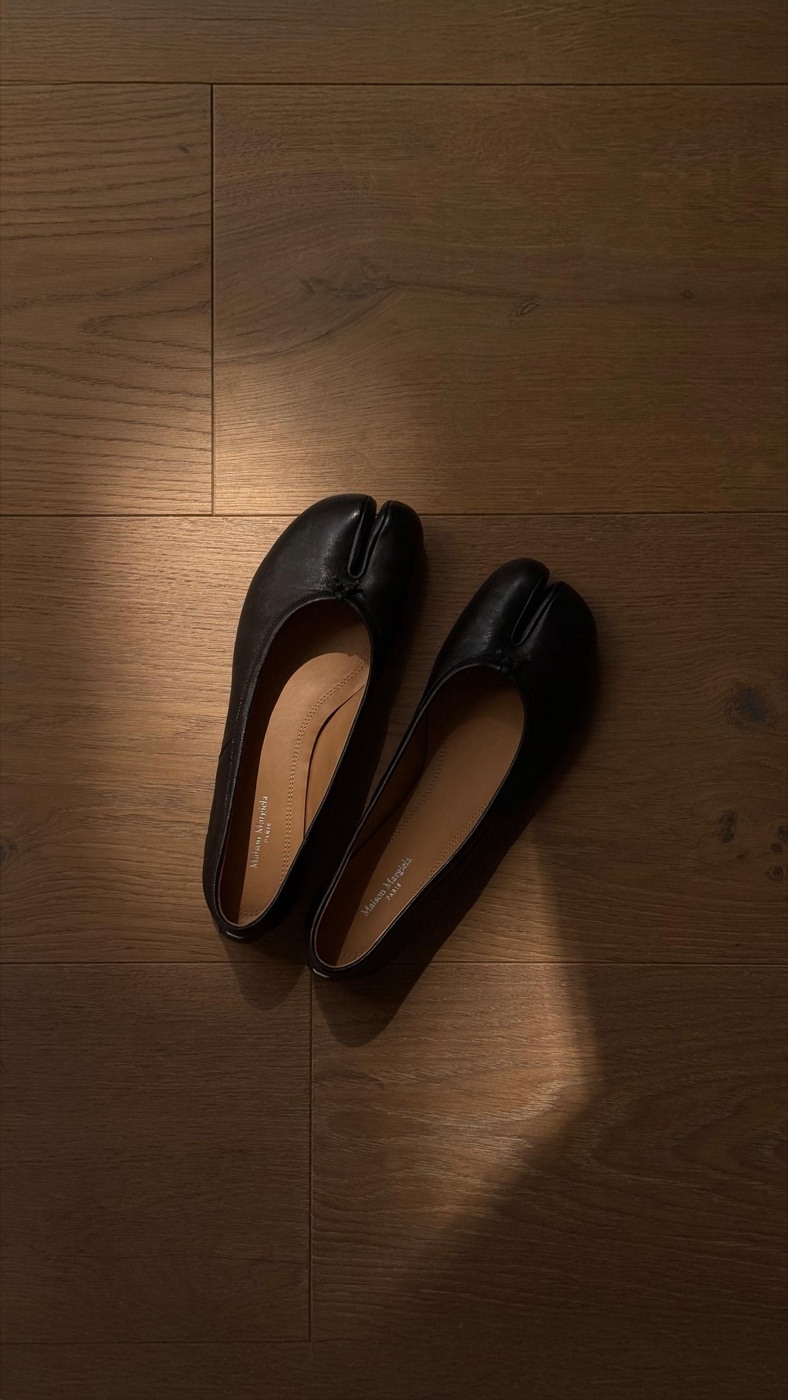
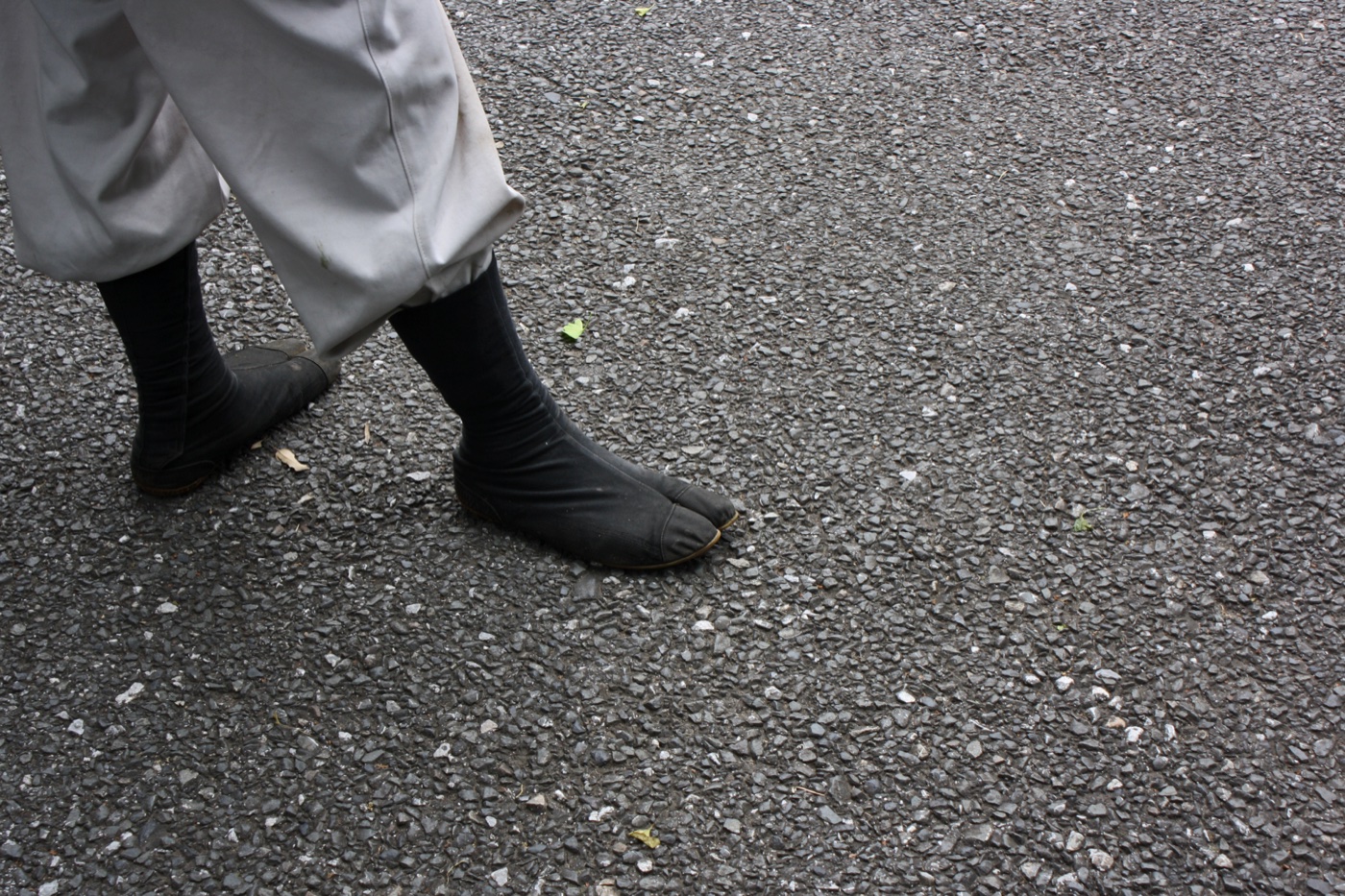
The first time a Margiela Tabi crosses your feed, it usually gets filed as a joke. A ballet flat split down the front, two toes where there should be one, worn by someone who clearly expects you to have an opinion about it. At first glance it reads as a shoe invented last spring to bait the algorithm. It’s the opposite. The split-toe tabi is a Japanese sock design that predates the brand by centuries, and Martin Margiela put it on his very first runway in 1988, which Dazed has been documenting through an archive account since the shoe’s 28th birthday.
What’s new is the audience. A creator’s TikTok about a Tinder date stealing her Tabi Mary Janes ended up covered by Vogue and The New York Times. By August, Fashion Journal could write that the shoe “appears on Pinterest boards, in countless influencer styling videos and, perhaps most tellingly, on the websites of Steve Madden, Alias Mae, Therapy and Glassons.” That’s the discourse: theft lore, dupe lists, a thousand styling reels. None of it answers the question people actually search, which is whether the real thing is worth the money.
So we shrank the question down to one object we could actually read: Maison Margiela’s own US shelf. On September 19, I loaded the brand’s two Tabi footwear pages, women’s and men’s, and copied down every style and every price. No showroom access, no wear test, just the shelf the way any shopper in Ohio would meet it.
What do Margiela Tabis cost in 2026?
Maison Margiela’s US site listed 102 Tabi footwear styles on September 19, 2026: 80 on the women’s page, which prints its own “80 items” counter, and 22 on the men’s. The floor is $1,050. The ceiling is $4,590. Not one pair of shoes on either page costs less than four figures, and the brand’s US product sitemap, which we also pulled, carries 1,456 product URLs of which 110 are Tabi. Roughly one item in thirteen on the entire American catalog has that toe.
The shelf sorts itself into tiers the moment you put the prices in a column. Margiela’s site doesn’t group them this way. The names below are ours.
| Tier (our name) | What’s in it | Styles | Price range |
|---|---|---|---|
| The ballet wall | Ballerinas, ballet flats, babouches | 25 | $1,050 to $1,330 |
| The middle rack | Loafers, Mary Janes, mules, pumps, sandals, lace-ups | ~36 | $1,090 to $1,850 |
| The signature shelf | Ankle boots, Chelsea boots, knee-highs | ~15 | $1,490 to $2,300 |
| The costume row | Claw Plexi pumps and thigh-high boots | 4 | $2,390 to $4,590 |
| Men’s, all of it | Babouches, lace-ups, mules, boots | 22 | $1,050 to $1,850 |
A few readings from inside those tiers. The classic ankle boot, the silhouette the 1988 show made famous, sits at $1,490. Its composition sheet on the military green colorway lists a 100 percent lambskin upper over calf lining and a calf sole, made in Italy, which is real four-figure construction and worth comparing against what a leather jacket buys you at the same money. The suede version runs $1,650, the white-painted “bianchetto” $1,690, and the knee-high $1,990 to $2,300.
The ballet wall is where the volume is. Twenty-four of the eighty women’s styles are flats between $1,050 and $1,330, which tells you exactly which Tabi the brand expects first-timers to buy.
The costume row is where the shelf stops pretending to be footwear: clear plexi pumps at $2,390 and thigh-high transparent boots at $4,590, price-tagged theater.
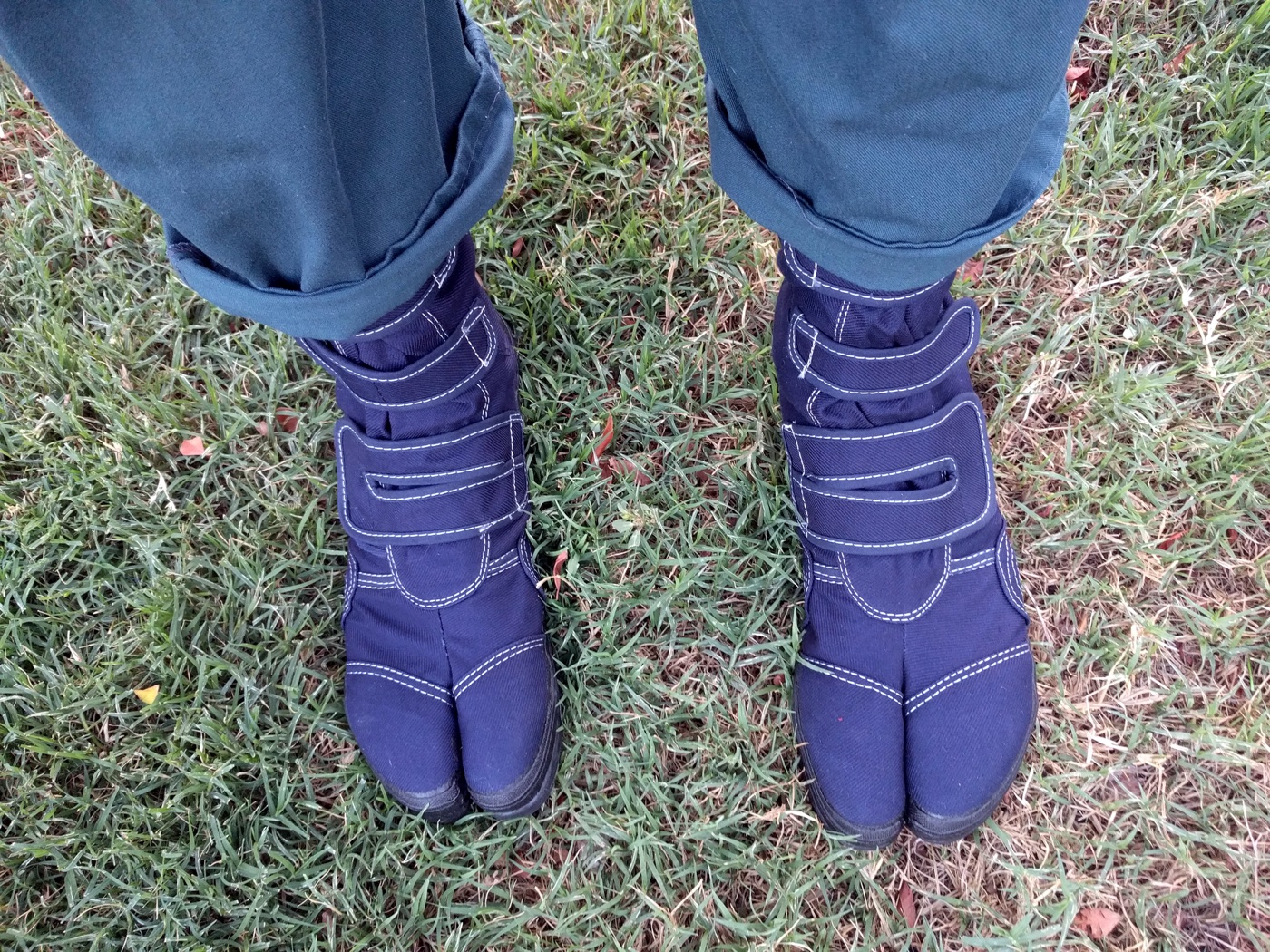
A second pattern only shows up in what’s missing. There is no Tabi sneaker anywhere: zero on either shelf page and zero in the full product sitemap. For years the high-top sneaker was the cheapest way into the toe, and its absence quietly raises the entry fee to $1,050. The men’s page is its own study in restraint. Twenty-two styles, no heels, nothing over $1,850, entry through a $1,050 babouche.
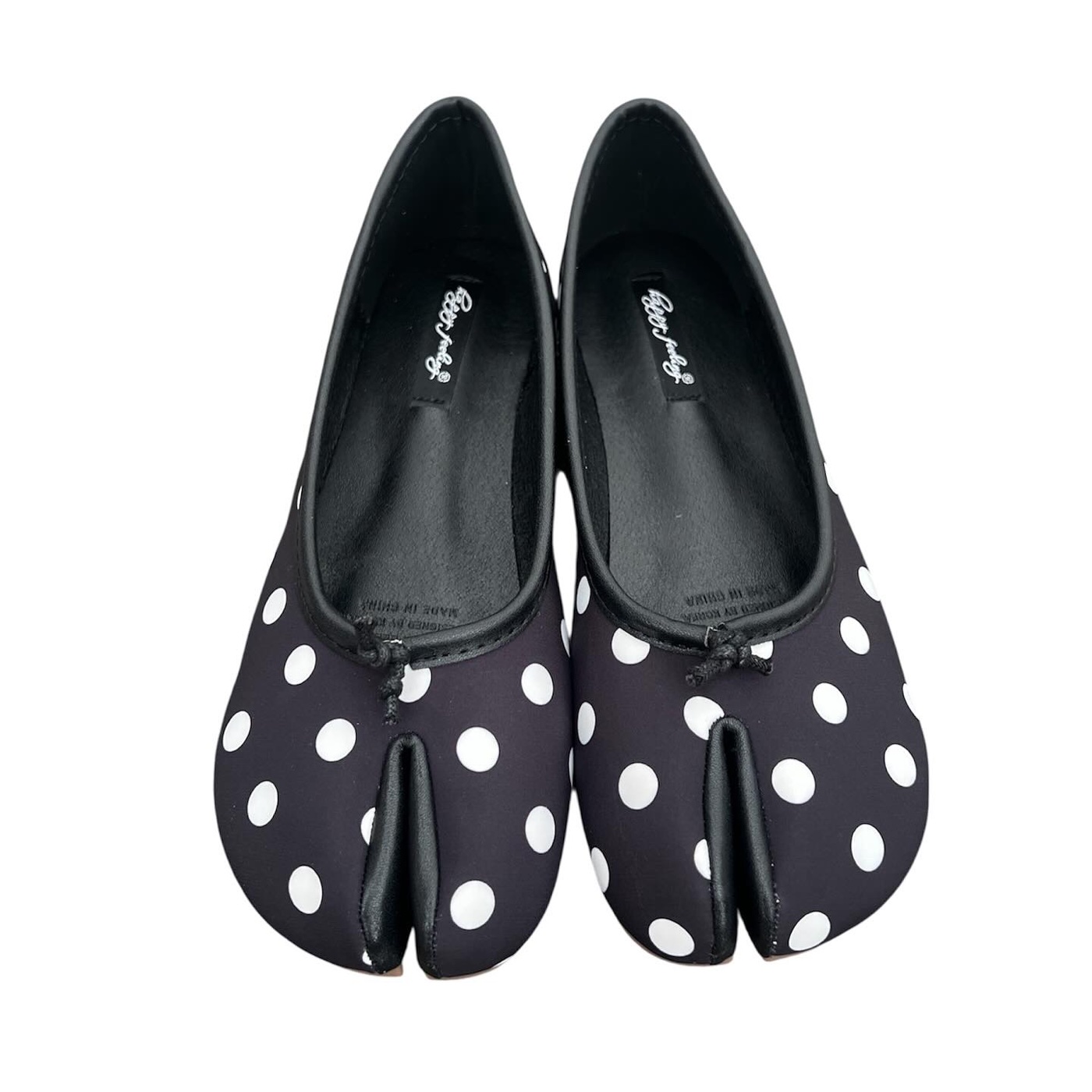
A third pattern is the one the dupe economy already found. Every silhouette on the ballet wall now has a mass-market shadow, the polka-dot pair below being a typical specimen, and we’ve written before about what a label actually tells you when a $55 version of a $1,000 idea shows up. The copies cluster around the flats, not the boots. Dupe sellers can mold a toe. A lambskin boot with a calf sole is harder to fake at $80.
Now the caveats, because a shelf census has edges. These are one morning’s page loads, and list prices, not what the style costs on resale or in an outlet. A category page also can’t tell you the one thing that decides this purchase, which is how the toe feels between yours after four hours. We haven’t worn a pair. Nothing here is a comfort claim, and if the seam bothers you in minute one, no tier of that table will fix it. Availability is the other soft spot: a style on the page isn’t a style in your size.
Are Margiela Tabis worth it?
Our verdict lands mid-shelf, and it’s narrower than the hype. The signature shelf is the only tier where the price buys something that has held its position: a boot the house has kept on its shelf, in one form or another, since 1988, in materials the composition sheet can defend. Fashion has repriced that continuity before, and the Celine Reebok math shows how much of a luxury shoe’s tag is story. Here at least the story is 38 years long. The ballet wall is a worse deal in the exact spot most people enter: it’s the tier the dupe flood targets, the trend-cycle risk is real however long the archive is, and $1,050 is a lot to pay to discover you hate a seam. The costume row was never a consumer question.
We started this morning assuming we were pricing a shoe. After 102 rows of it, the Tabi reads less like a shoe than a door policy: the toe is free to copy everywhere else, and what Margiela is charging four figures for is standing on the original side of the door. The brand even sells the honest version of that test. Buried in the same sitemap, the only split-toe item under $1,000 the house offers is a cotton Tabi sock. It costs $145, and it will answer the seam question for a seventh of the cover charge.