How Many Items Is a Capsule Wardrobe? Eight Rulebooks, Five Different Games
The famous capsule numbers run from 5 pieces to 37, and no two of them are counting the same closet. Eight rulebooks sorted into the five games they're actually playing, and the question that beats picking a number.
 · · Updated September 1, 2026
 There are only five machines in the whole capsule wardrobe industry, and every famous number is one of them wearing a costume: a closet cap, a styling exercise, a shopping quota, a planning template, or a category list. One stylist swears by seven pieces, a viral TikTok says nine, a menswear site wants 25, a beloved 2014 blog built everything on 37, and the most famous system of all caps you at 33, a number that includes your jewelry. The numbers can’t agree because they aren’t measuring the same thing. Some count your closet, some count your shopping, and one counts ten days of your life.
Sort the eight best-known rulebooks into those five buckets and the internet’s math fight mostly dissolves. Picking your own number takes about a minute afterward. The sorting’s below, borders and loopholes included, because the borders turn out to be where the real story lives.

How many items is a capsule wardrobe?
Published capsule wardrobe systems run from 5 items to 37, and the eight best-known ones are playing five different games: three are closet caps, two are styling exercises, one is a shopping quota, one a planning template, one a category list.
| System | Number | What it really is | What counts | What doesn’t | Clock |
|---|---|---|---|---|---|
| Project 333 (Courtney Carver, 2010) | 33 | Closet cap | Clothes, shoes, outerwear, accessories, jewelry | Underwear, sleepwear, loungewear, workout gear (if actually worn to work out), wedding ring | 3 months, repeatable |
| Un-Fancy capsule (Caroline Rector, 2014) | 37 | Closet cap | 15 tops, 9 bottoms, 9 shoes, 2 dresses, 2 jackets | Jewelry, accessories, purses, swimwear, pajamas, workout clothes | 3 months, no shopping until the last weeks |
| 10×10 Challenge (Lee Vosburgh, ~2015) | 10 | Styling exercise | Clothes and shoes | Accessories, unlimited | 10 days |
| 3-3-3 method (Rachel Spencer, TikTok, 2023) | 9 | Styling exercise | 3 tops, 3 bottoms, 3 shoes | Everything else | However long the fun lasts |
| 5-Piece French Wardrobe (forum-era, ~2005–2010) | 5 | Shopping quota | New statement pieces, shoes included | Basics, socks, underwear; accessories “unless expensive” | Per fashion season, twice a year |
| Four by Four (Janice Riggs, 2012) | 16 | Planning template | Garments only, in four color-coordinated fours | Shoes and accessories sit outside | None (it’s a blueprint) |
| RMRS men’s capsule (Antonio Centeno) | 25 | Closet cap | Tailoring, shirts, knits, trousers, 3 shoes, 2 coats | Underwear, socks, gym clothes (“consumables, not wardrobe”) | Permanent |
| PureWow work capsule (2025) | 7 | Category list | Seven categories: trousers, blazers, two shoe types, knits, blouses, jewelry | Everything casual | Year-round |
Read the third column twice. A closet cap, a styling exercise, a shopping quota, a planning template and a category list are five different tools, and asking which number’s correct is like asking whether a speed limit beats a grocery budget. Depends what you’re trying to slow down.
The closet caps, where 33 turns out to be bigger than 37
A closet cap restricts what hangs in your wardrobe for a set stretch of time, and the two most famous caps can’t agree on what a wardrobe is. Carver’s 33 includes shoes, bags, accessories and jewelry. Rector’s 37 excludes all four of those categories before counting starts. Apply Rector’s counting rule to Carver’s system and the “33” swells past 40, and run it the other way and the 37 shrinks to somewhere around the mid-20s.
Thirty-three is bigger than thirty-seven.
Numbers are a terrible way to compare these systems, and they’re the only way anyone compares them. The third cap makes the point even louder: the RMRS 25 pre-excludes socks, underwear and gym clothes as “consumables, not wardrobe,” which is a tidy phrase doing a lot of quiet subtraction. And every cap draws an exclusion line, and the line is where the volume migrates. Carver’s own rules had to specify that workout clothes are exempt only if you actually work out in them, which tells you exactly what people were doing. Practitioners write whole posts about their workarounds: the “loungewear that never leaves the house” category, the under-sweater tee reclassified as an undergarment, the belt that became “hardware.” The loungewear border is contested enough that we gave it its own ruling.
This isn’t said to mock anyone, and honestly, the creators seem relaxed about it. Vosburgh calls her rules “guidelines” and openly blesses swapping a shoe slot for a top, and Carver lets you trade out anything that stops fitting, no penalty. But it means an honest comparison has to look at the fence, not the number on the gate. A strict 33 with Carver’s borders is a genuinely small wardrobe. A loose 33 with three invented exemption categories is a normal closet with a spreadsheet.
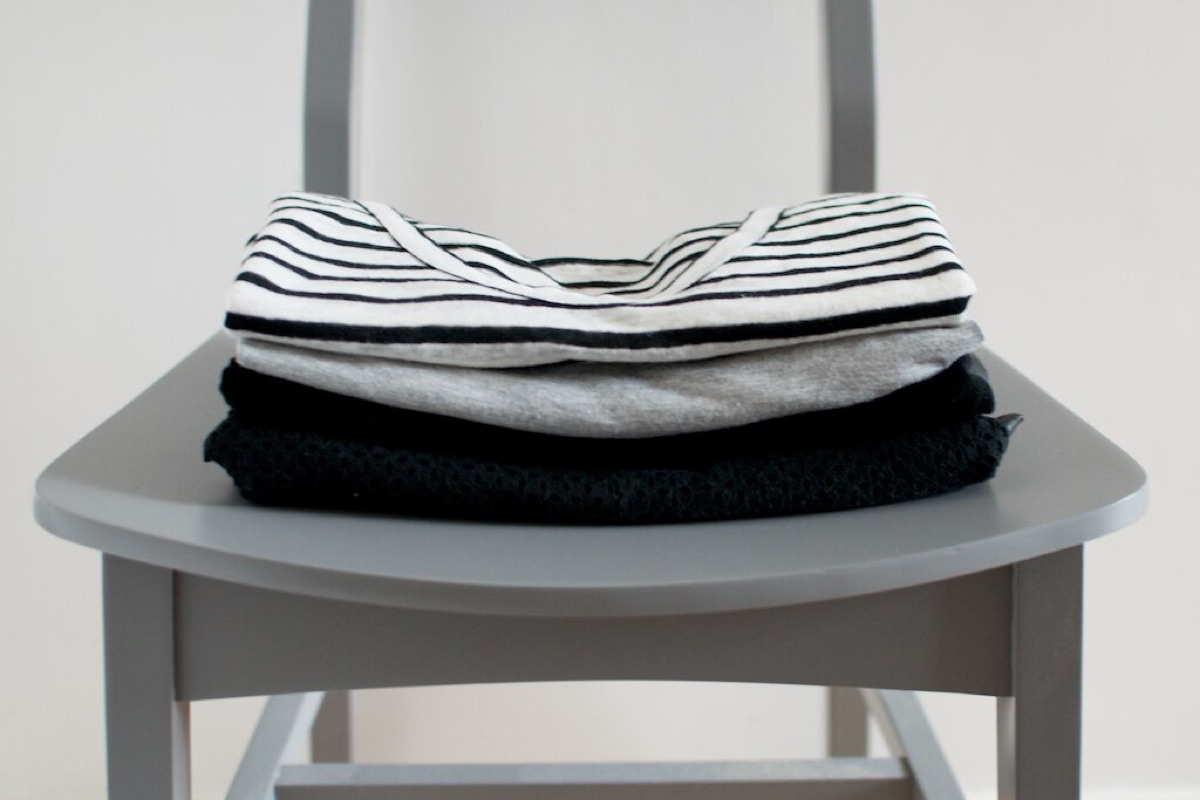
The styling exercises, the quota, and the two that aren’t wardrobes at all
A styling exercise borrows a small set of clothes from a closet you keep as full as ever, so it can’t shrink anything, and that’s not a flaw, it’s the job description. The 10×10 is ten items and ten days, invented by Vosburgh mid-shopping-fast as a way to stay interested in clothes she already owned. The TikTok 3-3-3 is nine items styled into 27 alleged outfits, a good packing drill with nothing to say about owning less. Which is fine! A drill is allowed to be a drill.
One warning about names here, because it cost me an hour: Project 333 (2010, Courtney Carver, quarterly closet cap, later a Penguin book) and the TikTok “333 method” (2023, Rachel Spencer, three-three-three styling game) are unrelated, and half the coverage of either one cheerfully mixes them up. We untangled the two 333s properly.
The 5-Piece French Wardrobe plays a different game again. It caps the inflow, not the shelf: roughly five new statement pieces per fashion season, basics exempt, accessories exempt “unless expensive.” Its edges are blurry, since nobody agrees what a “basic” is, but a blurry brake still slows the car. The last two systems aren’t even wardrobes. Riggs’s Four by Four is a planning template of 16 garments in four color-coordinated fours, with footwear parked in an optional add-on group, and PureWow’s “7 pieces” are seven categories, one of which is jewelry, which could hold a drawer.
Which capsule wardrobe system should you use?
The right capsule system depends on the problem: a full closet and a bad time getting dressed points to the 10×10, a buying habit points to the 5-Piece French quota, and a genuine reset points to Project 333 with the counting rule as written. The 10×10 is the cheapest trial of whether constraint helps you at all, and if it’s miserable you’ve lost a week and a half of outfits, where Project 333 charges a full quarter to teach the same lesson. The quota is the only one aimed at the actual behavior, because no closet cap stops shopping: you can own 33 items and still buy 60 a year, cycling them through. And the strict 333, jewelry and all, is the only version worth trusting, since the loopholes are the whole game. If 33-with-accessories sounds impossible, that reaction is roughly the point.
Maybe you came here for a shopping list of exactly seven chic things. You can skip this. All of it. A capsule is a fence you build for a reason, and if you don’t have the reason, the fence is just decor. Come back when a full closet and nothing to wear starts costing you real mornings.
The number was never the sacred part, and the people who built the idea kept saying so. The term “capsule wardrobe” was floating around American magazines back in the 1940s. Donna Karan turned it into Seven Easy Pieces in 1985, a system meant to run from office to evening on interchangeable tailoring and one black bodysuit. And Susie Faux, whose London boutique made the idea famous in the seventies, ran it for decades without ever fixing a count. Accounts of her formula range from “about ten pieces” to “a dozen, depending on your life,” which means the sellers of sevens and nines and thirty-threes are all more certain than the woman who invented the thing. Her version is the one that survives contact with a real closet. A dozen, depending on your life.