Do I Have to Pay Import Duty on Clothes in the USA? Four Sites Print 'Duties Included,' 'Under $800,' and the EU Rule
The $800 line is the one everyone remembers, and it is still printed in places you are likely to land, including on a government page written for online shoppers. On September 13 this desk read four fashion checkout pages against four documents U.S. Customs and Border Protection publishes, and wrote down every number that appears in print.
 ·
· 
“Packages whose declared value is under $800 … will generally be cleared without any additional paperwork prepared by CBP.”
That sentence sits on Internet Purchases, the page U.S. Customs and Border Protection writes for people who buy things from foreign sellers online. ThreadGloss read it on September 13, 2026. Elsewhere on the same domain, in the agency’s E-Commerce Frequently Asked Questions, a question asks whether the suspension of the de minimis exemption applies to all countries and all merchandise, and the printed answer is: “Yes, the suspension applies to merchandise valued at $800 or less arriving via all modes, including the international postal network, unless specifically excepted pursuant to a separate authority.”
Both pages were live that morning. The $800 figure is the sticky one, and it’s outlived the thing it described in more than one place, including on the retail side of the transaction. Who ends up holding the bill when those two sentences disagree is decided somewhere else again, on a fee schedule and on the shipping page of whoever sold you the coat. Both of those come later here.
A disclosure first. Nobody at this desk placed an order to test any of it, cleared a parcel, or paid an invoice at a door.
Every line quoted below came off a page anyone can open. This desk also fetches from Korea, which distorts exactly one of the readings below and is flagged where it does.

Do I have to pay import duty on clothes in the USA?
CBP’s own factsheet, Publication No. 5129, marked “Updated 08/18/2025,” compresses the change into one line: “Effective Aug 29, 2025, imported goods from all countries that are valued at or below $800 will no longer be eligible for de minimis treatment and will be subject to all applicable duties, taxes, and fees.” The FAQs call the suspension indefinite and put a date on the paperwork that follows it, saying the new mail informal entry process takes effect July 24, 2026.
Read the factsheet with a calendar open and part of it’s already expired. It describes two ways of assessing the tariff on a postal shipment, an ad valorem duty and a specific duty, the second being “a flat duty ranging from $80 per item to $200 per item.” Then it closes that door itself: “The specific duty option will be available for six months; all shipments must use the ad valorem method beginning Feb 28, 2026.” That deadline passed six and a half months before this piece. It’s gone.
Gifts are the one carve-out a shopper might reach for, and the FAQ narrows it before anyone gets there. Bona fide gifts under 19 C.F.R. § 10.153(a) stay eligible for duty free treatment, but the definition excludes “articles acquired by purchase, barter, promissory exchange, or similar transaction,” and excludes anything “given” alongside a purchase, “such as a so-called bonus article.” Asking a seller to mark your order as a gift doesn’t make it one.
What the rate will be is a separate question, and the Internet Purchases page refuses to answer it in advance on anyone’s behalf: “only CBP can make a final determination about what is owed.”
Will I be charged customs fees from the UK to the USA?
The page that answers that question isn’t a government page. It’s the shipping or customer care page of the seller, and it’s where the choice between paying at checkout and paying at the door gets made. Four fashion sites, read the same day, print four different things.
| Site, page read | What it prints for a US delivery |
|---|---|
| Mytheresa, Shipping (US customer care) | “For all deliveries made to the US over $800, customs duties and handling fees apply and will be included in the total price. Orders under $800 will not be charged customs duties and taxes.” |
| Dissh, Shipping | “US: Applicable taxes are payable at checkout. Duties included (with no nasty surprises).” Elsewhere the page explains the DDP and DDU choice, and what happens if duties go unpaid: the order returns to the sender and the refund is issued “minus return fees and any additional shipping and customs charges.” |
| Lucy & Yak, Shipping FAQ | The question is printed as “Will I be charged sales tax & import taxes if I live outside the UK?” The answer covers the EU only, at “€3 for each different product type in the order,” and adds that the fees “cannot be adjusted or reimbursed by Lucy & Yak.” |
| Totême, Shipping | The US block lists three FedEx tiers and their prices. The line “Taxes and duties are included in all product prices” appears under the separate heading “Shipping outside the EU.” This desk’s session was routed to a partly Korean page, so no absence claim is made here about what a US-routed reader sees. |
Mytheresa’s is the sentence worth sitting with, because it prints the old threshold as a live promise to the shopper, on the page a US customer is sent to. That’s not a ruling, though, and no retailer’s page is. The Internet Purchases page is blunt about where liability lands, and it names the buyer as the importer: CBP “holds the importer … liable for the payment of duty not the seller.”
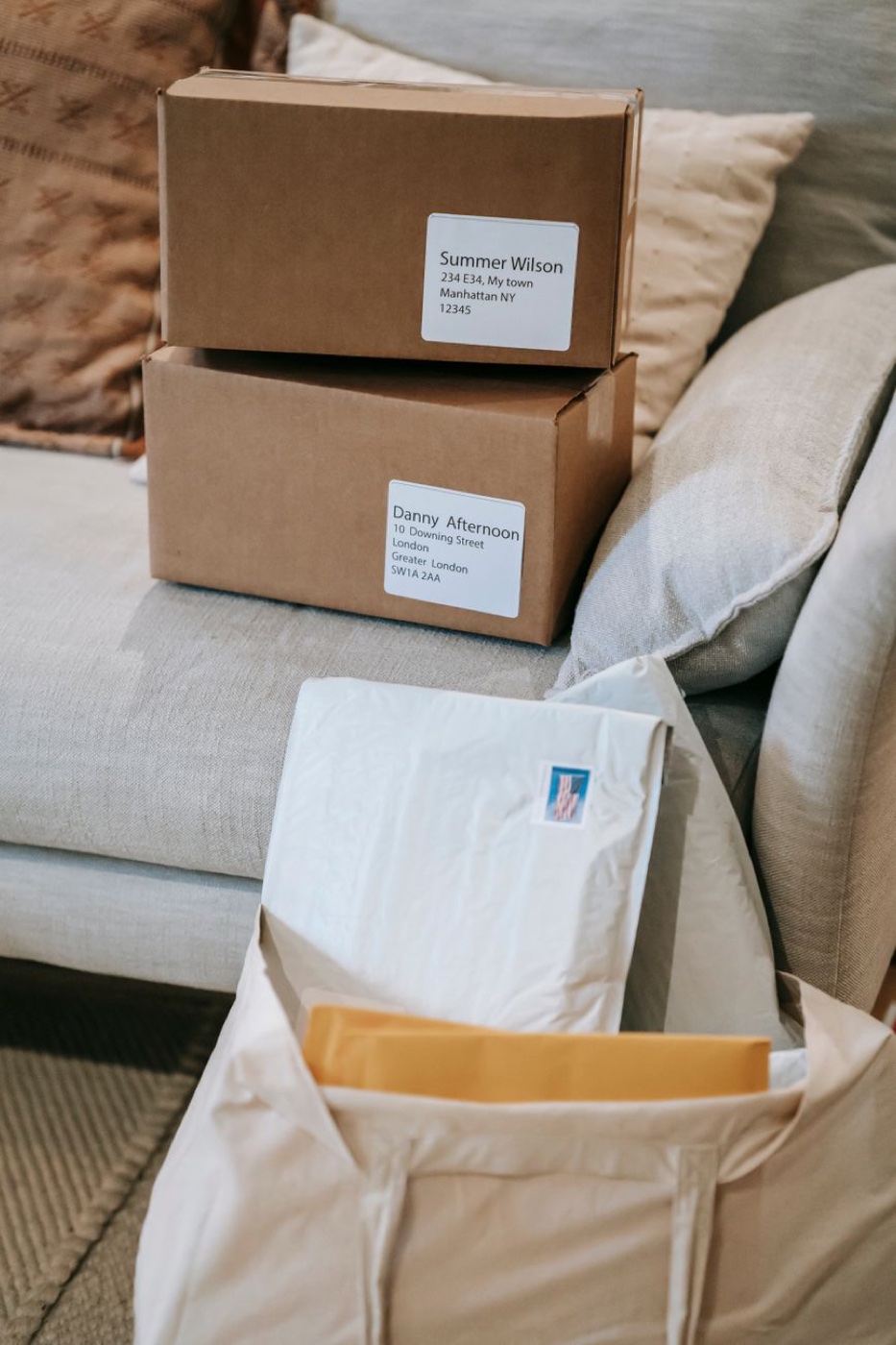
How do I know if I have to pay customs charges?
The declared value written on the outside of the parcel is the number this whole machine runs on, and CBP tells shoppers to make sure the seller writes it properly. Its list asks for a description of the item in English, the quantity, the “Purchase price in U.S. dollars,” the weight, and the country of origin, with a warning attached to that last one: “Be aware that this is not necessarily the country where the item was purchased.” A dress bought in London can be a dress made somewhere else, and the made somewhere else is what gets classified.
Two more lines on that page are aimed straight at the assumption most of us shop under. “As a rule, a purchase price that includes shipping and handling does not include duty or any costs associated with clearing the goods through CBP.” And, on the couriers: buyers “often have the misunderstanding that when the purchase price includes shipping and handling, all the costs associated with clearing the package through CBP are covered by the seller.”
So the honest answer to the search query is that you find out from the seller, in writing, before you click. Read the seller’s page first. If it says duties are included, that’s a commitment you can screenshot. Silence isn’t one.

What does the government’s own fee table actually charge?
CBP publishes its charges to the cent, on a page called the User Fee Table, and the numbers are smaller than the dread around them.
| Fee, as printed on CBP’s User Fee Table | Amount |
|---|---|
| Dutiable Mail Fee | $7.39 per dutiable package |
| Merchandise Processing Fee, informal entries | $2.69, $8.06, or $12.09 |
| Merchandise Processing Fee, formal entries | $33.58 minimum, 0.3464% ad valorem, $651.50 maximum, plus a $4.03 manual surcharge |
| Express Consignment Carrier/Centralized Hub Facility Fee | $1.34 per waybill |
None of those is the duty itself, which depends on classification and origin. And the charge that tends to shock people is on none of them, which CBP says out loud on the shopper page: first time importers get billed for duty, for the processing fee, “and something referred to as ‘customs fees,’ which are actually charges for the services of the broker who cleared your goods through CBP. Customs brokers are not CBP employees.” That broker is hired by the courier, not by you, and its number is set by the courier.
This desk can’t print that number. FedEx’s robots.txt disallows its customs and duty and tax pages to our crawler, so those pages were not fetched, and a fee we haven’t read is a fee we don’t publish.

Practically, the same discipline applies here as at the free shipping threshold: the price on the product page isn’t the price of the transaction, and the gap lives in a document you’ve got to go and find.
What this desk read, and what it couldn’t
Four CBP documents were read in full on September 13, 2026: Internet Purchases, the E-Commerce Frequently Asked Questions, the User Fee Table, and Publication No. 5129. Four retail pages were read the same day: Mytheresa’s shipping page, Dissh’s shipping page, Lucy & Yak’s shipping FAQ, and Totême’s shipping page.
The sample is small because most of the others wouldn’t open. Thirty-three fashion sites and three carriers were tried. Sézane, Rouje, SSENSE, Aritzia and Charlotte Tilbury returned 403 to a plain request. Net-a-Porter, COS, ARKET, GANNI, Princess Polly, Everlane and Farfetch returned 404 at the customer service paths tried, ASOS served its customer care index but 404’d on every delivery path under it, and FedEx disallows its customs and duty pages in robots.txt while UPS and DHL returned 404 at theirs. That’s the third document type in a month that this desk has found closed as a class, and it means the four rows above are the pages that happened to render, not a representative sample of how the trade prints this.
Two things are worth rechecking rather than trusting. The retail pages carry no revision dates, so the Mytheresa sentence may be edited the week after this publishes and nothing on the page will say so. And CBP’s shopper page and its FAQ still describe the $800 line differently, which is a live condition and isn’t a settled one. That’s why this piece is dated.