What Is the Point of Fashion Week? We Counted Last September's 11 Trend Words on Two Racks
New York opens its spring 2027 shows today. Last September's spring lists named eleven things you could type into a search box, so we typed all eleven into two shops and wrote down what came back.
 ·
· 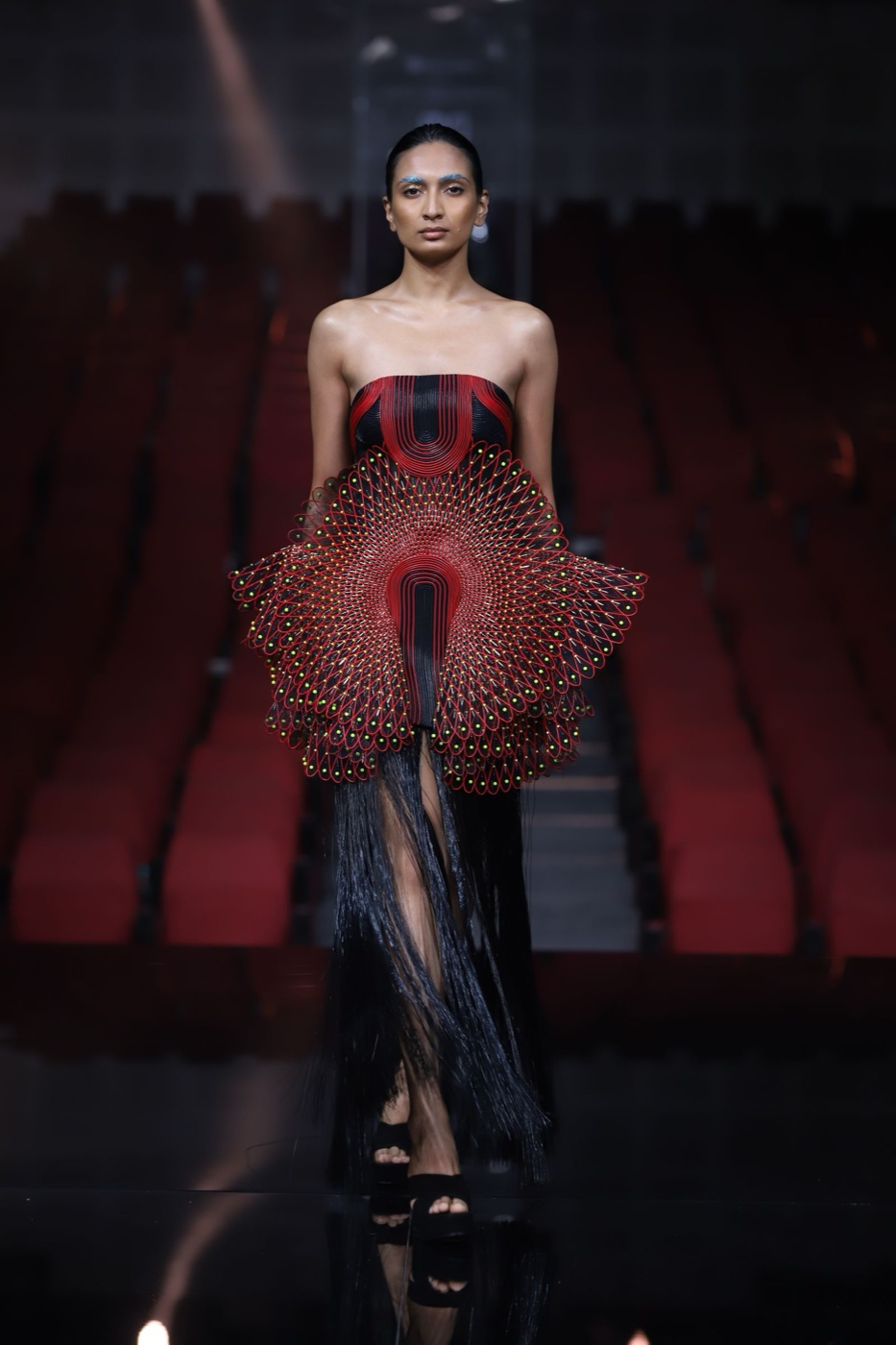
On September 18, 2025, Who What Wear published a spring list under the headline “According to NYFW, Everyone Will Wear These 6 Trends by Spring 2026”. Three days before that, Coveteur had run six of its own, reported from the same shows and signed by two named editors. Neither list was careless work. Both were assembled the way trend reporting is supposed to be assembled, with editors in the room, designers cited by name, and a shape or a color repeated across enough collections that it looked like agreement instead of coincidence. Anyone who read those two pieces in September 2025 and walked away expecting a cerulean, polka-dotted, heavily belted spring was reading closely.
New York opens again today. The CFDA’s preliminary schedule lists 70 runway shows and presentations between Henry Zankov’s Diane von Furstenberg debut this morning and Thom Browne on the fifteenth, and by Friday the spring 2027 versions of both lists will exist. Before reading them, it seemed worth going back to check the last set against the only place the reader ever meets a trend, which is a shop.
How do you grade a trend forecast a year later?
Grading a forecast requires an instrument the forecaster doesn’t control. The one used here was the search box at two shops the target reader already buys from: Anthropologie in the United States, and ASOS, which covers the same twenty-something wardrobe on both sides of the Atlantic. Both print a total on the results page. Anthropologie says “497 products.” ASOS says “1,791 styles.” Neither number is a page count, which was checked by searching a word that has to return thousands. “Dress” comes back at 5,673 on Anthropologie. The counter works.
Twelve trends were named across the two lists. Eleven of them reduce to a word a shopper could actually type, and those eleven were run through both shops on September 9 and 10, 2026, through the same public reader channel for each. The twelfth, Who What Wear’s “modern femininity,” was left out because there’s no search term in it, and pretending otherwise would have meant inventing one.
What this counts is the word, not the garment. A shop can carry a cerulean sweater and file it under “blue,” and no search for “cerulean” will ever find it.
The limit is real, it runs through everything below, and the last section is about what happens when you take it seriously.
Which of the eleven words did the racks keep?
Five of the eleven came back in the hundreds or thousands at both shops. Four came back under 100 at one shop or both. The split runs almost exactly along one line, and it isn’t the line the lists were drawn on.
| Word named in September 2025 | Named by | Anthropologie | ASOS |
|---|---|---|---|
| polka dot | Coveteur | 497 | 1,791 |
| animal print | Coveteur | 841 | 1,272 |
| fringe | Who What Wear | 431 | 594 |
| pendant | Who What Wear | 584 | 176 |
| peplum | Coveteur | 281 | 451 |
| bomber jacket | Coveteur | 100 | 541 |
| polo shirt | Who What Wear | 60 | 1,125 |
| pencil skirt | Who What Wear | 29 | 363 |
| headscarf | Coveteur | 49 | 88 |
| statement belt | Who What Wear | 35 | 29 |
| cerulean | Who What Wear | 19 | 5 |
Read the top of that table and you’re looking at polka dots, animal print, fringe, pendants and peplum. Every one of them is a merchandising category that predates the forecast by decades.
Polka dots weren’t invented at Khaite in September 2025. Coveteur’s own editor said as much in the piece, writing that “we already knew that polka dots weren’t going anywhere and New York Fashion Week affirmed it.” The forecast was right about the things that were already true.
Now look at the bottom four. A way of tying a scarf, a belt worn where a belt isn’t needed, a shape of skirt, a specific blue. Those were the genuinely new calls, and they’re the ones sitting on two-digit counts.
What happened to cerulean?
Cerulean was Who What Wear’s opening item, described as the first thing everyone on the team mentioned. A year on, Anthropologie’s search returns 19 results for it and ASOS returns 5, which ASOS labels “page 1 of 1.”
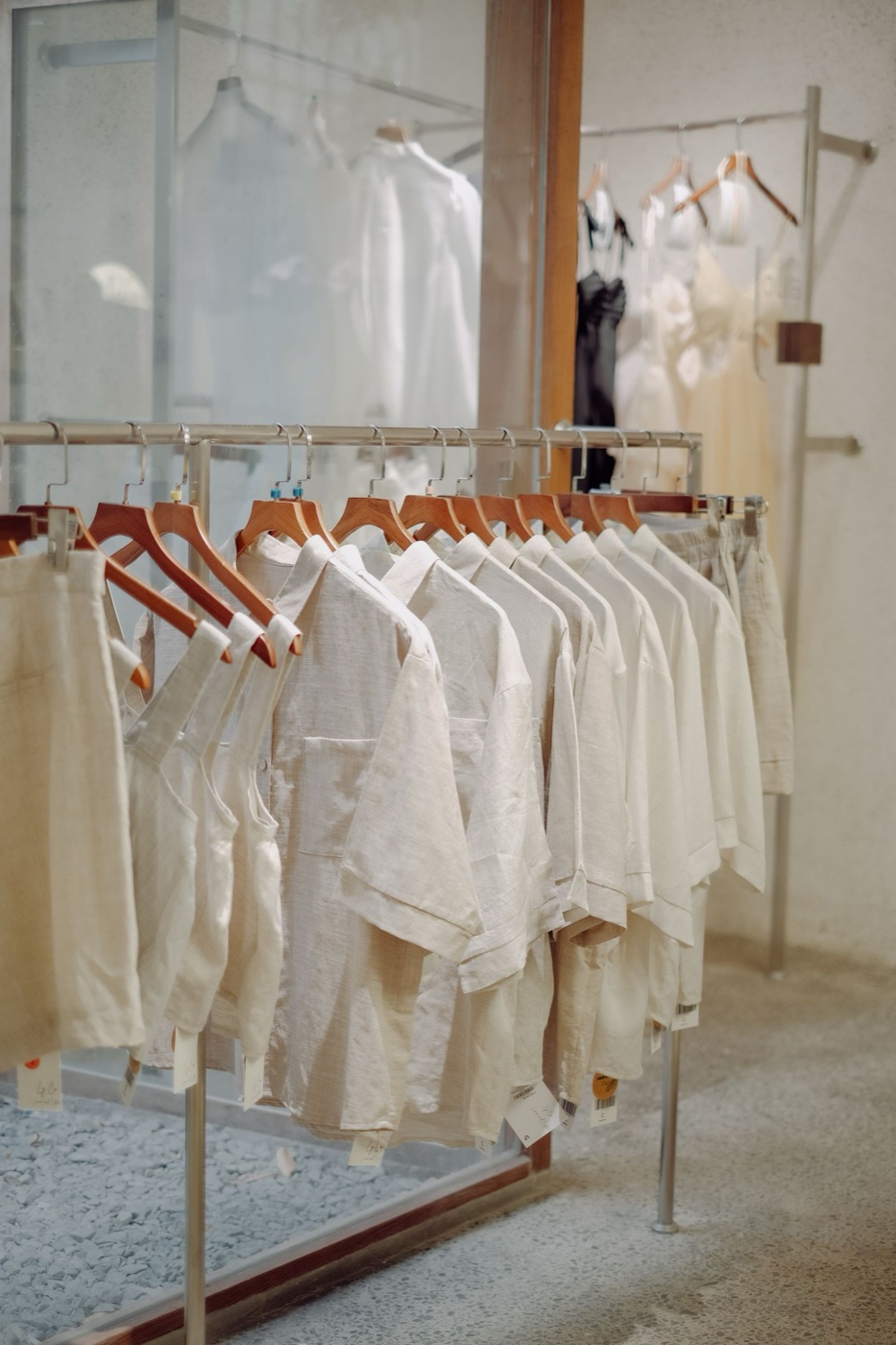
ASOS reports 5 styles and renders 3 distinct products, and those three are worth naming: a slinky bandeau maxi dress “in cerulean blue,” a heavyweight cotton cropped tee “in washed cerulean,” and a cropped high-neck gym tank “in cerulean.” Where the other two styles went, the page doesn’t say, and guessing would be inventing.
On Anthropologie, only two of the 19 results print the word in the product name at all, and they are a roll of wallpaper and a tin of House of Hackney paint. Two more carry it as a colorway, “Cerulean Painted Petals” and “Undyed With Cerulean.” So the runway color that opened the list survives on those two sites mainly as a gym tee and something you put on a wall.
Could the fall calendar explain the low counts?
Fall is the obvious objection, and it’s a good one. Spring 2026 merchandise sold from roughly February to June, and a rack read in September 2026 is stocked for autumn, so a spring color should be thin by now. That competing explanation was checked against a set of control words never named on either list. “Stripe” returns 2,519 and 6,135. “Jeans” returns 3,026 and 5,789. “Cardigan” returns 289 and 4,561. A September rack isn’t a rack that’s stopped printing words.
The vocabulary objection is stronger, and it’s the one that survives. Search “blue” instead of “cerulean” and the counts jump to 10,069 and 10,720. Search “belt” instead of “statement belt” and 35 becomes 547, while 29 becomes 1,036. The color exists, and so do the belts. What doesn’t exist is the shop’s willingness to speak the forecast’s language, and for a reader standing at the search box that amounts to the same thing.
So what is fashion week producing, if not your next purchase?
Fashion week produces agreement among people whose job is to notice, and the two lists prove that much: they were reported independently and they overlap on prints, on texture and on the idea that spring would be busier than the season before it. Agreement is a real finding. Predictive power over your closet is a different claim, and nothing in these counts supports it.
The practical version is short. When a spring 2027 list lands this week, run each item through the search box at the shop you actually use before you believe you need anything. Words that come back in the thousands are things you could have bought last year and can buy next year, which means there’s no hurry. Words that come back with two digits are not a shopping instruction. They’re a description of a room in Manhattan you weren’t in, and the room is allowed to be interesting without being about you. Our cross-reference of the fall 2026 trend lists found the same gap running the other way.
None of this was tried on. Nothing here is a claim about whether a peplum suits you, and a count is not a review.
The next reading is already scheduled. When the spring 2027 lists publish this week, every searchable word in them goes into a file, and the same two shops get the same eleven-column treatment on September 10, 2027. Same instrument, same day of the calendar, published either way.