When Do Boots Go on Sale? Nine Autumns Rule Out the Two Months Ahead of You
Nordstrom's pre-season boot discount closed on August 9. Black Friday is 97 days out. The months in between are the ones the shoe floor is built to sell in, and the federal price index has a long-running opinion about what they cost.
 ·
· 
L.L.Bean’s homepage this morning led with one line across the top: Summer Savings, 30 to 50 percent off warm-weather favorites. Same site, same minute, the fall boots sat at list. That arrangement is running on nearly every apparel homepage in the country right now, and it is not a coincidence or a conspiracy. The markdown points backward at the season that’s leaving. The thing you came for is the season arriving, and it costs what it says on the tag.
Which makes “when do boots go on sale” a genuinely good thing to type. Autocomplete keeps the sentence going for you: when do winter boots go on sale, when do boots go on clearance, do Timberland boots go on sale for Black Friday. What comes back is a stack of coupon blogs, a credit union blog, and a page that appears to have been written by a machine that has never met a boot.
So I went to the price data instead.
The Bureau of Labor Statistics publishes a monthly index for women’s footwear, unadjusted, going back decades, and it is the closest thing that exists to a public record of what shoes actually cost month by month. I pulled it from 2016 forward and sorted it by calendar month.
When do boots actually go on sale?
Averaged across the nine complete years from 2016 through 2024, the women’s footwear index sits 1.9 percent below its own year’s average in January and 1.4 percent above it in October, which is the widest spread on the calendar. September is the runner-up for most expensive. The two cheapest months of the shoe year are January and December, in that order.
| Month | vs. that year’s average |
|---|---|
| January | -1.92% |
| December | -1.62% |
| July | -1.41% |
| June | -0.35% |
| November | -0.18% |
| August | +0.01% |
| May | +0.19% |
| February | +0.39% |
| April | +0.69% |
| March | +1.38% |
| September | +1.40% |
| October | +1.42% |
One honest caveat before anyone screenshots that table. The index tracks average prices paid across all women’s footwear, sandals and sneakers and snow boots together. So it isn’t a markdown tracker for one pair of knee-highs. It tells you which way the whole floor is leaning and how reliably. It doesn’t tell you that a specific boot will be 30 percent off on a specific Tuesday.
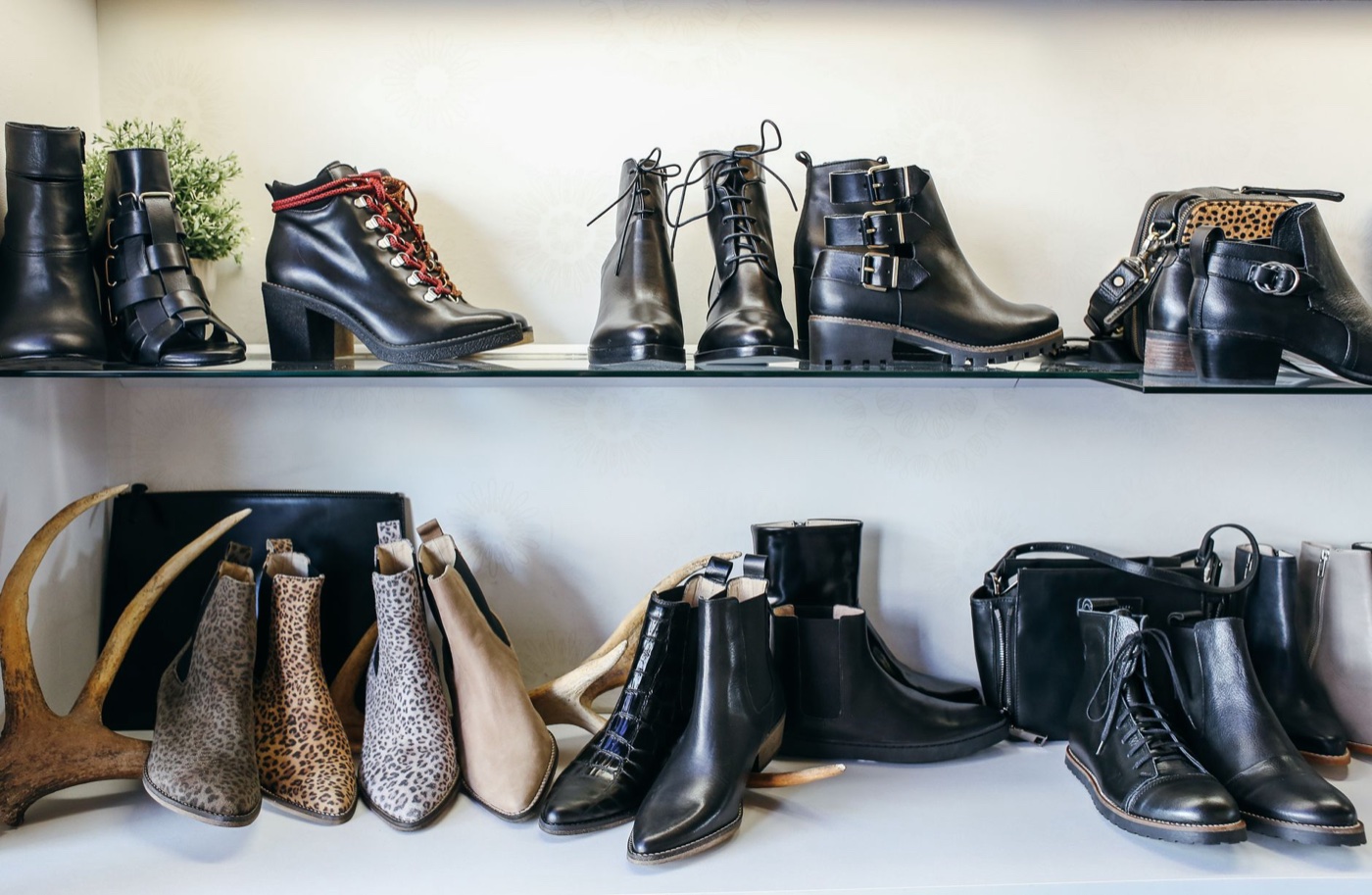
Are boots cheaper in January than in the fall?
In every one of the nine years from 2016 through 2024, the January women’s footwear index came in below the previous October, by an average of 2.9 percent. Nine for nine. The biggest drop was the winter of 2016 into 2017, at 5.2 percent, and the smallest was the winter of 2021 into 2022, which was basically a flat line at 0.05 percent, back when nothing in a supply chain was behaving.
Last winter is missing its October reading, so I ran it from September instead: 136.7 in September 2025, 132.1 in January 2026, down 3.4 percent. The pattern held in the most recent year we have.
That is the whole finding, and it’s worth being precise about what kind of finding it is. The direction is close to a law. The size is modest. If you’re picturing a 40 percent clearance rack, the index is not promising you one, it’s promising you that the wind blows one way from Halloween to New Year’s and the other way from February.
Why do boots cost more in September?
September raised the women’s footwear index in all ten Septembers from 2016 through 2025, by an average of 1.5 percent in a single month, and it’s the only month in the series with a perfect record of going up. February’s post-clearance reset is bigger on average, at 2.3 percent, but February has missed once. September never has.
The retail calendar explains itself here. New season, new assortment, full ticket. And the one large pre-season discount on the American calendar already came and went: Nordstrom’s Anniversary Sale, which its own press room describes as “new fall fashion at sale prices from July 18 through August 9.” The 2025 edition ran July 12 to August 3 with what the company branded Anniversary Big Deals, up to 50 percent off select items, per Retail Dive’s coverage that June. Both editions closed before Labor Day. That sale is the inversion in the year, new goods marked down before the season instead of old goods marked down after, and it’s over.
Is Labor Day a good time to buy boots?
Labor Day lands on September 7 this year, sixteen days from now, and the clothing promotions attached to it are aimed at summer inventory, which is exactly what L.L.Bean’s banner is doing with its warm-weather favorites. We went through the Labor Day math in more detail when the banners went up last year, and the shape hasn’t changed: real discounts, wrong season. If you want a linen shirt in September, that weekend is yours. Boots aren’t in the sale.
The same logic runs through everything on the floor in August. The clearance right now is on July’s clothes, and the full-price wall is on October’s.

How much do boots actually drop on Black Friday?
Adobe Analytics put the apparel discount at its Cyber Monday peak at 25 percent off listed price in 2025, easing to 18 percent through early December. Footwear doesn’t get broken out separately, so treat 25 percent as the neighborhood rather than the number. Black Friday is November 27 this year, 97 days out.
Ninety-seven days is a real cost, and I’m not going to pretend otherwise. It’s most of the fall.
You’d be wearing last year’s boots through the part of the year when boots are the entire point, which is a genuine argument for paying October’s price and being done with it.
But the index does the same thing it did to knitwear. When I ran the federal numbers for sweaters earlier this week, the shape was identical: a climb into September, the hard drop in November, the floor in December and January, a reset in February.
Two different departments, one clock. And the coats follow it too, which is why the winter coat piece lands in the same place.

There’s a catch in January that the index can’t see, and it’s the same one that kills every wait-for-the-clearance plan. The cheapest month is also the emptiest. Nine for nine on price says nothing about whether your size is still on the shelf in January, in the width you need, in the one pair you actually wanted.
Which leaves two situations. If last year’s pair still zips, the calendar isn’t asking anything of you until Thanksgiving week, and you can walk past the whole wall between now and then. If it doesn’t zip, or the sole is gone, buy the boot. A wet sock in October costs a lot more than 2.9 percent.