Are Peplum Tops Back in Style? The Answer's Been Hanging in a Denver Museum Since 1947
The peplum has been declared back five times in ten months, each time with a clause about the one already in your closet: too jersey, too clingy, too 2013. I walked the clause past two museum holdings, one April shopping list, and a $25 jersey top, and took notes on what survived.
 · · Updated September 3, 2026
 The Denver Art Museum keeps a jacket with engineered hips. Cream silk shantung on top, a full pleated black wool skirt below, and between them a padded flare that pushes outward from the waist, built to hold its curve whether or not a body is inside. The plaque reads Christian Dior, Bar suit, spring 1947: the collection the press named the New Look. It is, by any definition, a peplum. The museum files it under permanent collection, not under trend.
Fashion media files the same shape differently. Five mastheads have spent ten months treating it as breaking news, and each announcement arrives in the same two sentences. Sentence one: it’s back. Sentence two: not the one you own. InStyle promised in October 2025 that the new crop “takes the ugly out of the nostalgia-driven trend.” Elle Singapore put the clause in the headline itself in March 2026: “The Peplum Is Back, But Not As You Remember It.” Who What Wear’s Ana Escalante conceded in April 2026 that “peplum tops are officially back,” with a “much-needed refresh.” WWD filed it in June under “A Reviled 2010s Trend Is Suddenly Hot Again.” Coveteur’s fall report, published in late August, calls peplum “a central theme this season.”
Google autocomplete shows who’s actually reading. Type “peplum” and it offers “are peplum tops back in style 2026,” “is peplum coming back,” “are peplum tops still in style,” and, plaintively, “is peplum flattering.” Those are owners, not discoverers. They kept the top.
Are peplum tops back in style in 2026?
Yes, per five separate declarations since October 2025, and the evidence behind them is runway-wide rather than one editor’s hunch. For spring 2026, Phoebe Philo sent out a backless white tank with a ruffle curving across the waist, Dries Van Noten showed a gray bustier peplum under Julian Klausner, and Adam Lippes built whole looks around what he called “the silhouette of an accentuated waist.” By the fall 2026 shows it was a bloc: Dior under Jonathan Anderson with bar jackets flaring outward, Alexander McQueen with a sharper, near-gothic cut, Genny, Aknvas in denim, Stella McCartney folding it into plain tailoring. When WWD says “suddenly hot again,” the “suddenly” is doing a lot of work. InStyle called it eight months earlier.
What interests me is the fine print, because every single declaration comes with one.
| Outlet | When | The declaration | The clause about yours |
|---|---|---|---|
| InStyle | Oct 2025 | “a style renaissance” | new crop “takes the ugly out of the nostalgia-driven trend” |
| Elle Singapore | Mar 2026 | back on the runway | “Not As You Remember It”; “the instinct to cringe is valid” |
| Who What Wear | Apr 2026 | “officially back” | “much-needed refresh”; recalls the “business-casual clubwear top” era |
| WWD | Jun 2026 | “suddenly hot again” | “before you dust off that American Apparel one from the depths of your closet” |
| Coveteur | Aug 2026 | “a central theme this season” | filed under refined proportion play |
Two of the five reach for the same phrase. InStyle’s peplums got a “much-needed upgrade,” Who What Wear’s a “much-needed refresh.” The comeback copy is itself a reissue.
What do the new peplum tops have that yours doesn’t?
Four specs, per the 2026 coverage: cleaner lines, softer structures, more wearable proportions, more sculptural shaping. Elle Singapore gets concrete for exactly one clause and rules out “clingy jerseys.”
Now read the shopping list published under Escalante’s April piece. It includes an H&M bandeau peplum at $13, an H&M ponte peplum at $20, a Zara top at $36, an Aligne ponte top at $165, a Reformation jacket at $298, an A.L.C. trench at $595, and a Liberowe linen jacket at $2,200. Also on the list, sitting right there among the approved: an H&M jersey peplum top, $25. The fabric one outlet named as the mark of the old shame is for sale on another outlet’s list of the new virtue, for less than lunch for two.
So the refinement thesis runs $13 to $2,200 and includes jersey. I can’t find the spec that separates a cringe peplum from a sanctioned one, and I went looking. Cut? The 2026 versions flare from a dropped or corseted seam, but so did plenty of 2012 ones. Fabric is disproven by the list, price cleared the bar at $13, and the one variable that reliably differs is the year on the receipt.
Adam Lippes, to his credit, said the honest part out loud. “As newer generations are introduced to these silhouettes, it’s inevitable that it would be an exciting ‘new discovery’ for them,” he told WWD. “That’s the nature of the fashion trend cycle.” A comeback pitched at people who were in middle school the first time around, not at owners deciding whether to re-wear.
Was the peplum ever actually gone?
Not according to the institutions that keep one under glass: the Museum of Classical Archaeology in Cambridge holds a cast of the Peplos Kore, carved around 530 BC and named for the garment on it, and the Denver Art Museum holds the 1947 Bar suit. An ocean east of Denver, the holdings just get older. Cambridge displays the plain plaster cast beside a reconstruction painted the way the Greeks originally saw it, red and blue and unembarrassed.
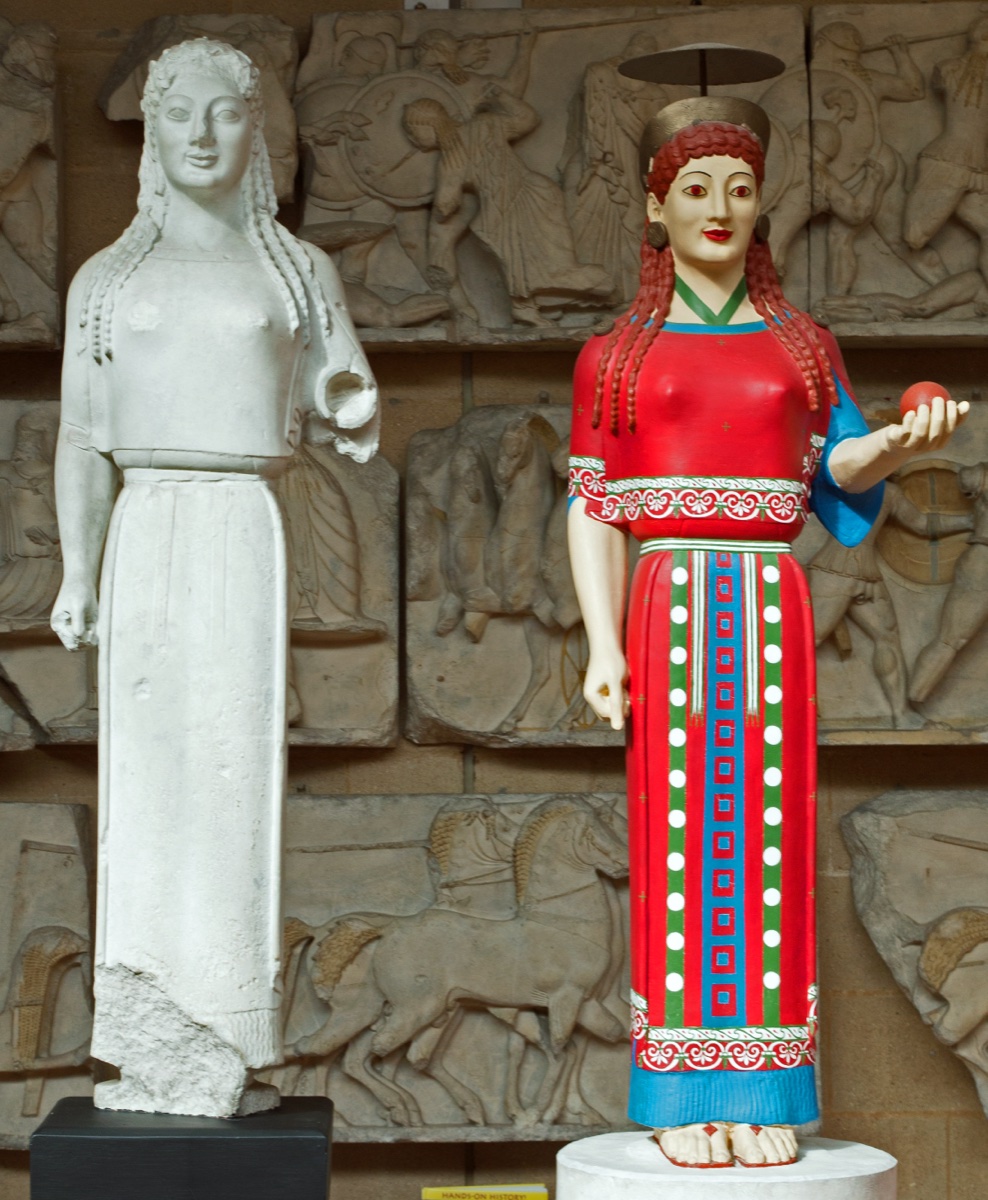
Elle’s own history section traces the shape from the Greek peplos through the 1940s, a sharper 1980s pass, and what it calls “peak saturation in the 2010s.” “Dior leads the revival in Paris, as it should,” the same outlet writes, and the phrasing is more loaded than it looks. The bar jackets flaring outward on Anderson’s fall 2026 runway are descendants of the suit in Denver, hips engineered outward since 1947.
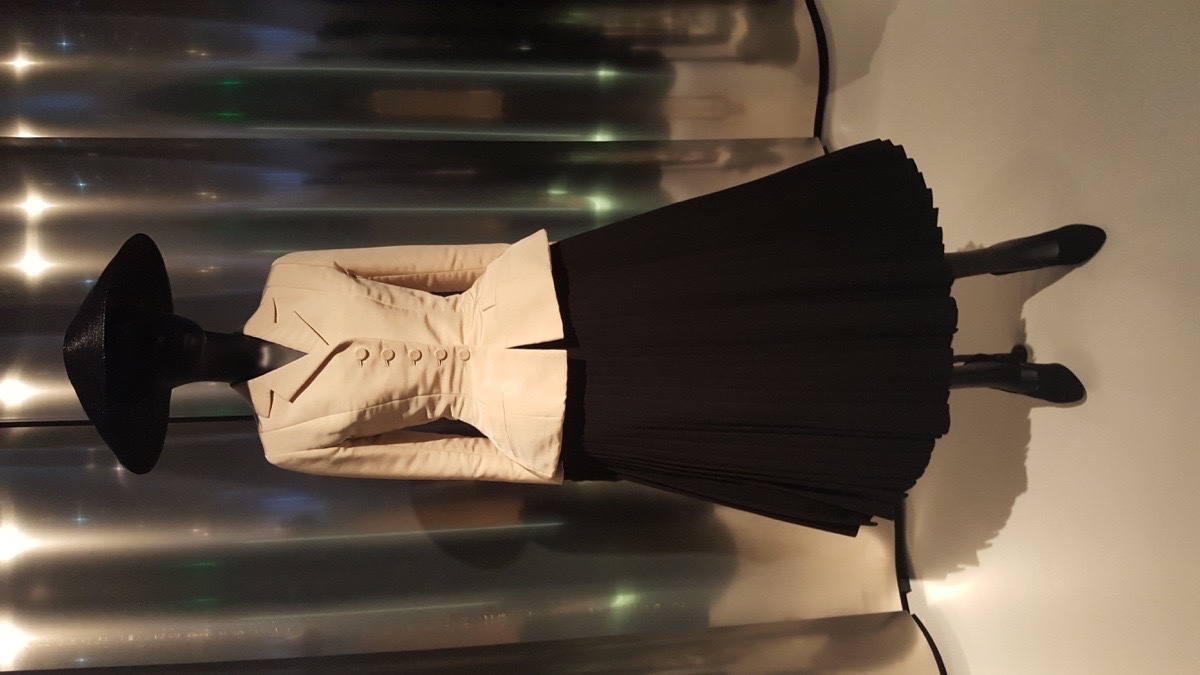

Which means “back, but not as you remember it” has been true at every single return. The 1980s version didn’t honor Dior’s proportions. The 2010s version didn’t honor the 1980s. A silhouette this old doesn’t come back wrong; it comes back in whatever fabric the decade is selling.
Can you wear the peplum top you bought in 2013?
A 2013 peplum in structured cotton or ponte matches the published specs of the 2026 wave nearly clause for clause. The last stop on this tour is a hedge, photographed in July 2012, at the exact peak the current coverage keeps apologizing for. Here is what the alleged emergency actually looked like: cotton or jersey, a flare off the natural waist, skinny jeans below, a structured bag on one arm.
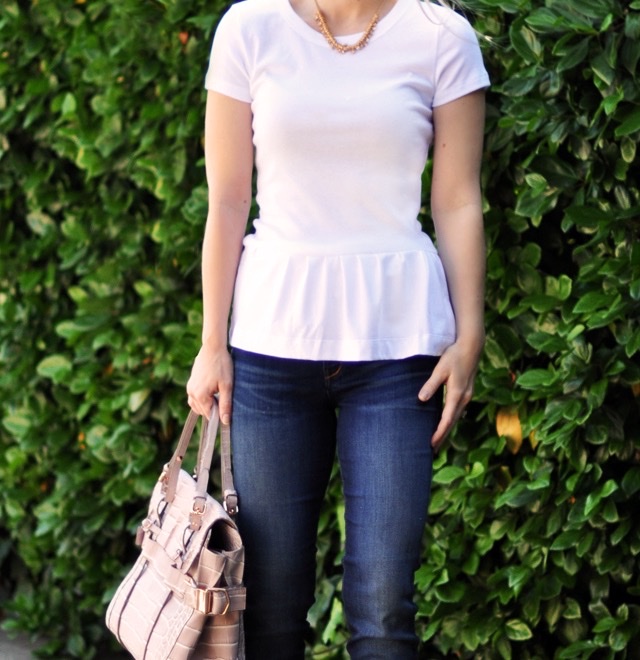

Does that photograph read as an emergency? It reads as a white top. Nobody at street level runs a fabric inspection. Wear it with the wider trousers you already own instead of the skinny jeans, since the bottoms, not the top, are what actually date the photo. If yours was clingy jersey and you hated it, that opinion was yours before it was an editor’s, and it’s still valid.
Standard disclosure: none of the 2026 crop has been through my hands, and this is an audit of quotes, shopping lists, and museum plaques rather than a fitting-room report. But the fitting-room question had a desk answer the whole time, and if you purged yours years ago on a magazine’s advice, the same industry that told you to toss it would now like to sell it back at anywhere from $13 to $2,200. We watched this exact mechanism run on 2016’s trends, and on leopard print’s “neutral” license, and the verdict transfers: check the drawer before the cart.
So, one more look at “back, but not as you remember it.” The line is on its fifth tour of duty, and after walking it from a museum in Denver to a cast in Cambridge to a hedge in 2012, I’d retire it. Nothing about this shape depends on your memory. A silhouette that has held its flare since 530 BC doesn’t come back, doesn’t leave, and doesn’t ask what you remember. It waits. The receipts are the only thing that changed.