Does Dry Clean Only Mean Only? What That Tag Is Actually Allowed to Claim
Two words in the collar decide whether a sweater costs $98 or $98 plus a bill every season. The federal rule that governs those words says one of them is a warning a brand has to be able to prove, and the other one is not.
 · · Updated September 6, 2026
Type does dry clean only really mean only into a search bar and look at who answers you. Dry cleaners answer, and they bill by the garment, so they aren’t going to talk you out of the word. A laundry brand answers, and it sells the detergent that competes with the word. A Quora thread answers, and it can’t agree with itself. None of them wrote the two words sewn into your collar. Those came out of a federal rule with a name, the FTC’s Care Labeling Rule, and the rule treats the phrases you’ve been reading as one instruction as two different legal objects.
The short version, receipts below: “Dryclean Only” is a warning, and a brand that prints it is supposed to be holding proof that washing will harm the garment. “Dryclean” without the “only” isn’t a softer version of the same sentence. It claims nothing about water at all.
Does “dry clean only” really mean only?
Under the FTC’s Care Labeling Rule the word “only” is reserved warning vocabulary, and the agency’s compliance guide puts the burden in one line: “you can’t say ‘Dryclean Only’ unless you have proof that washing will harm the garment.” The same guide repeats it later, in case anyone skimmed: “Remember that ‘Dryclean Only’ warns that the garment can’t be washed.”
Warnings have to use “Do not,” “No,” or “Only,” and behind each one the brand is supposed to hold evidence of harm rather than a hunch. On a wool sweater a factory has made the same way for thirty years, that’s a low bar. Still a bar, though. And the compliance guide counts 16 enforcement actions since 1990, with penalties as high as $300,000.
| What the tag says | What the brand needs evidence of | What it doesn’t claim |
|---|---|---|
| Machine wash cold | The garment survives machine washing, cold | Nothing about drycleaning |
| Hand wash | The garment survives hand washing | Nothing about the machine, and silence isn’t a warning |
| Dryclean | Standard drycleaning, any solvent, is safe | Nothing about washing |
| Dryclean Only | That washing will harm it | This row is the warning |
| Professionally dryclean. No steam. | The normal process needs modifying | On its own, “professionally dryclean” isn’t an adequate instruction |
| Do not wash, do not dryclean | Both would harm it | Nothing left to try |
Can you wash something labeled just “dryclean”?
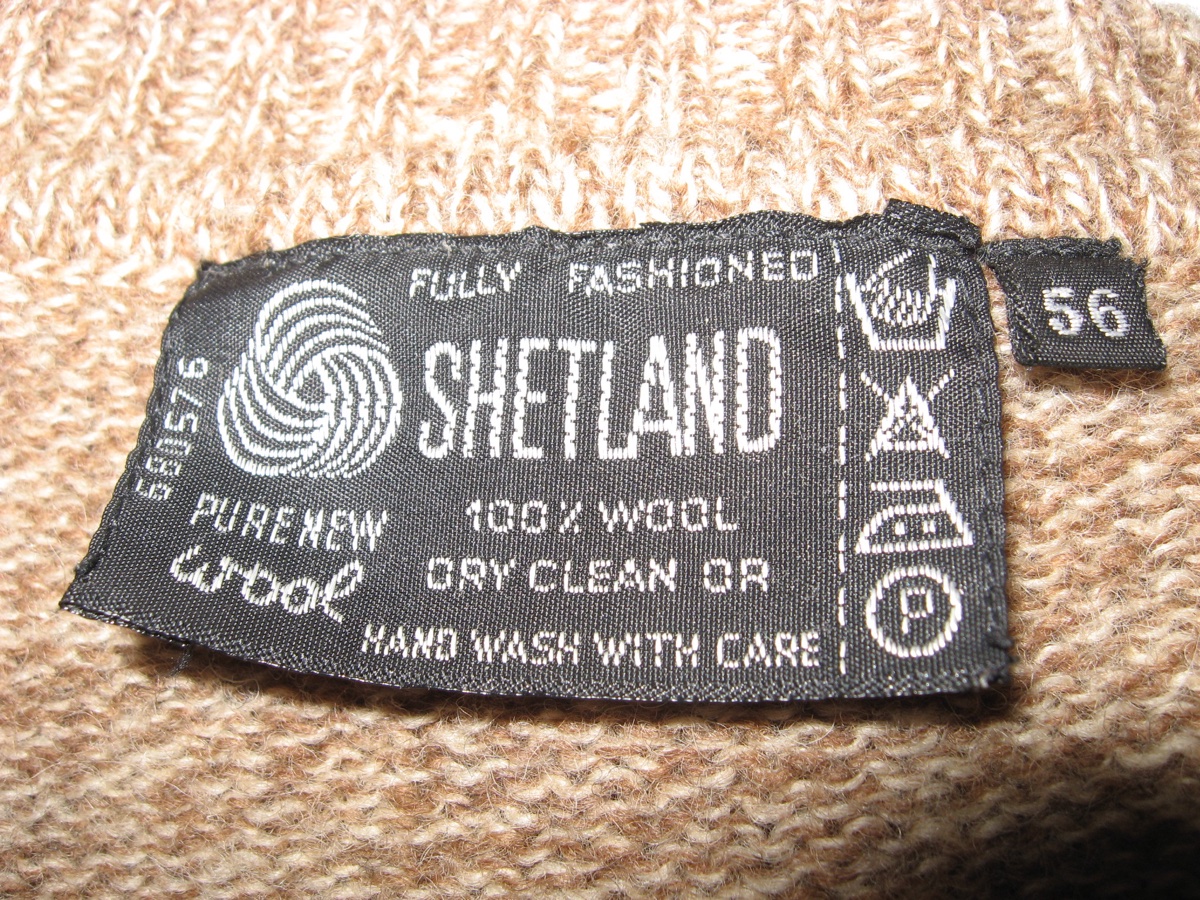
A “Dryclean” tag with no “only” attached makes no claim about washing, because 16 CFR 423.6, call it the one-instruction clause, requires a label to carry exactly one workable method: “If either washing or drycleaning can be used on the product, the label need have only one of these instructions.” One instruction, not a census of everything the garment survives.
You read the tag as the full list of options. The clause never asked it to be.
Why do wool sweaters say dry clean at all?
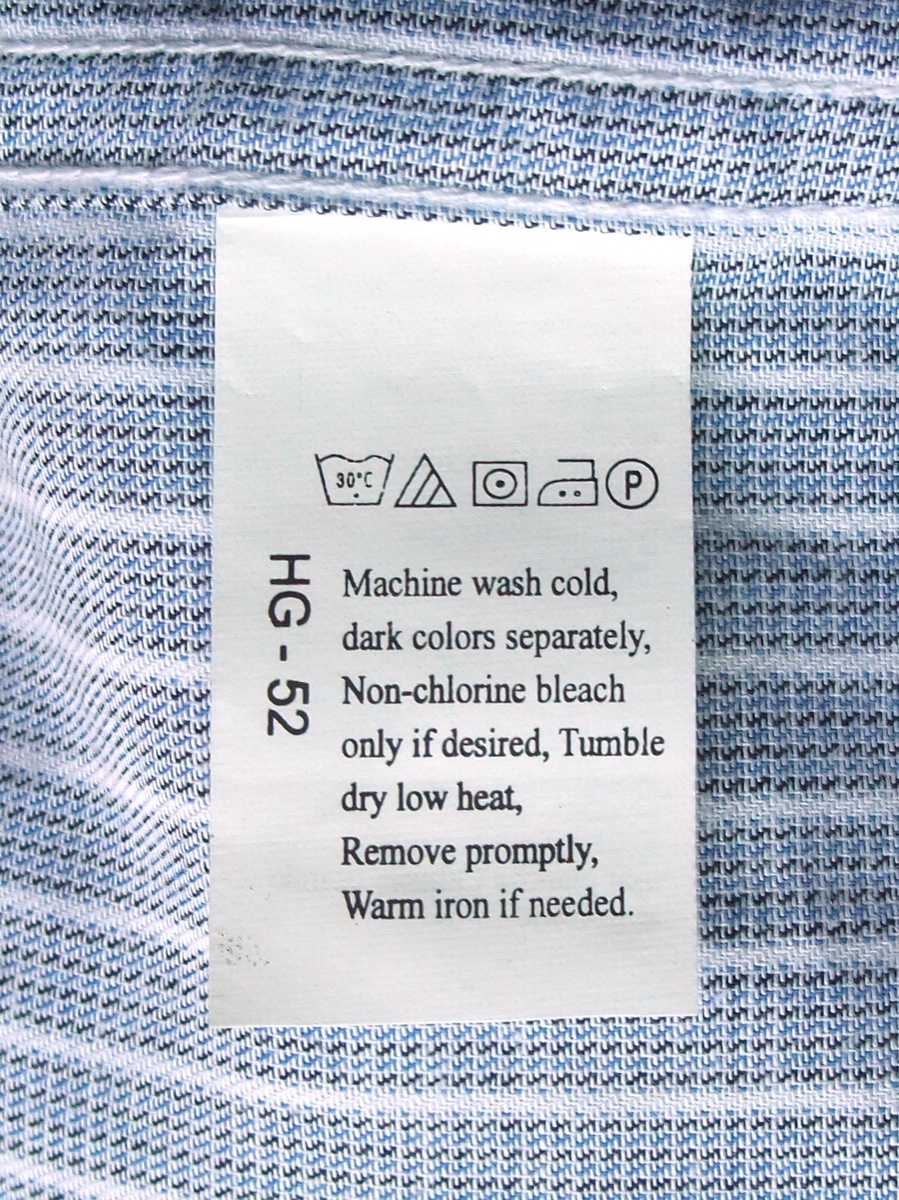
Woolmark, wool’s own industry body, says on its care pages that “these days, many wool products can be washed in a domestic washing machine,” while still telling you to follow a “Dry Clean Only” claim where a brand has printed one. Pendleton is blunter about where the word comes from. Its washable shirts, the company says, “are made with a fabric that has been treated with a special process to seal the scales of wool fiber,” and its Sir Pendleton shirts, made without that finish, are dry clean only.
The tag is tracking a factory process, not a fiber.
Two things you don’t get from any of this. We haven’t washed anything to test it, and the rule governs what a brand has to be able to prove, not what your particular sweater will survive on a Tuesday. Silence on a label isn’t permission either. It’s silence. Asking your cleaner before you switch methods costs nothing. What the words cost is easier to count: a coat runs $32.99 a visit at the chain we priced, sweaters less, and the season is long.
And the strongest reason to count the words in your collar comes from the counter that cashes in on them. The Drycleaning and Laundry Institute is the trade association for the people you’d be paying, and its own consumer page volunteers the sentence that shrinks its members’ tickets: “Manufacturers are only required to list one safe method. A garment labeled ‘Machine Wash’ may also be safely drycleaned, and vice versa.”