Is the Friends and Family Sale Worth It? We Priced All 265 Excluded Styles Before This One Closes
One denim label is running a Friends and Family event right now, and its own catalog publishes both racks in the open. Readers who pull the numbers on a Saturday in September get an answer before the code expires on the 30th.
 ·
· 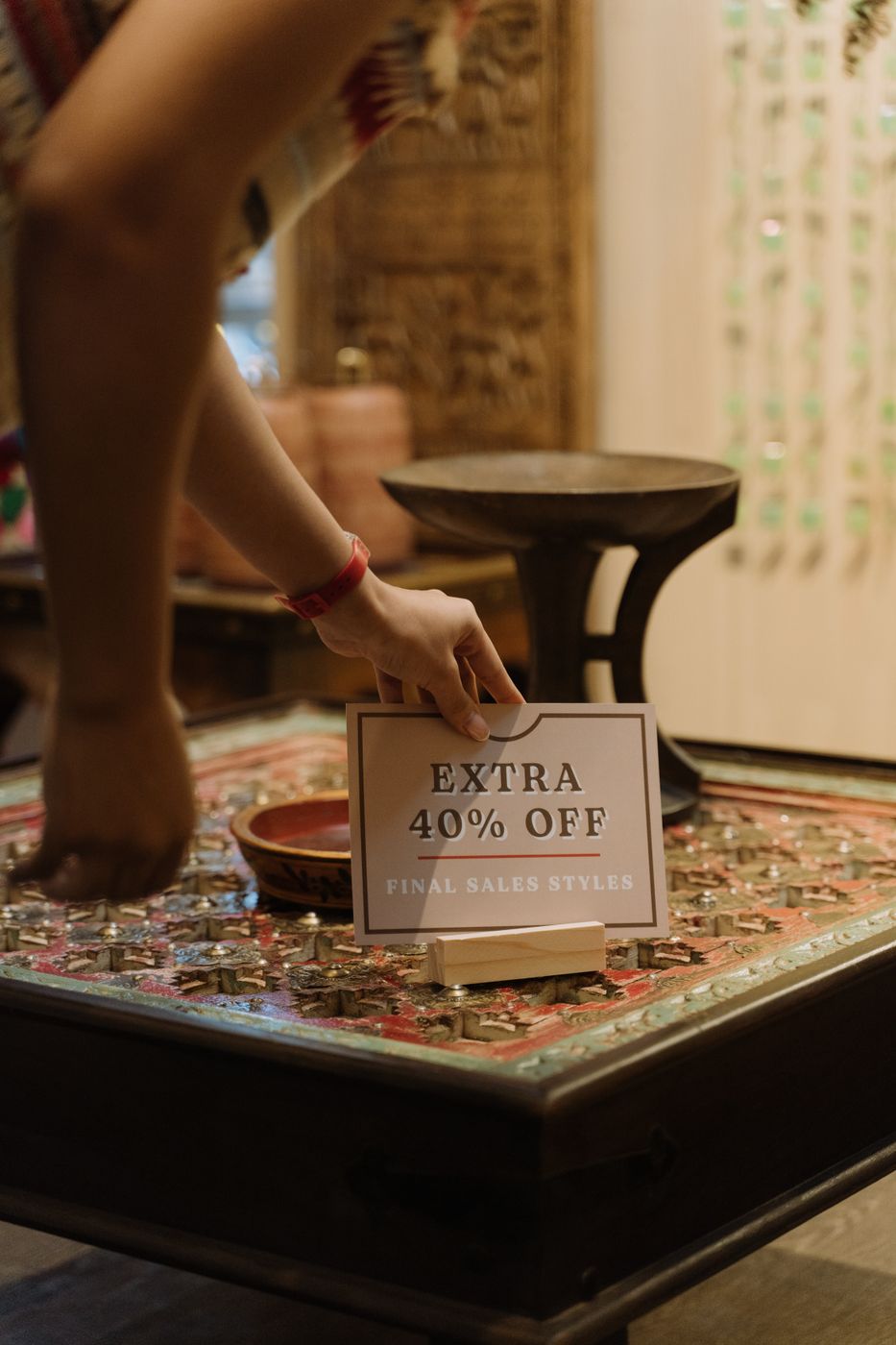
The number on the sign is the worst-performing piece of information in a promotional sale. Shoppers read 25 percent or 40 percent and treat it as depth, when the sentence that decides the price is always the small one underneath about which rack the number is allowed to touch. So this desk stopped reading signs. On Saturday, September 20, 2026, with a Friends and Family event live and its posted close still ten days out, we pulled one brand’s entire public catalog through its US route and counted both racks against each other, style by style.
AG Jeans posts its terms in full. The Fall 2026 event runs “from Thursday, 9/17/2026 12:00 AM EST to Wednesday, 9/30/2026 11:59 PM EST,” gives 25 percent off all full-priced styles, and carries one clause that turns out to do all the work: “The promotion excludes previously marked down styles.”
What is a friends and family sale, in the terms rather than the marketing?
A friends and family sale is a promotional discount a retailer schedules in advance, and the terms split into two opposite designs that behave nothing alike. AG’s design applies a flat percentage to full-price stock only. Macy’s design does the reverse: its posted page offers “EXTRA 30%, 25%, 15%, OR 10% OFF items labeled FRIEND” and says plainly that “extra savings % applied to already-reduced prices.”
Readers standing in front of the first design and readers standing in front of the second are being offered different products under one phrase. In the first, the discount and the markdown rack are mutually exclusive, while in the second they stack, but only across the subset of items a buyer has tagged.
| The design | What the percentage touches | What it cannot touch | Where readers meet it |
|---|---|---|---|
| Flat percentage, full price only | Styles carrying no markdown | Anything on the sale rack, outlet stores, other offers | AG Jeans, 25 percent, Sept. 17 to 30, 2026 |
| Extra percentage on reduced price | Regular, sale and clearance prices on tagged items | Everything not labeled FRIEND, plus 30 named categories | Macy’s, extra 30 percent on apparel |
| Percentage on a named past collection | The collection named on the page | Whatever “select styles” covers, unlisted | A.P.C. US, 25 percent, Pre-Spring 2026 |
How long does a friends and family sale actually last?
Fourteen days, in the one case where a brand printed both timestamps. AG’s window opens 9/17 at 12:00 AM and shuts 9/30 at 11:59 PM, which is a fortnight, not the weekend-long scramble the banners imply. Gap’s version, judging by the banner this desk pulled from gap.com on September 20, had already rolled past its event into a redemption window: “Spend your GapCash by 9/21 on styles already up to 50% off,” with a fallback line offering 30 percent off under the code YOURS. Gap keeps its offer terms behind a Details control that doesn’t render for an automated reader, so we can quote the banner and nothing more.
That’s the good half of the answer, and readers should take it: the clock is mostly theater. The second half is where the money is.
Is the friends and family discount better than the sale rack it excludes?
Not at AG, and the gap is measurable to the dollar. Pulling both collections through the brand’s public catalog on the US route on September 20, 2026, the Friends and Family collection holds 840 styles and the sale collection holds 265, with the full catalog at 1,106 and zero styles appearing in both. Every one of the 265 sale styles carries a printed markdown. None of the 840 event styles does.
Then the depths. All 265 markdowns land between 29.41 and 30.00 percent off, a single tier that rounds to 30, with nothing deeper anywhere on the rack. The event pays 25. On women’s bottoms, where both racks are deep enough to compare honestly, the 243 event styles have a median list price of $245 and the 100 sale styles have a median former price of the same $245. Twenty-five percent off the first takes a reader to $183.75. The second is already sitting at $172.
Named examples from the same read, so the median isn’t carrying the argument alone: the Dylan Jean sits at $179 against a $255 former price, the Mari Extended Jean at $165 against $235, the Everett 360° Jean at $151 against $215. A reader who wants any of those three gains nothing from the event, because the event is not allowed to look at them.
What gets excluded from a friends and family sale?
Exclusion lists at the department stores run to hundreds of names, and the fall categories are on them. The Macy’s FRIEND page, read September 20, names 237 brand entries across its four exclusion blocks, 236 of them distinct once Calvin Klein’s double listing is collapsed, alongside 30 named categories. Two of those categories are “clothing & accessories” and “coats & jackets,” which is most of what anyone shops for in late September. We’ve taken the anatomy of these rosters apart separately in our audit of what “exclusions apply” covers.
Worth knowing why the list exists, because it isn’t spite. Pricing-compliance guidance from Wiser Solutions tells retailers running coupon promotions to “state clearly which items are excluded from the coupon,” since advertising a discounted price on a minimum-advertised-price brand breaks the agreement with that brand. The roster is a compliance artifact. Read the other way, it’s also a free map of which labels never discount, which is the more useful thing on the page. Save the list.
Can you stack a friends and family code with anything else?
No, on both designs, and the clauses are blunt about it. AG’s terms state the discount “may not be combined with any other offer, discounts, or promotions during the Sale Period,” then add “no price adjustments on previous purchases” and “no rainchecks.” Macy’s version limits a shopper to one code per transaction and excludes its own Limited-Time Specials, Doorbusters, Everyday Values and Last Act clearance from the extra percentage. Readers who assumed these events were the moment to spend a stored credit are reading the wrong month. The bounce-back coupons that mint that credit run on a separate clock we’ve timed elsewhere.
One clause does cut the reader’s way. AG’s return policy sets a threshold rather than a blanket rule: merchandise “discounted 40% or more from the original retail price are Final Sale.” Nothing on the 265-style sale rack reaches 40 percent, so on this brand, in this week, the cheaper rack is also the returnable one.
That is not how final sale usually works, and it won’t hold at a retailer whose markdowns run deeper. Check the threshold first.
Where these numbers came from, and what they don’t cover
Every figure above comes from pages the retailers publish and from one brand’s public catalog, read at a desk in Korea on September 20, 2026. Nobody here wore anything, touched a rack, or completed a purchase. The catalog defaults to Korean routing and prints won prices, so we requested the US route explicitly and used only those dollar figures. The two readings disagree on currency and agree on the discount ratios.
Four limits belong in the open. This is one brand and one afternoon, and a denim label’s markdown discipline is not every retailer’s. Macy’s keeps its FRIEND terms at a permanent URL that rotates, and the version standing on September 20 still printed an event ending June 15, 2026, so treat the roster as a structure rather than a live offer. Theory’s Friends and Family page, Nordstrom’s terms, Bloomingdale’s event page, Anthropologie and Kohl’s all returned blocks or challenge screens to an automated reader, and we don’t route around those, which means the two-design split rests on the brands that answered. And a 25 percent event on a full-price rack is a real discount for a reader who wants something the rack never marked down, which at AG is 840 styles out of 1,106.
Bottom line
The phrase promises a side door, the one the staff use, the price your cousin who works there gets. Hold it against the catalog and the door opens onto the room everyone was already standing in, at a price five points shallower than the room next to it. A friends and family event is not a better price. It’s a full-price event with a warm name, built to move the rack that hasn’t moved, and the useful question is never how big the number is. Ask which rack it’s allowed to stand in front of, then go look at the other one.