What Stores Give You Money for Old Clothes? Carhartt Pays $10 for a Flannel, but Only If It Cost $49.99 New
Five brands, five different prices for the same bag by your door. I read every printed table on September 12 and lined it up against what the same page charges the next person.
 ·
· 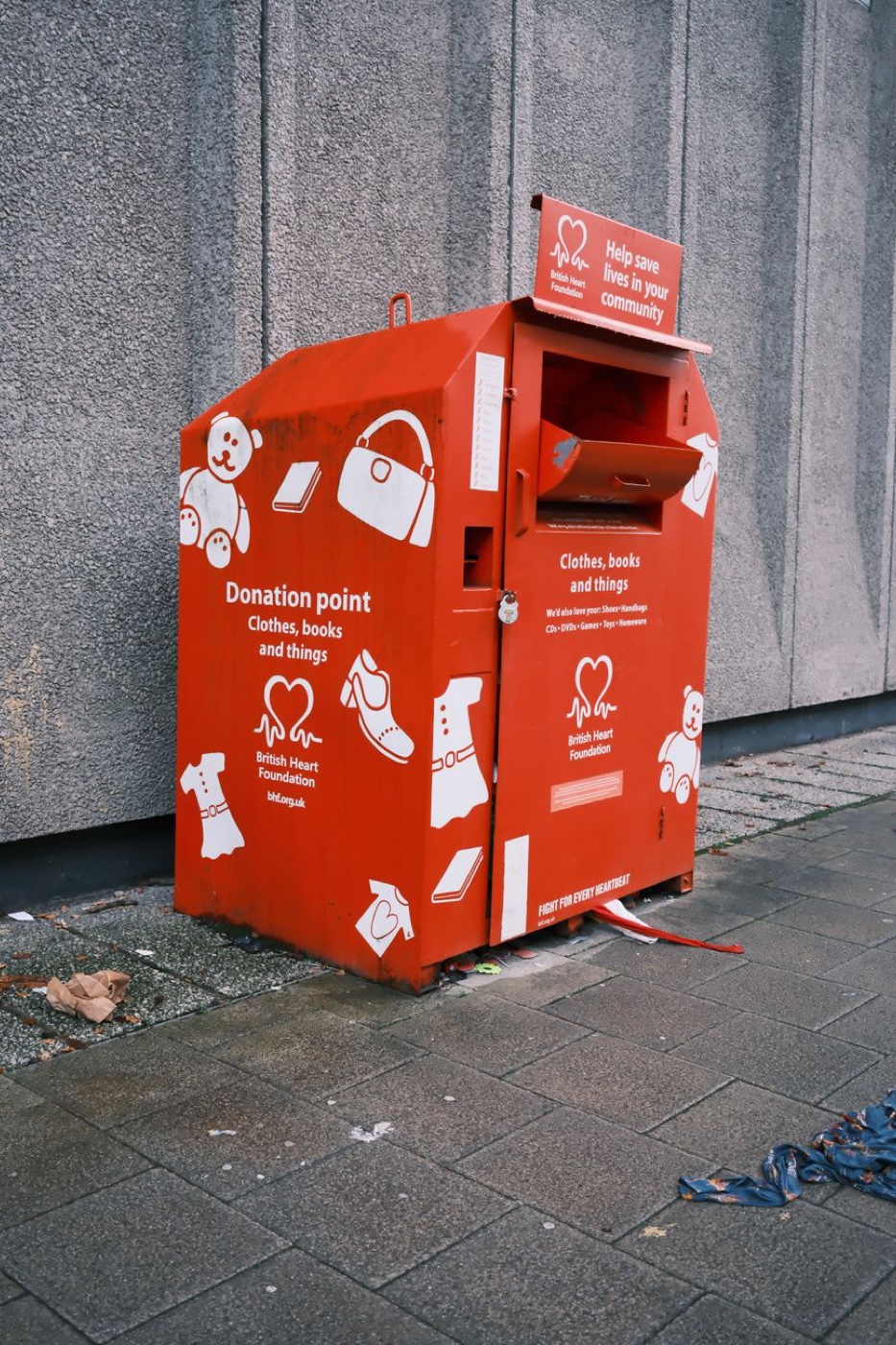
If you’re waiting for a store to hand you actual cash for the bag in your hallway, this piece isn’t for you, and I’d rather say that in the first line than in the last one. None of the five take-back programs I read today pays in money. Four pay in a currency that only spends at their own register. The fifth, on the page it shows American readers, doesn’t say it pays anything.
Everything below came off a page the brand publishes, read on September 12, 2026. I didn’t walk into a store, mail a box, or trade anything in. Where a page wouldn’t load for me, I’ve written that down instead of treating silence as an answer.
Start with the good news, because it’s real and it’s unusual. Three of these brands print a number before you hand the garment over, which is more than most retail fine print manages.
Does Patagonia do trade ins?
Patagonia estimates most items at “around 20% of the MSRP” and publishes ranges by category: sweaters $10 to $60, jackets $10 to $200, pants $10 to $60, shorts $5 to $25, dresses $10 to $20, duffel bags $15 to $75. You get merchandise credit, usable at patagonia.com, WornWear.com and Patagonia-owned stores. Trade-in is US only.
Two lines in that page do the real work. Online trade-ins have “a $7 shipping fee deducted,” so a pair of shorts at the bottom of the range arrives as credit worth less than a sandwich.
The exclusion list is the other one, and it’s long enough that a normal closet clean-out mostly bounces off it: no t-shirts, no shoes, no leggings or tank tops, no baselayers, no bras, no swimwear except boardshorts, nothing embroidered, nothing with a corporate logo, nothing missing its size and care tags. Recycling is the unpaid track, and Patagonia says so plainly: “we don’t compensate you for sending items in to be recycled.”
One detail about how I got there. Patagonia’s old trade-in URL now answers with a 410, the status code a server uses for gone on purpose, and the Worn Wear storefront carries a line saying trade-in “has moved to Patagonia.com.” The program is alive. The page you may have bookmarked isn’t.
What is the Levi’s trade-in value?
Levi’s SecondHand prints a four-row table topping out at $30, and the row most readers land in pays $5. Jeans made in the past ten years, $5. Trucker jackets from the same decade, $5. Denim shorts, $5. Items from 2000 to 2010 move up to $15, and vintage or premium collections reach $30 for jeans and jackets, $20 for shorts. Payment is a Levi’s gift card, you need an appointment at a participating US store, and you can bring five items at most.
Now the part I didn’t expect. Levi’s runs a second live page, its SecondHand help center, and that page quotes a different table. It says credits “range from $5 to $35,” puts early-2000s jeans at $20 and trucker jackets at $25, and puts current items at $5 to $15 for jeans and $5 to $20 for jackets. The article carries a date: July 19, 2021. Both pages were up when I read them. A customer who searches lands on one, a customer who browses lands on the other, and the numbers differ by as much as $15 on the same garment. Fifteen dollars.
The trade-in terms are worth thirty seconds before you book. Items “will not be returned to the Participant for any reason.” The terms “may be modified from time to time without notice to you.” And your remedy, if you disagree with what your jeans were worth, is spelled out in capitals: your “sole and exclusive remedy for any claim arising out of the Program, including dissatisfaction with item condition and any trade-in value, is to cease participating in the Program.” The document also names the operator running it, Trove Recommerce Inc., which turns up again further down this page.
How much do you get for recycling clothes at H&M?
The US garment collecting page says nothing about a reward, and its own sub-navigation is the cleanest evidence of that. On hm.com the section runs Garment collecting, Materials, Packaging & Transport, Chemicals, Working conditions. On the UK version of the identical template, one more item sits second in that list: Rewards. Open it and H&M UK prints the offer. Bring unwanted textiles to any store, “Reward: 20 points and a £5 digital voucher.” That’s H&M UK’s number in H&M UK’s currency. On the American page, no such tab.
Both versions do publish something more interesting than a voucher, which is where the clothes go. During 2025, of everything collected: 63% resale, 24% repurposing or recycling into things like cleaning cloths and insulation, 3% textile-to-textile recycling, and “approximately 10%” disposed of, with energy recovery prioritized. Same four figures on both pages. The US page credits REMONDIS with that classification and the UK page credits Looper Textile Co., the joint venture H&M Group launched with REMONDIS in 2023.
How does Madewell denim recycling work?
Madewell pays $25, and the $25 only exists as a discount on a new full-price pair of its own jeans. Bring in denim of any brand, in any condition, at least 90% cotton, and you get $25 off or a Do Well card to use later. The offer “can only be applied to full-priced Madewell jeans,” so collecting it means buying a new pair at full price, and I didn’t price today’s jeans to put a figure on that.
Two answers in the same FAQ sit oddly together. One says “for every pair of jeans you donate, you’ll get $25 off a new pair.” Another says “you can use only one $25 discount per purchase.”
Both are true, and they describe different things. A reader hauling in four pairs should still know which one governs the register.
What happens after is unusually well documented. thredUP assesses condition and value, wearable pairs get listed on Madewell Forever, and the rest goes to insulation through Cotton’s Blue Jeans Go Green program. Madewell puts the program total at 2.4 million pieces and 893 tons diverted, with two square feet of insulation per pair recycled.
Where can I take old clothes for money?
Carhartt Reworked publishes the flattest, most legible table of the five: $25 for jackets and coats, $20 for bib overalls and coveralls, $15 for hoodies, sweatshirts and vests, $10 for shirt jacs and button-downs, $5 for pants, jeans and shorts. Payment is a digital gift card. There’s a floor, and it’s the line most people will trip on: anything with an original MSRP below $49.99 isn’t eligible for a card at all, and gear made outside the past ten to fifteen years is out.
Mailing it in is the irreversible option. Post it and it’s theirs. Carhartt’s own wording: “for trade-in by mail, we are unable to return any gear once it has been shipped, regardless if it was approved or declined for credit.” Walk into a company store instead and you can take back anything they turn down.
Which brings me to the other end of the chain, on the same page. Scroll past the $10 quote for a button-down and Carhartt Reworked lists used plaid shirts for sale at $24, $31, $33 and $35. Traded-in hoodies bought at $15 sit on the resale grid at $30 to $45. These aren’t the same garments, and I want to be exact about that: it’s a category-level comparison between two tables printed on one page. What sits between them, the cleaning, the inspection, the photography, whatever share goes to the recommerce operator, isn’t published anywhere I could find, so I can’t tell you the margin. I can only tell you the two ends, and the two ends are about three to one.
What each one actually pays
| Brand | What it pays | Form | The line to read twice |
|---|---|---|---|
| Carhartt Reworked | $5 pants to $25 jackets, flat by category | Digital gift card | Original MSRP under $49.99 gets nothing, and mail-ins never come back |
| Patagonia | About 20% of MSRP, $10 to $200 by category | Merchandise credit | $7 shipping deducted online, no tees, shoes, leggings or baselayers |
| Levi’s SecondHand | $5 for jeans from the past ten years, $30 vintage | Levi’s gift card | The help center still quotes a different table, dated July 19, 2021 |
| Madewell | $25 per pair of denim | Discount on full-price Madewell jeans | One discount per purchase, and the jeans can’t be on sale |
| H&M US | No reward stated on the garment collecting page | n/a | H&M UK’s version of the page offers 20 points and a £5 voucher |
Three things I couldn’t verify, said plainly. lululemon’s Like New trade-in sits behind a page that returned 49 characters of text to me, so I have no figures for it and won’t guess. thredUP’s clean-out page answered 403. Madewell’s shorter /denim-recycling address redirected me to the homepage, and I only got the terms above from the longer .html version of the URL.
None of this makes the programs a scam. A gift card is worth something, the resale shelf is genuinely better than a landfill, and I’d rather a brand print $5 than print nothing. But notice what the currency does. Store credit is the same instrument I’ve written about when a return claws back the credit you earned, and it only converts into value if you spend at that brand again, at that brand’s prices, which are the prices the resale market has already caught up with.
So price the errand honestly before Saturday. A pair of ten-year-old Levi’s, driven to a store, booked into an appointment slot, handed over permanently: $5.