Why Are Clothing Sizes So Inconsistent? You're Allowed to Blame the Charts, Not Your Body
Seven current womenswear size guides, one size 12, and a tape measure's worth of daylight between them. We lined up the printed rows in centimetres and in inches, then checked one column against the other. The brands apparently hadn't.
 ·
· 
Somewhere in a returns warehouse right now there’s a parcel holding two pairs of the same trousers, a 10 and a 12, because the woman who ordered them stopped trusting the number years ago and started ordering the argument instead. Retailers even have a word for it, bracketing, which is a polite way of describing a customer who has correctly concluded that the size label is a rumour.
So on Sunday I did the thing the explainer articles never do. I pulled the women’s size charts that five UK-facing brands actually print, ASOS and Boohoo on their own pages, Oasis, Ted Baker and Next inside the size-guide PDFs Next hosts, plus Superdry’s and Barbour’s from the same shelf, and lined up what each one claims a size 12 measures. We haven’t measured a single garment. Charts only: the brand’s own promise about your body, in its own print.
They don’t agree. Not with each other, and in three cases not with themselves.
Why are clothing sizes so inconsistent?
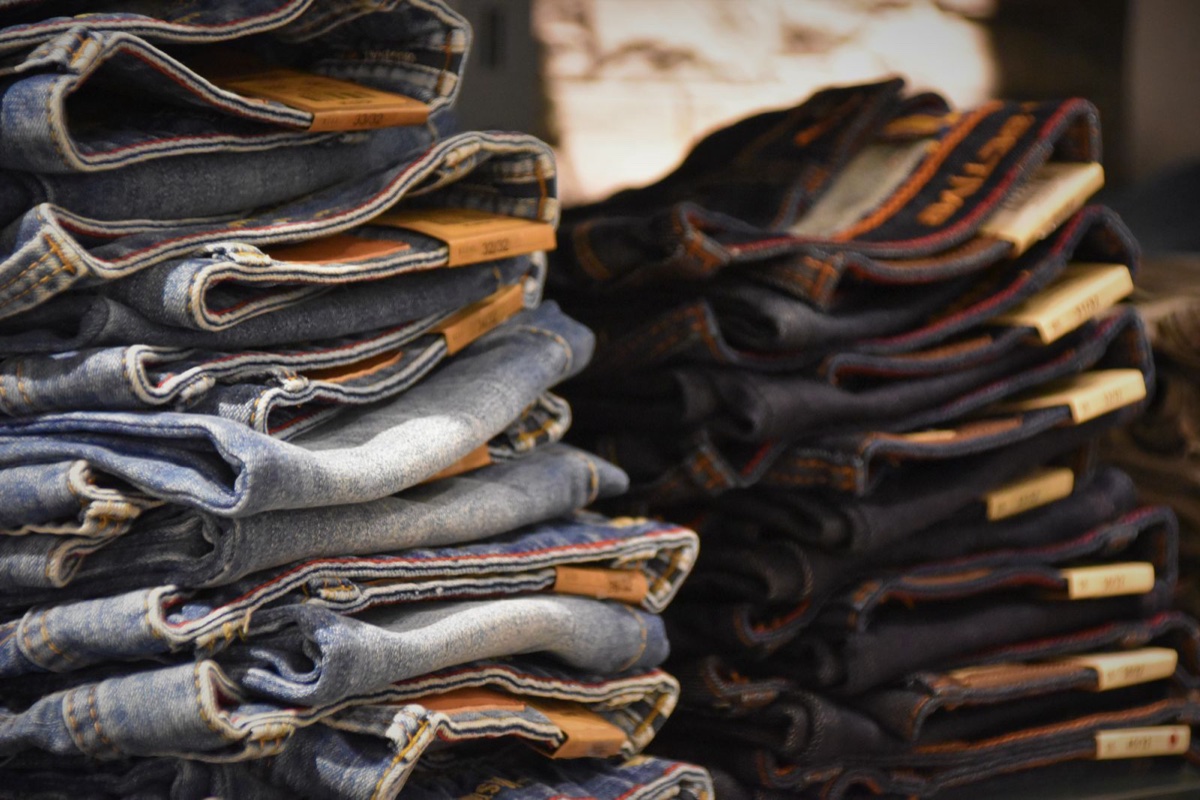
Women’s clothing sizes are inconsistent because no standard has bound them since January 1983, when the US Department of Commerce withdrew PS 42-70, the last commercial body-measurement standard for women’s apparel, leaving every brand free to draw its own chart. Which they did. Here’s what “size 12” measured across the five charts that print full body numbers, all read on August 24:
| Chart | Bust at UK 12 | Waist | Hips | UK 12 in US |
|---|---|---|---|---|
| Next | 90 cm | 74 cm | 99 cm | 8 |
| Oasis | 92 cm | 74 cm | 97 cm | 8 |
| ASOS | 94 cm | 73 cm | 98.5 cm | 8 |
| Ted Baker | 94 cm | 76 cm | 98 cm | 8 |
| Boohoo | 95 cm | 77 cm | 103 cm | 8 |
Five centimetres of bust between Next’s 12 and Boohoo’s, four of waist, six of hip. And the hip number is the quietly wild one, because a brand’s own gap between sizes is about five centimetres, which means Boohoo’s size-12 hip (103 cm) has already crossed into Oasis’s size 14 (102 to 107). Same number on the tag. One full size of difference in the body it was drawn for.
The conversions, for once, hold hands, all five calling a UK 12 a US 8. Enjoy that; it’s the last agreement in this article.
How many inches is a UK size 12?
A UK size 12 is a 35 to 37.5 inch bust, a 28.75 to 30.5 inch waist and a 38 to 40.5 inch hip, depending on whose chart you read. And you should read it in centimetres, because the imperial columns are where the mistakes live. ASOS prints its size-10 bust as 91 cm in the metric column and 34 inches in the imperial one, and those are different bodies: 34 inches is 86 cm, nearly two inches smaller, so the same page hands a metric shopper and an imperial shopper two different size 10s. Superdry’s medium waist is “74cm” and “30.5in” in the same cell, and 74 cm is 29 inches. Ted Baker’s hip ladder manages to walk backwards, from 88.5 cm at XXS down to 88 cm at XS, while its inch row climbs from 33.5 to 34.5 over the same two columns.
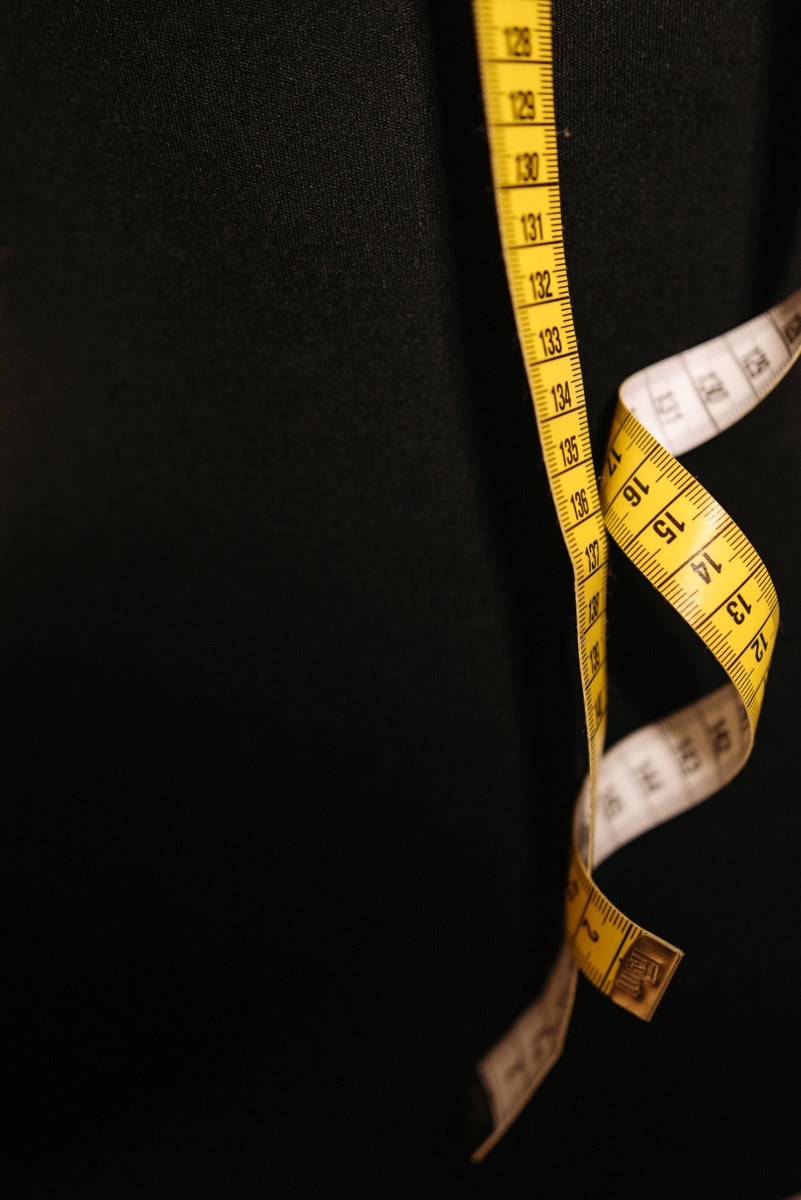
None of these are scandals. They’re typos, sitting uncorrected in the one document whose entire job is precision, which tells you roughly how much weight the number on the tag is bearing internally. If the brand’s own proofreader didn’t check the chart, you’re allowed to stop treating it as a verdict on your body.
Is a UK size 12 a medium or a large?
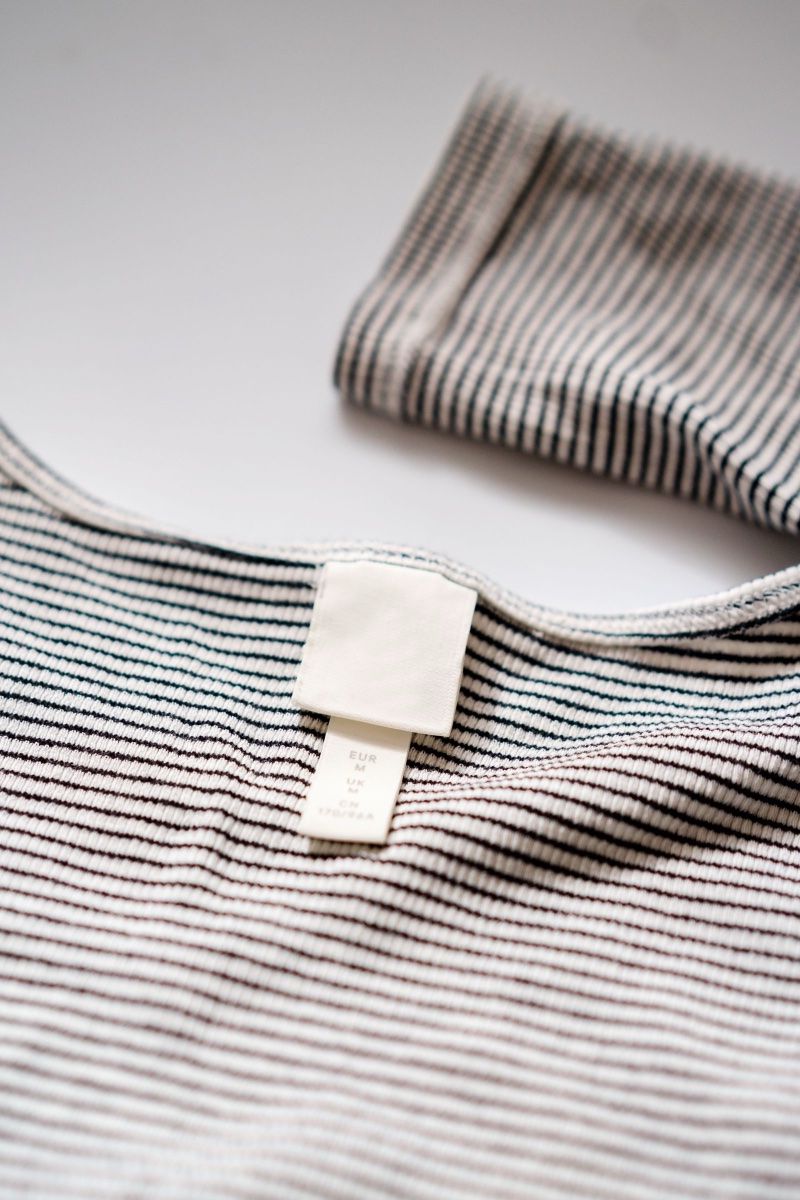
A UK size 12 is labelled a medium on every chart in this audit that prints letters, and then ASOS’s own dual-size table files that same M band under a US small. The letters get stranger from there. Oasis runs its letter row XS, XS, S, M, L, L, XL across sizes 6 to 18, two sizes sharing a label at each end, and prints identical measurements for the 6 and the 8, and again for the 14 and the 16, meaning four of its seven sizes are duplicates wearing different numbers. Boohoo stretches eight letters over fifteen numbered columns and lets you guess where the seams fall. ASOS’s dual-size chart gives the M bust as “91-78 cm,” a range that runs downhill.
Barbour skips letters entirely and instead prints four separate tables, tops, jackets, trousers and shirts, in which a size 12 bust is 94 cm in one and 102 or 103 in the others. The guide never says whether those bigger numbers are your chest or the jacket’s. As far as I can tell it’s garment ease, but the page doesn’t commit, and a chart that won’t tell you what it’s measuring is a strange thing to feel bad in front of.
Am I a size 8 or a 10?
With an 86 cm bust you’re a 10 at Next (86.5), barely past an 8 at Boohoo (85), and at ASOS you fall into the hole between its 8 and its 10, because that chart’s bust column jumps from 81 to 91 cm in a single step after climbing by 2.5s. Nobody is an 8 or a 10 as a property of their body. The number is a lookup key into one brand’s table, and the tables, as established, were drawn by different hands, for different imagined customers, and proofread, on this evidence, by nobody.
The working routine that survives all this is short. Tape measure, twice a year, in centimetres. Check the chart per brand, per order, and trust the metric column over the imperial one. Order one size, because bracketing has a price now: a growing list of retailers charge for the return leg of your two-parcel argument. And if you’re between rows, the composition field is a better tiebreak than hope, because a knit that lists its fibres will tell you more about give than the size letter ever will.
The parcel from the top of this piece, the one with the 10 and the 12 in it, was never really a fitting problem. One of those trousers was always going straight back, postage paid, to a warehouse that will slot it next to thousands of its twins. The customer isn’t confused. She read the situation perfectly. The charts are the ones that can’t hold their story together, and now you’ve seen them try.