Is Abercrombie Better Quality Than Uniqlo? We Read Eight Fiber Labels to Find Out
'Whoa So Soft.' 'Extra Soft.' 'Merino Wool-Blend.' Product names read like fiber claims and none of them is one, so we pulled the percentage line on eight sweaters at four brands, plus two brands that wouldn't show theirs, and let the numbers talk. The care tag column was the part nobody saw coming.
 · · Updated September 1, 2026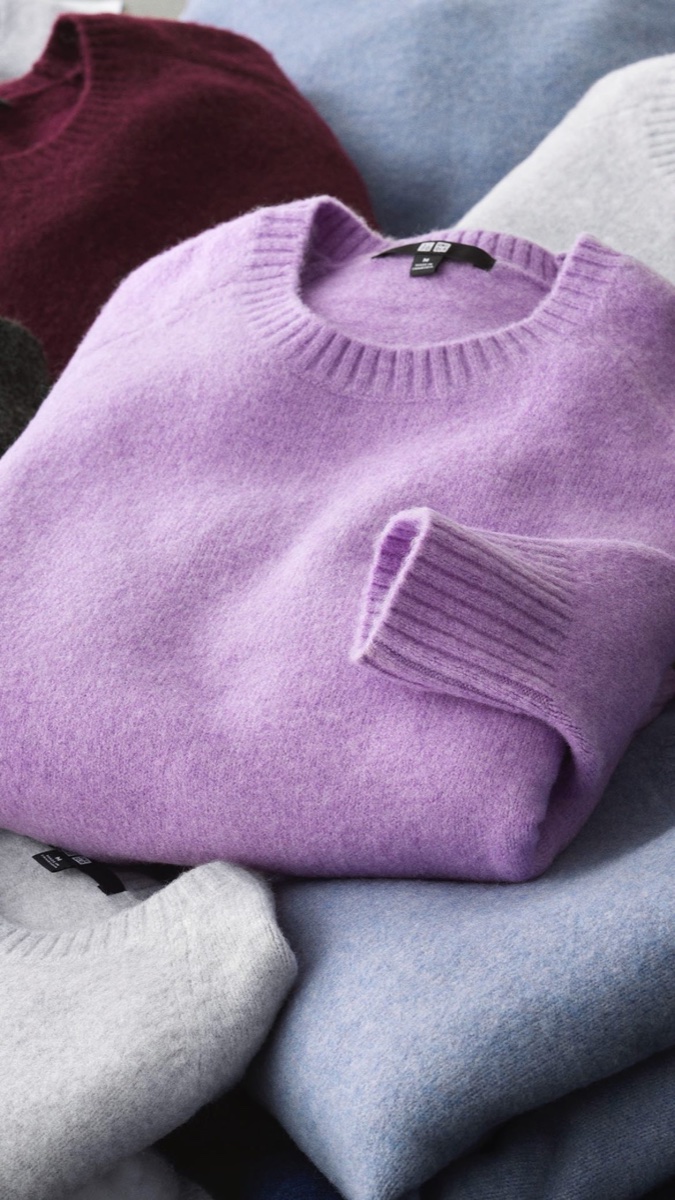
“Whoa So Soft.” “Extra Soft.” “Merino Wool-Blend.” Each of those is a real product name on a real knit this fall, each reads like a fiber claim, and none of them is one. A product name is copy. The marketing department writes it the same way it writes the banner and the subject line, and no law tells it what soft has to mean. One line lower on the tag, the rules change.
The good news is real: three of the four brands compared here sell a sweater that’s wool all the way through, and the fourth never promised wool in the first place. The less good news is that the names won’t point you to the honest one, and at Abercrombie the prices won’t either, because the 100% merino sweater and the 30% blend hang fifteen dollars apart in the same tab.
That gap is why the search box is busy. Google’s autocomplete under the brand reads like a jury still out: “is abercrombie better quality than uniqlo,” than zara, than h&m, than american eagle, “is abercrombie worth the price,” “abercrombie quality reddit.” Abercrombie’s fall knits landed in mid-August, the newest flagged New at $90, and with the first cool mornings close now, the sweater bought this month is the one getting washed in November.
So I read the one line no brand gets to write freely, on eight sweaters at four brands, off each brand’s own product page in the third week of August. I haven’t worn any of them, and this piece doesn’t pretend otherwise. The percentage line doesn’t need my hands. It’s the only line on the tag with a law behind it.
Does a sweater label have to say how much wool is in it?
Under the Wool Products Labeling Act, a garment label that names a fiber at all has to carry the full fiber content in percentages, which is why the number under the product name is the one part of the tag the marketing department doesn’t write. The FTC’s rules say that once a label uses a fiber name, disclosure of the full fiber content “with percentages shall be made.” The name can whisper merino. The percentage line has to say how much, in numbers, every time.
What follows is what the percentage lines said, pulled from each brand’s own product page, prices as listed on August 19 and 20.
| Sweater | Price | Fiber line, per the page | Care tag |
|---|---|---|---|
| A&F The Madeline Merino Wool-Blend Crew | $75 | 66% nylon, 30% wool, 4% elastane | Hand wash cold, do not dry clean |
| A&F Merino Wool-Blend Henley (new fall) | $90 | 66% nylon, 30% merino wool, 4% elastane | Hand wash cold, do not dry clean |
| A&F 100% Merino Wool Easy Mock Neck (new fall) | $90 | 100% merino wool | Hand wash cold, do not dry clean |
| Uniqlo Merino Sweater, crew neck | $49.90 | 100% wool | Machine wash cold, gentle |
| Zara Wool V-Neck Jumper | $59.90 | 50% polyester, 30% wool, 20% acrylic | Not shown on page |
| Zara Extra Soft 100% Wool V-Neck | $79.90 | 100% wool | Not shown on page |
| AE Big Hug Oversized Sweater | $19.48 on sale, May archive | 60% cotton, 40% acrylic | Machine wash |
| AE Crew Neck Raglan Sweater | $25.98 on sale, May archive | 60% cotton, 40% acrylic | Machine wash |
Two disclosures before you read anything into that. American Eagle’s fall pages wouldn’t load their fiber lines for me, so those two rows come from archived spring product pages, sale-priced. The fabric recipe is the brand’s standard cotton-acrylic and the current Whoa So Soft Classic Crew lists at $54.95. And H&M blocked every route I tried, so it isn’t in the table at all. Hollister’s new $44.95 Rory Crew loaded fine, but the fabric field in its own page data sits empty, which is its own kind of answer.
How much wool is in an Abercrombie sweater?
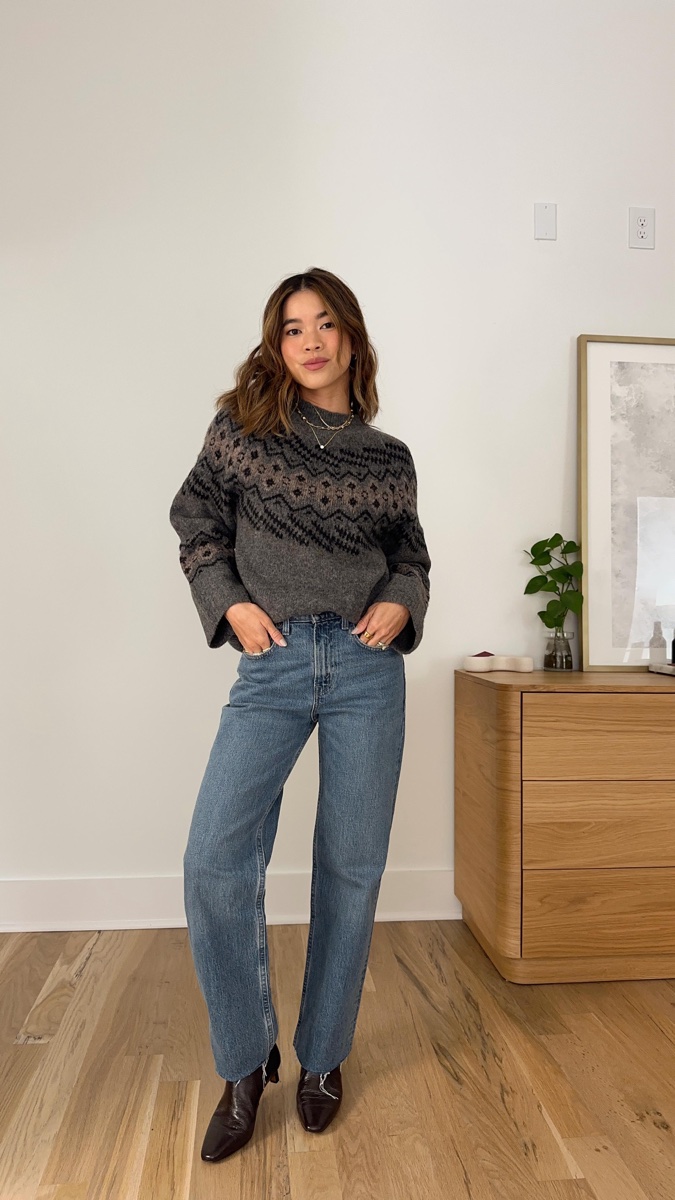
Abercrombie’s fall range runs from 30% wool at $75 to 100% merino at $90, per its own fiber lines, and the two ends hang fifteen dollars apart. Read the A&F rows first, because they’re the reason the question is worth asking at all.
The $75 Madeline crew is called “Merino Wool-Blend.” Its fiber line is 66% nylon, 30% wool, 4% elastane, and on this one the word merino doesn’t even survive into the percentage line. It’s just wool once the law starts talking. The $90 henley, new for fall, is the same recipe with merino restored to the label: 66% nylon, 30% merino, 4% elastane. Two different sweaters, two different prices, one house blend. Two-thirds of both is nylon.
Zara runs the same play at $59.90. The product is named, in full, “Wool V-Neck Jumper.” The composition is 50% polyester, 30% wool, 20% acrylic, which is to say the sweater named after wool is 70% plastic. Zara also sells an Extra Soft 100% Wool V-neck at $79.90, so the honest version exists in the same store, twenty dollars up the rail.
And then Uniqlo’s crew, the one the autocomplete keeps comparing everyone to: $49.90, fiber line “100% Wool,” 214 reviews, in stock at the August read. The cheapest sweater in the wool half of this table is the only crew neck in it that’s wool all the way through.
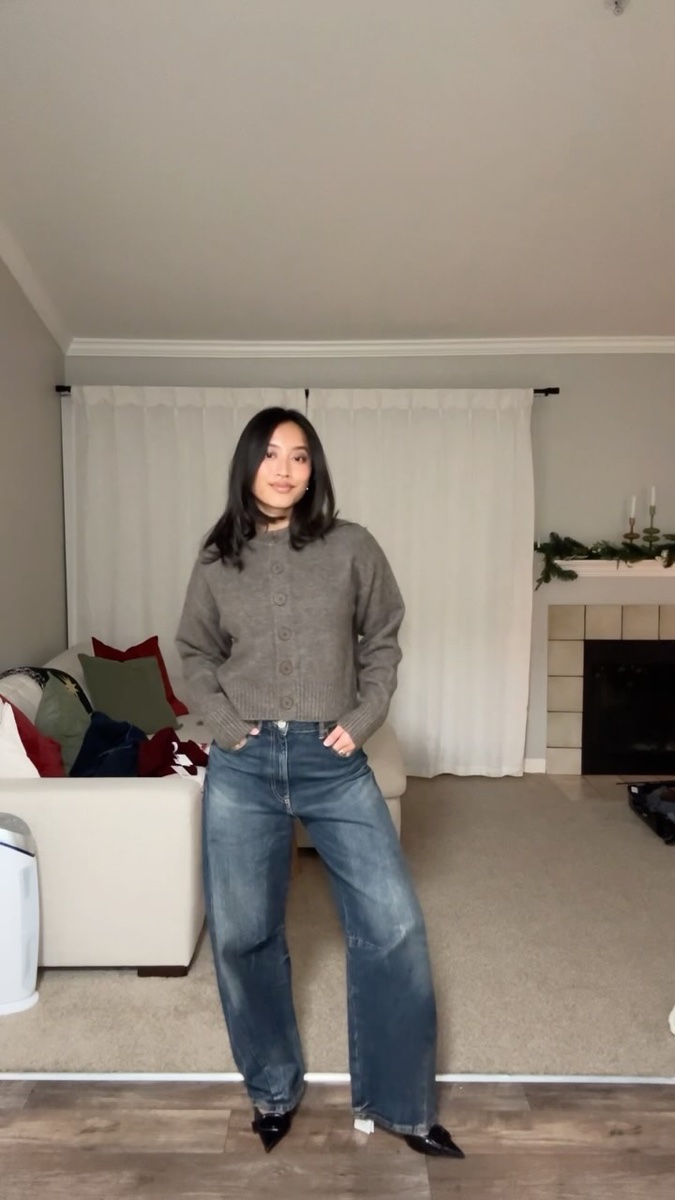
None of this is illegal, and none of it is even hidden. “Blend” is doing exactly what it’s paid to do. The FTC makes the brands print the ratio, not make anyone read it. A nylon-heavy knit has real arguments for it, too. As far as I can tell that’s what the elastane is there for, shape recovery, and nylon is why the Madeline can survive a fit that clings. I just think that if merino is the word that got you to the product page, you should know you’re paying $75 for 30 points of it.
Can you machine wash a merino wool sweater?
Uniqlo’s $49.90 sweater, the 100% wool one, says machine wash cold on a gentle cycle, and the two Abercrombie sweaters at $75 and $90 say hand wash cold and do not dry clean. That was the column I didn’t see coming, since the A&F pair are nylon-majority and elastane-stretched. The sweater with the most delicate-sounding label is the easiest one in the table to live with, and the sweaters that are two-thirds synthetic ask for the sink.
I won’t pretend to know exactly why A&F’s care team ruled that way. Hand-wash tags are sometimes about trims and dye as much as fiber. But cost-per-wear math runs on wears, and wears run on whether washing the thing is a chore. A sweater that goes in the machine gets worn like it goes in the machine. We ran the same logic on how long clothes should last, and care friction kept showing up as the quiet killer.
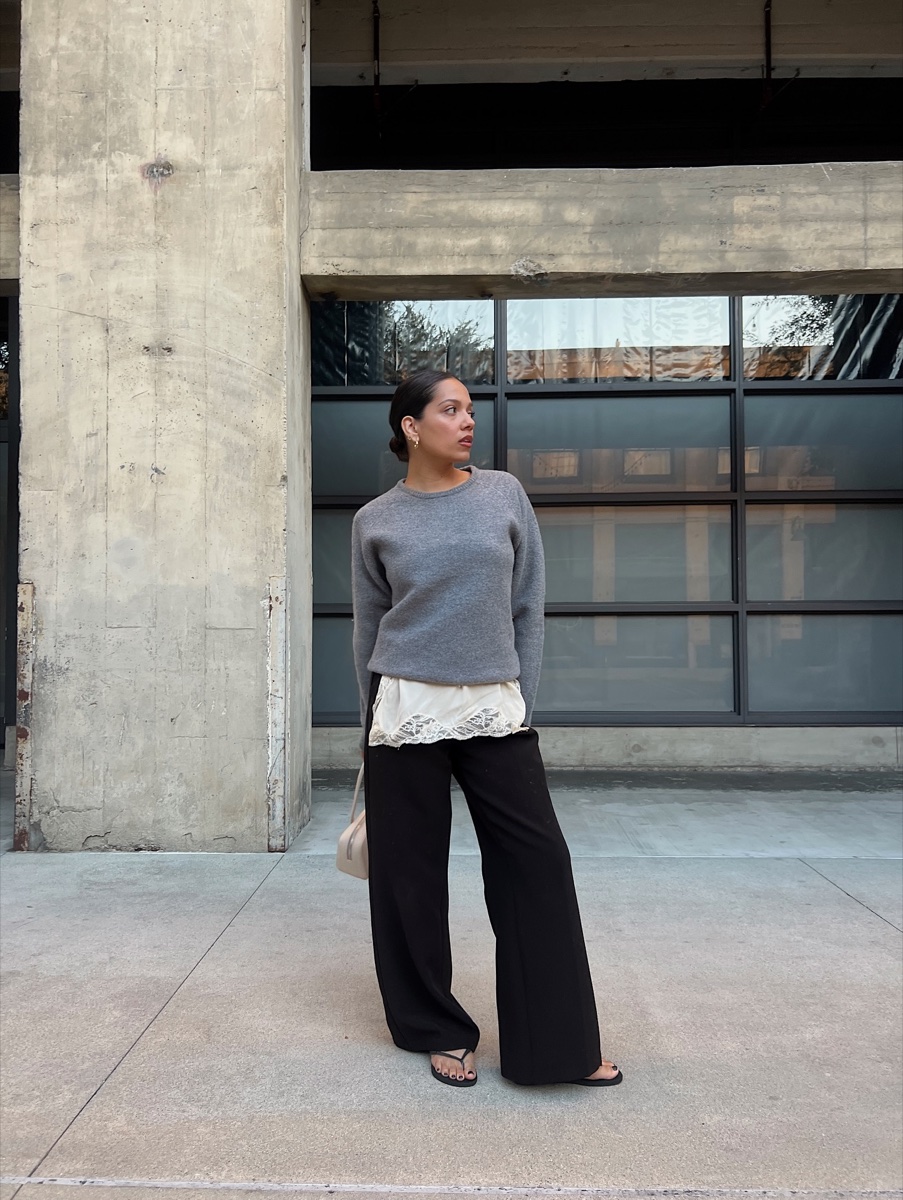
The autocomplete question puts a brand name on each side of “better quality,” and eight labels say the question is aimed at the wrong noun. Brands don’t have a quality. Fiber lines do. Abercrombie will sell you a 30% wool sweater for $75 and a 100% merino one for $90, same tab. Uniqlo will sell you the 100% version for $49.90. Zara will sell you 30% wool named “Wool,” or the real thing for $79.90. Every one of these stores contains both answers, which is why comparing logos gets you nowhere and comparing percentage lines takes about a minute.
So the verdict comes in two lines. If a merino sweater is what you wanted this fall, you can skip the $75 blend entirely: the same brand’s own $90 mock neck beats it on fiber, and the $49.90 crew beats both on price and on the care tag. And if you were never actually attached to wool, the honest move is American Eagle’s cotton-acrylic at half the money, machine washable, no merino implied. Abercrombie’s price tags move around enough that the number on the tag is negotiable. The percentage line has a law behind it. Buy the line, not the word.