Are Wool Blend Coats Worth It? Uniqlo's Fall Coat Is 33 Percent Wool, and That's Legal
The new fall coats are landing next to last winter's clearance racks, and both say wool blend on the tag. I opened ten product pages, two labeling laws and the wool industry's own logo rules to find out what the word is worth. Less than the price, more than nothing, and never the number you actually need.
 · · Updated August 23, 2026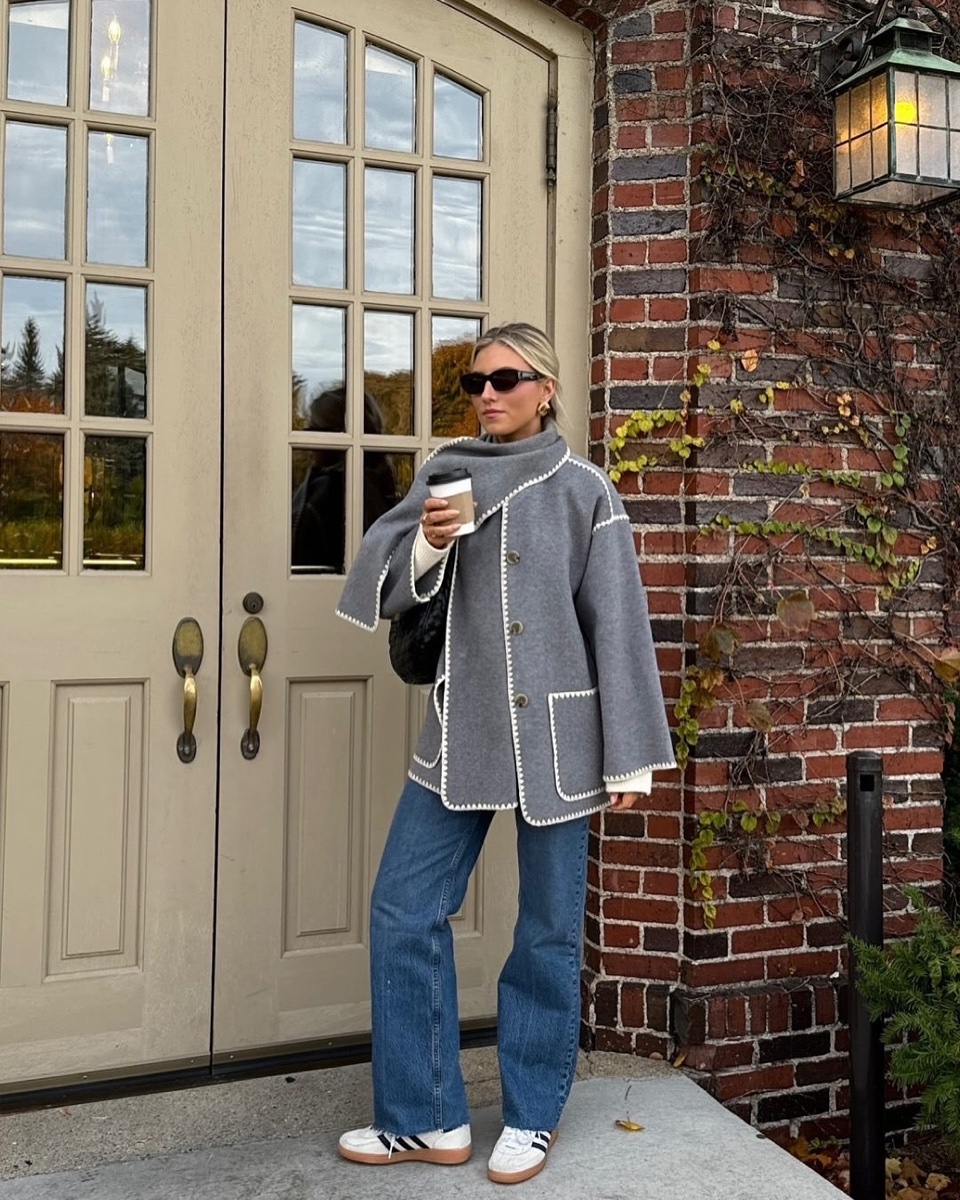
Uniqlo’s fall coat for women is up on the US site this week, $149.90, “arriving early Sep.” The copy calls it “wool-blend material treated with a fulling finish for substantial thickness, warmth, and durability.” The composition line, three scrolls down, reads 47% polyester, 33% wool, 20% nylon. So two thirds of the wool-blend coat is not wool, and nobody at Uniqlo has done anything wrong. That last part took me longer to confirm than the first part, and it’s the actual answer to “are wool blend coats worth it,” so let me show the work.
I haven’t touched any of these coats. This is a label audit, ten product pages open in tabs on August 18, plus the two laws that decide what a label has to say and one trade body that decides who gets a logo.
What percentage of wool makes a coat a “wool blend”?
No US rule sets a floor, so a coat that is 33 percent wool can be sold as a wool blend as long as the tag prints the real numbers. In the US, the Wool Products Labeling Act requires the tag to show, by weight, the percentage of wool, of recycled wool, and of each other fibre at 5 percent or more. The FTC’s own guide adds that percentages run in descending order, that there’s a 3 percent tolerance on the numbers, and that “wool” legally covers sheep, lamb, Angora and cashmere goat, camel, alpaca, llama and vicuna. What neither the statute nor the FTC guide contains is a floor. There is no percentage below which you may not print “wool blend” on the marketing copy. Print the numbers honestly and the adjective is yours. That’s the whole rule.
The UK and EU rule, Regulation 1007/2011, is stricter about one word and silent about the other. Article 7: only a product “exclusively composed of the same fibre” may be labelled “100 %”, “pure” or “all”. Article 8: you can only put “virgin wool” on a blend if the wool is at least 25 percent of the weight. Article 9: descending order, same as the FTC. “Wool blend,” again, has no threshold.
The one body that does draw lines is private. Woolmark, the Australian growers’ brand, licenses three logos, and its owner AWI spelled out the bands in December 2023: the plain Woolmark for 100 percent pure new wool, Woolmark Blend for 50 to 99.9 percent, and a Wool Blend logo for 30 to 49.9 percent. Below 30 they don’t want their name on it. Uniqlo’s 33 percent clears that bar by three points, which is inside the FTC’s tolerance, if you enjoy that sort of thing.
How much wool is in this fall’s wool blend coats?
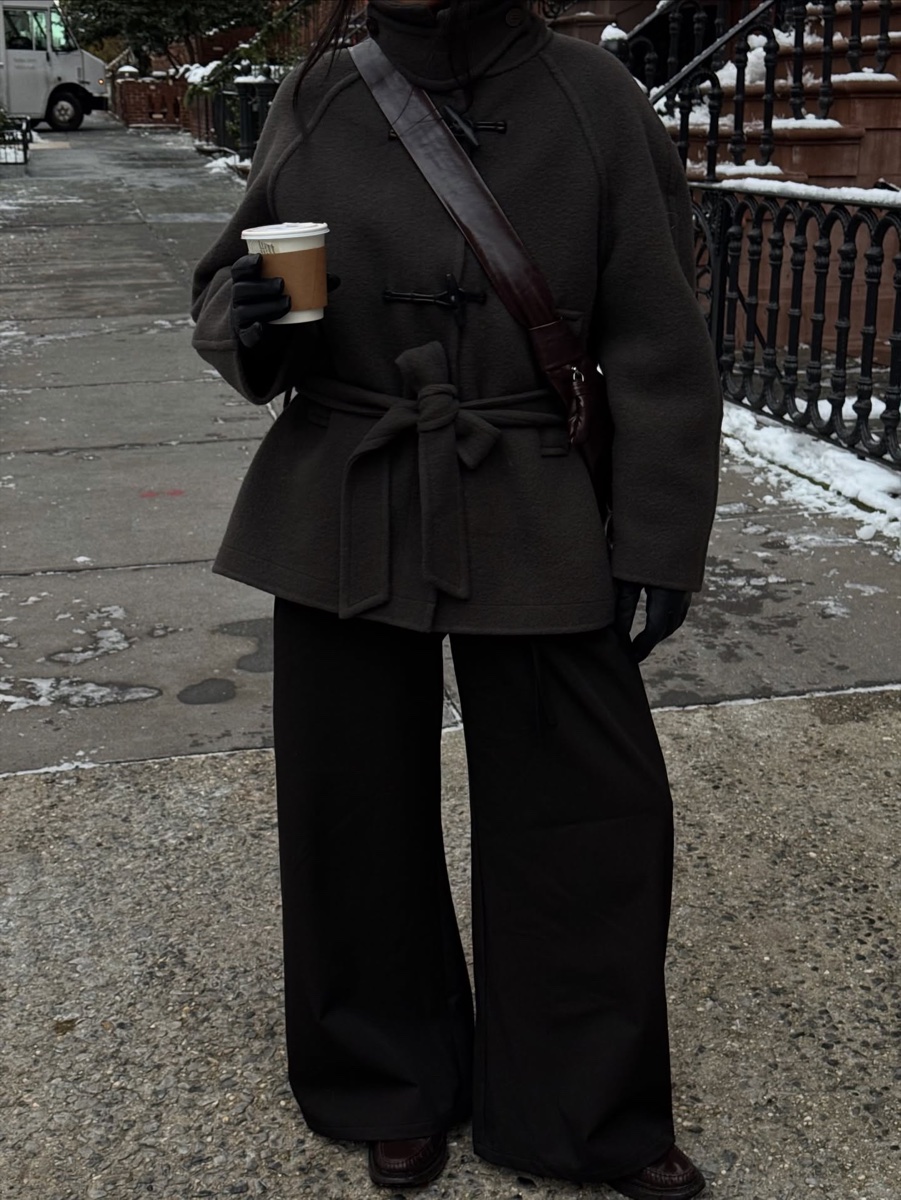
Across ten coats priced $149.90 to $450, the wool content on the label runs from 33 percent (Uniqlo) to 100 percent (Zara, Quince), with most of the middle sitting between 51 and 75. Ten tabs, one afternoon. List price first, sale price where there is one, then the shell composition exactly as printed. I’ve left out coats whose pages wouldn’t load without a browser (H&M, Aritzia, Sézane, Abercrombie all blocked me), which is its own small finding.
| Coat | List price | Wool | The rest | Mill named? |
|---|---|---|---|---|
| Uniqlo Double Face Relaxed Long Coat (arriving Sept.) | $149.90 | 33% | 47% polyester, 20% nylon | No |
| Zara ZW Collection 100% Wool Long Coat | $269 | 100% | Viscose lining | No |
| Zara ZW Wool Blend Short Coat (last season, $33.80 now) | $169 | 57% | 38% polyester, 5% other | No |
| Marks & Spencer Wool Blend Longline Tailored Coat | $315 | 52% new wool | 48% polyester | No |
| Everlane Italian Car Coat ($104 on final sale) | $348 | 51% (43% recycled) | 42% recycled polyester, 3% recycled nylon, 4% other | Manifattura Emmetex |
| Reformation Lucas Coat ($214 now, waitlist) | $428 | 70% recycled | 18% polyamide, 12% recycled polyamide | Manteco |
| Banana Republic Italian Wool-Blend Top Coat ($129.97, sold out) | $450 | 68% | 24% polyamide, 6% polyester, 2% other | Manifattura Emmetex |
| COS Oversized Double-Breasted Wool Long Coat | $449 | 75% recycled | 25% recycled polyamide | Manteco |
| J.Crew Chiara Topcoat in Double Face | $450 | 75% | 20% lyocell, 5% cashmere | Ora Tessuti |
| Quince Double-Faced Merino Wool Scarf Coat | $200 | 100% merino | None | No |
Some things fall out of that table on their own. The word “blend” is doing very different jobs: 33 percent at Uniqlo, 52 at M&S, 75 at COS and J.Crew. Zara’s page for the $269 coat is titled “100% Wool Long Coat” and its description paragraph begins “Wool-blend coat,” which is either a template nobody updated or a very literal reading of the viscose lining. Five of the ten use recycled wool, which under the FTC rules has to be called recycled wool on the tag and can’t hide inside the plain word. And the two 100 percent coats are the two cheapest per point of wool: Quince at $2 a point, Zara at $2.69, against $6 and up for the Italian-mill blends. That’s a dumb number, and I don’t fully trust it, but it says the wool line and the price line aren’t tracking each other, which is worth knowing before you pay for the percentage.
The number none of the ten pages give you
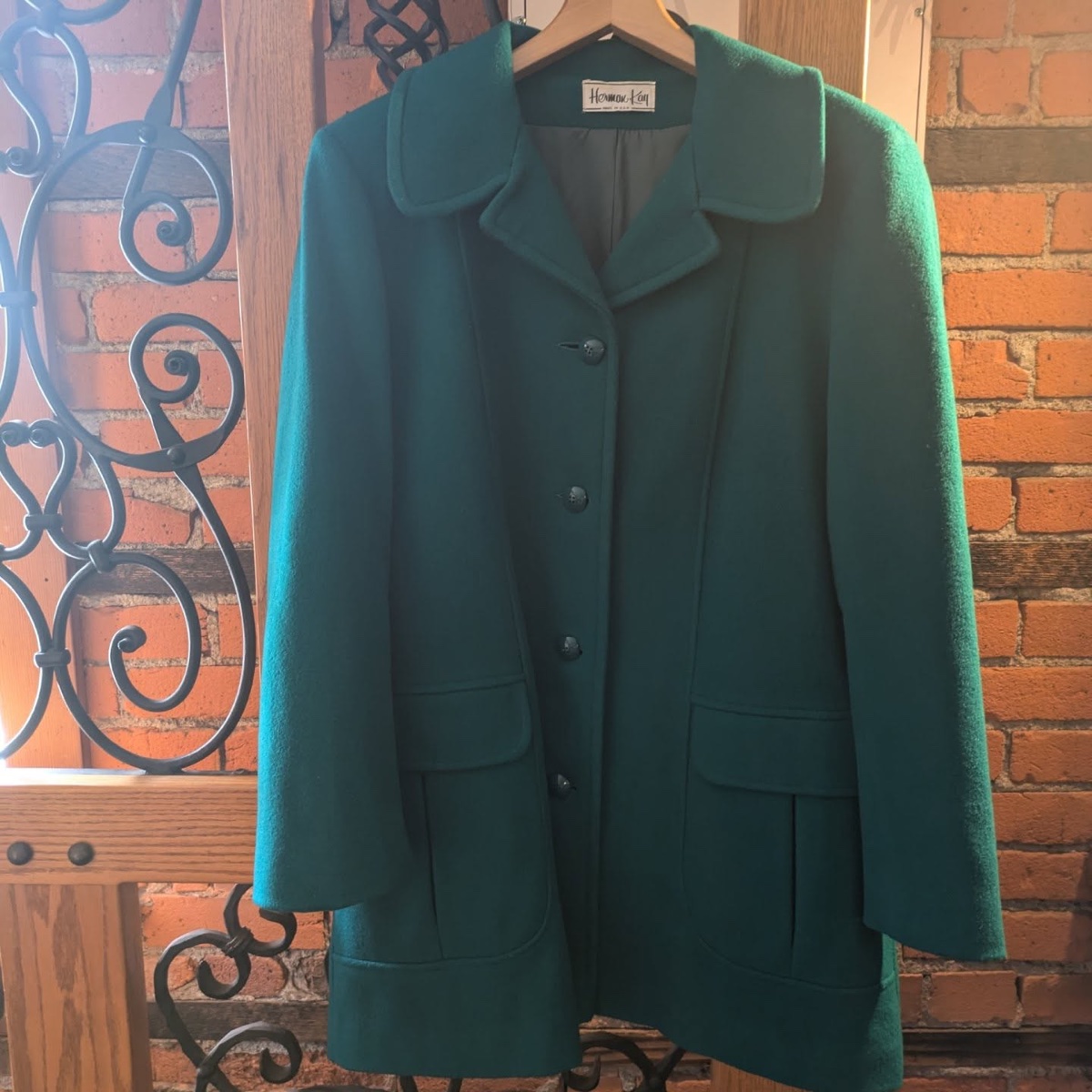
Every “what percentage of wool should a coat be” answer I could find online lands on a figure, usually 60, 70 or 80, and treats it as the whole question. The tailoring people treat it as a footnote. Simon Crompton, who runs Permanent Style, wrote a guide to overcoating cloth in 2018 that opens with weight, because “of these, weight is certainly the most important.” Some mills start their overcoat range at 370 grams, or 13 ounces, “the kind of weight I’d recommend for a jacket, rather than a coat.” Most start nearer 500 grams. For a first good coat he’d look at 600 to 700 grams, 20 to 25 ounces. On cashmere blends, the upsell you’ll see most this fall, his line is that “the small amount of cashmere will make little difference to warmth, so generally it’s only worth buying on softness.”
That’s bespoke cloth, and I’d hedge it for a $150 double-face coat. But the point stands on any budget: the fibre percentage tells you what the cloth is made of, and only the weight tells you how much cloth you’re actually getting for the money. Wool’s warmth is mostly trapped air, as far as I understand it, and a heavy 50 percent cloth can trap more of it than a thin 90 percent one. Now go back to the table. Reformation calls its cloth “heavy weight outerwear fabric,” Everlane says “Heavyweight,” Uniqlo says “substantial thickness.” Not one of the ten pages gives a gram or an ounce. Not one. The number that would answer the question isn’t on the label, and the number that is on the label is the one everyone argues about.
So, are wool blend coats worth it?
On paper, some are, and the paper can’t tell you which. Here’s how I’d read a tag in a fitting room, given that I can’t weigh the coat for you.
Under 50 percent, you’re holding a polyester coat with wool in it, and you should price it as one. Uniqlo’s, at $149.90, is priced as one. Fair enough. The Italian-mill blends in the 68 to 75 range are what most people mean when they say wool coat, and the reason they cost $450 has more to do with the mill and the fabric weight, I’d guess, than with the sixteen to twenty-three points of wool between them and M&S. Above that, 100 percent is a floor, not a promise. The Zara and the Quince are pure wool at $269 and $200 and neither page will tell you how heavy the cloth is, and this site’s own Quince file is a reminder that “same fibre” and “same fabric” are different sentences.
The thing you can skip is buying the percentage. If a coat’s copy leads with the wool number and its price leads with the mill, that’s the label selling you the label. If your closet already has a coat that’s 50 percent or more and heavy enough that you notice it on the hanger, it will outlast the warranty whatever the tag says, and the fall drop doesn’t change that. And if you’re going to buy anyway, look at the right-hand column of that table again: four of those ten coats are on clearance in the third week of August, at $33.80 and $104 and $129.97 and $214, sitting on the same websites as the full-price arrivals. The price line for coats doesn’t move for another few months. The wool line, as far as I can tell, never moved at all.