Is Sherpa Real Wool? The Tags That Actually Name a Fiber Don't Agree With Each Other
One federal rule says what shearling is allowed to mean. Nothing says what sherpa means. So we read the composition line under twelve things sold as sherpa on September 20, and the line changes from page to page.
 ·
· 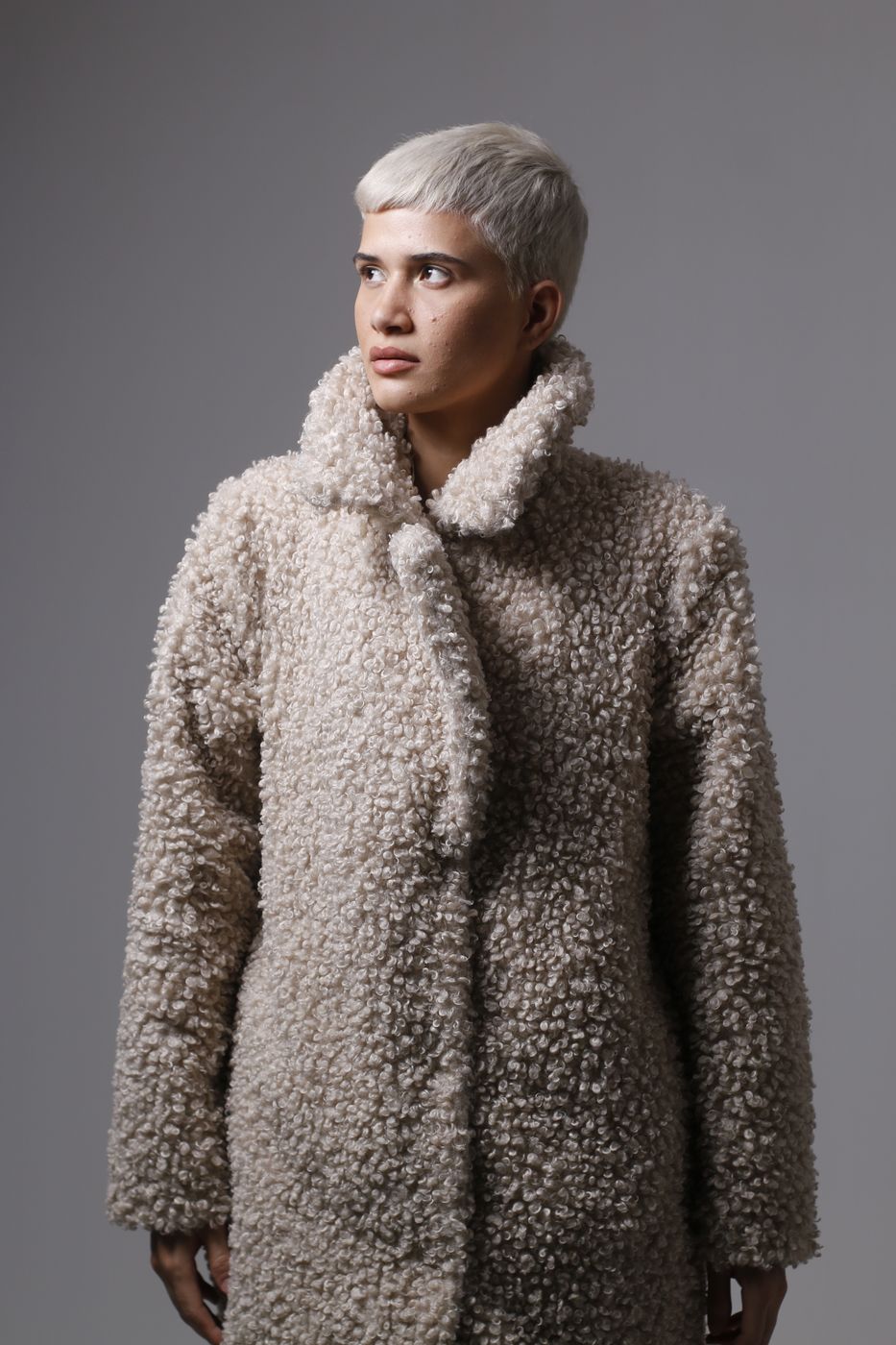
Two answers are already waiting for you. The first, which fills most of the results page, is that sherpa is a synthetic, polyester pretending to be a sheep. The second, offered by the word itself and by the price of the coats it turns up on, is that you’re buying something woolly. Neither one survives a composition line. Toad&Co’s Sespe Sherpa Jacket, $168 on its US catalog feed on September 20, prints 45% recycled wool. Marine Layer’s Sunset Sherpa Pullover, on sale the same afternoon at $70, prints 100% polyester. Same word. Opposite fiber.
That gap isn’t a scandal. It’s a licensing question, and the license turns out to be missing.
We read twelve US listings with sherpa in the product name on September 20, 2026, plus four carrying the word shearling, and copied the composition field exactly as each page printed it. Nobody here has handled any of these. The desk hasn’t touched the pile, hasn’t put a jacket on, hasn’t washed one, and every line below is a retailer’s own transcription of its own label rather than our measurement of what’s inside.

Is sherpa wool or polyester?
Six of the twelve sherpa listings we read print polyester and nothing else, so polyester is the safe bet and a bad rule. One of the twelve prints 45% recycled wool. One blends 20% TENCEL Lyocell into the pile. Four never name a fiber for the pile at all, which is the part worth slowing down for.
Here is the set, as printed on September 20, with US pricing where the site would serve it:
| Listing (sherpa in the name) | Composition line as printed | Price |
|---|---|---|
| Marine Layer Sierra Sherpa Pullover | 100% polyester | $168, on sale $108 |
| Marine Layer Sunset Sherpa Pullover | 100% polyester | $148, on sale $70 |
| Marine Layer Park Sherpa Pullover | 100% Polyester | $118, on sale $58 |
| Marine Layer Jacquard Sherpa Full Zip Jacket | 100% recycled poly | $188, on sale $75 |
| Marine Layer Mila Reversible Sherpa Vest | 80% recycled polyester, 20% TENCEL Lyocell | $138 |
| J.Crew Factory Sherpa Snap Pullover | 100% polyester. | not served to our reader |
| Cutter & Buck Cascade Eco Sherpa Pullover | Body: 71% Recycled Polyester / 29% Polyester Fleece | $95 |
| Toad&Co Sespe Sherpa Jacket | 47% Recycled Polyester, 45% Recycled Wool, 5% Recycled Nylon, 3% Recycled Other Fibers | $168 |
| Toad&Co Sespe Sherpa Vest | “100% recycled materials” | $125 |
| Toad&Co Manzana Sherpa-Lined Quilted Jacket | shell 100% Organic Cotton, lining fiber not printed | $175 |
| Jenni Kayne Fabric Swatch Oatmeal Sherpa | none | swatch |
| Jenni Kayne Fabric Swatch Bone Sherpa | none | swatch |
The Toad&Co jacket is the one that breaks the internet’s version of this answer. Its page calls it “the most sustainable sherpa you’ll ever meet” and then lists more wool in the fabric than a lot of wool-blend coats carry, which is a thing we’ve counted before in wool blend outerwear. Meanwhile the quilted jacket two rows down puts sherpa in its actual product name, prints 100% organic cotton for the shell, and never says what the sherpa lining is made of. The only weight on that page belongs to something else entirely, “130 GSM recycled polyester insulation,” which is the filling, not the fuzz.
What is sherpa made of?
Sherpa names a construction, a knit with one flat face and one brushed pile face, and US labeling rules attach no fiber requirement to that name at all. The Federal Trade Commission’s textile rules establish generic names for manufactured fibers under 16 CFR §303.7, twenty-five of them, from acrylic and modacrylic to polyester and rayon. Sherpa is not on the list. It can’t be, because it isn’t a fiber.
§303.17 allows a brand to put a non-deceptive fiber trademark on a label “in conjunction with the generic name of the fiber to which it relates,” and that clause is the whole trick: the marketing word rides along, the generic name does the legal work, and the generic name is the one in small type.
Which is why the pile in these garments is, in fiber terms, the same family as the fleece sitting next to it on the rack. Brushed polyester, mostly. The difference between a sherpa and a plain fleece is how long and how curled the face is, not what it’s spun from.
Is shearling real wool?
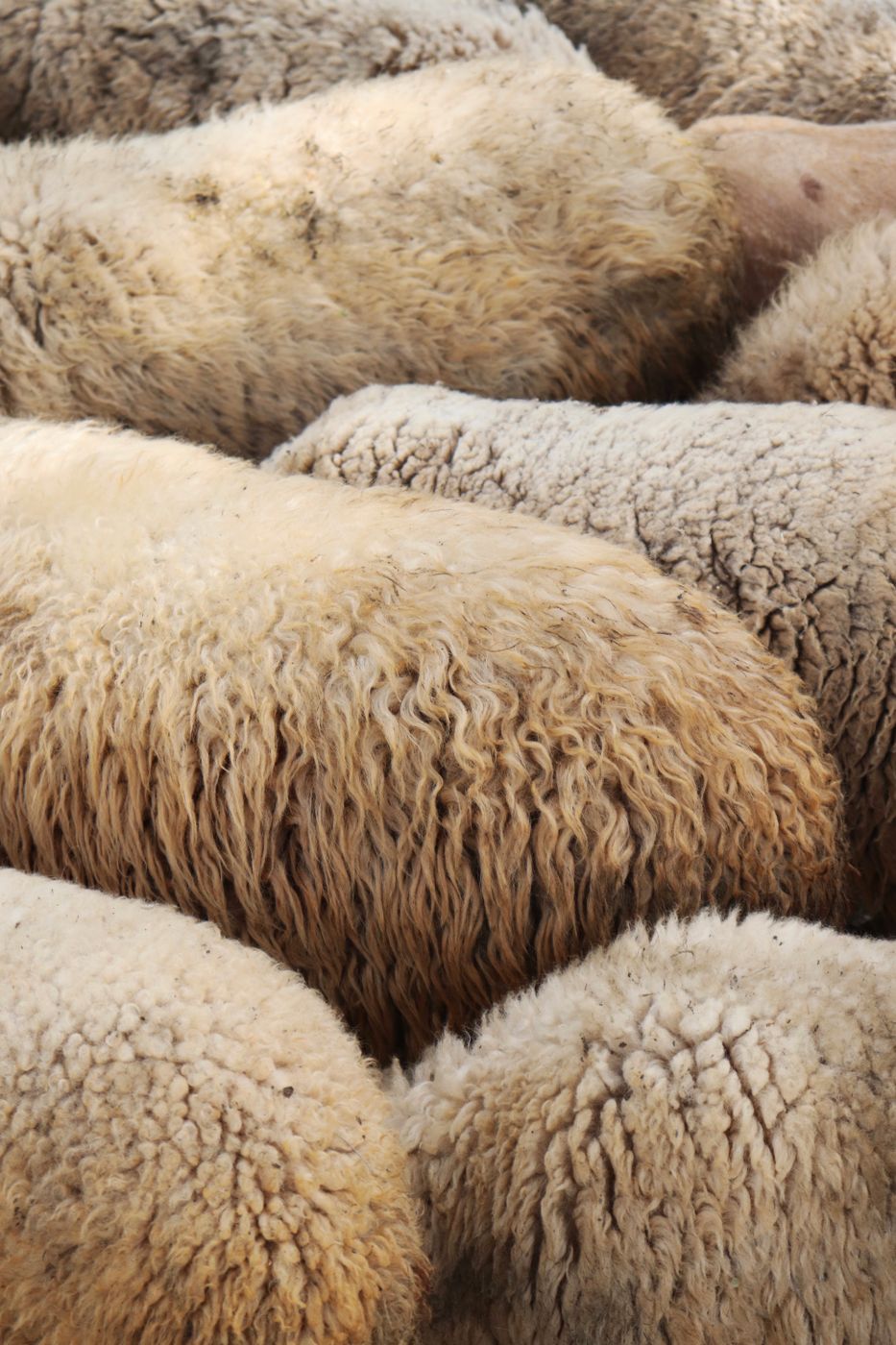
Shearling is a skin, not a fabric, and the FTC’s Fur Rules spell it out: §301.9(b) says “The term Shearling Lamb may be used to describe the skin of a lamb which has been sheared and combed.” The neighbouring paragraph does the same job for Mouton Lamb, down to the chemical treatment and the thermal set. A word with a rule behind it behaves differently in a catalog.
You can watch it behave in one showroom.
Jenni Kayne sells furniture swatches. The shearling swatch, $25, prints “100% Icelandic sheep shearling.” The two sherpa swatches, from the same brand, the same swatch program, the same page template, print no fiber whatsoever. Upstairs in the clothing, the same split holds at a different order of magnitude: a Shearling Aurora Coat at $2,225, described as “100% lamb shearling on one side and leather on the other,” and a Long Shearling Yves Shawl Coat at $1,895. Even the baby booties, $145, print “100% shearling.” Every sherpa garment we read sat between $95 and $188.
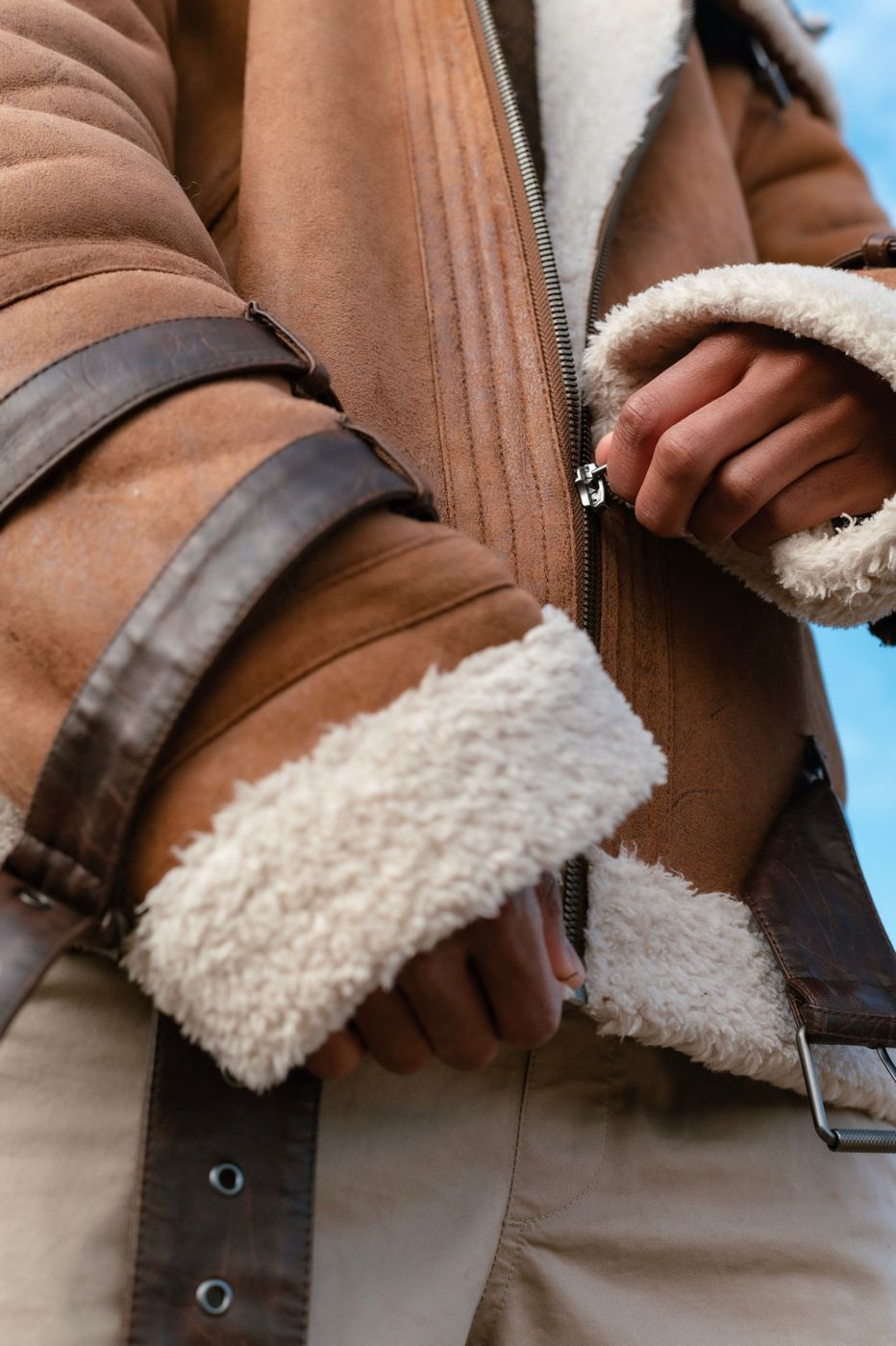
One page in our set shows the pressure on that boundary. The J.Crew Factory pullover prints “100% polyester.” in its own tech list, and the keyword strip the site publishes on the same page reads “Polyester, Polyester Material, Shearling, Sherpa, Soft.”
Nothing on the label claims an animal. The search vocabulary does, quietly, one line away from the composition field, and it isn’t the line the rules govern.
Is sherpa warmer than fleece?
Autocomplete asks this four different ways, and none of the twelve pages we read can answer it, because warmth in a pile fabric comes from weight and loft and not one of them prints a weight for the pile. Toad&Co gets closest with a five-point scale, calling the Sespe jacket “Midweight, 3 out of 5.” That’s a slider, not a number. Compare it with merino jumper labels, where the composition line at least gives you percentages to rank, or with the hair-on hides we counted in calf hair listings, where the disagreement was between names rather than inside a single missing field.
Now the counterweight, because polyester sherpa isn’t a swindle. It costs a fifth of shearling, goes in a washing machine, dries in an afternoon, and doesn’t need a specialist cleaner when a coffee lands on it. A $58 pullover made of brushed polyester is doing exactly what it says on the hanger, and no rule was broken in the making of it. The only thing that’s sold at a markup here is the impression that the word carries information.
It doesn’t. What carries information is the line underneath, and in this set the line was missing four times out of twelve.
So the question “is sherpa real wool” has no answer at the level the question is asked. It has an answer one line lower, in the composition field, item by item, and the rulebook says as much by what it defines and what it leaves alone. The Fur Rules will tell you what a lamb has to have been through before a coat may call itself shearling: sheared and combed, per §301.9(b). No rule anywhere finishes the sentence “sherpa is.”