Lambswool vs Merino Wool | The Two Racks Are Answering Different Questions
Shoppers have been asked to pick a side in a fight the wool trade never set up. We read the testing authority's glossary, Woolmark's softness page, and eleven product pages across five storefronts, and the versus dissolved on the sellers' own paper.
 ·
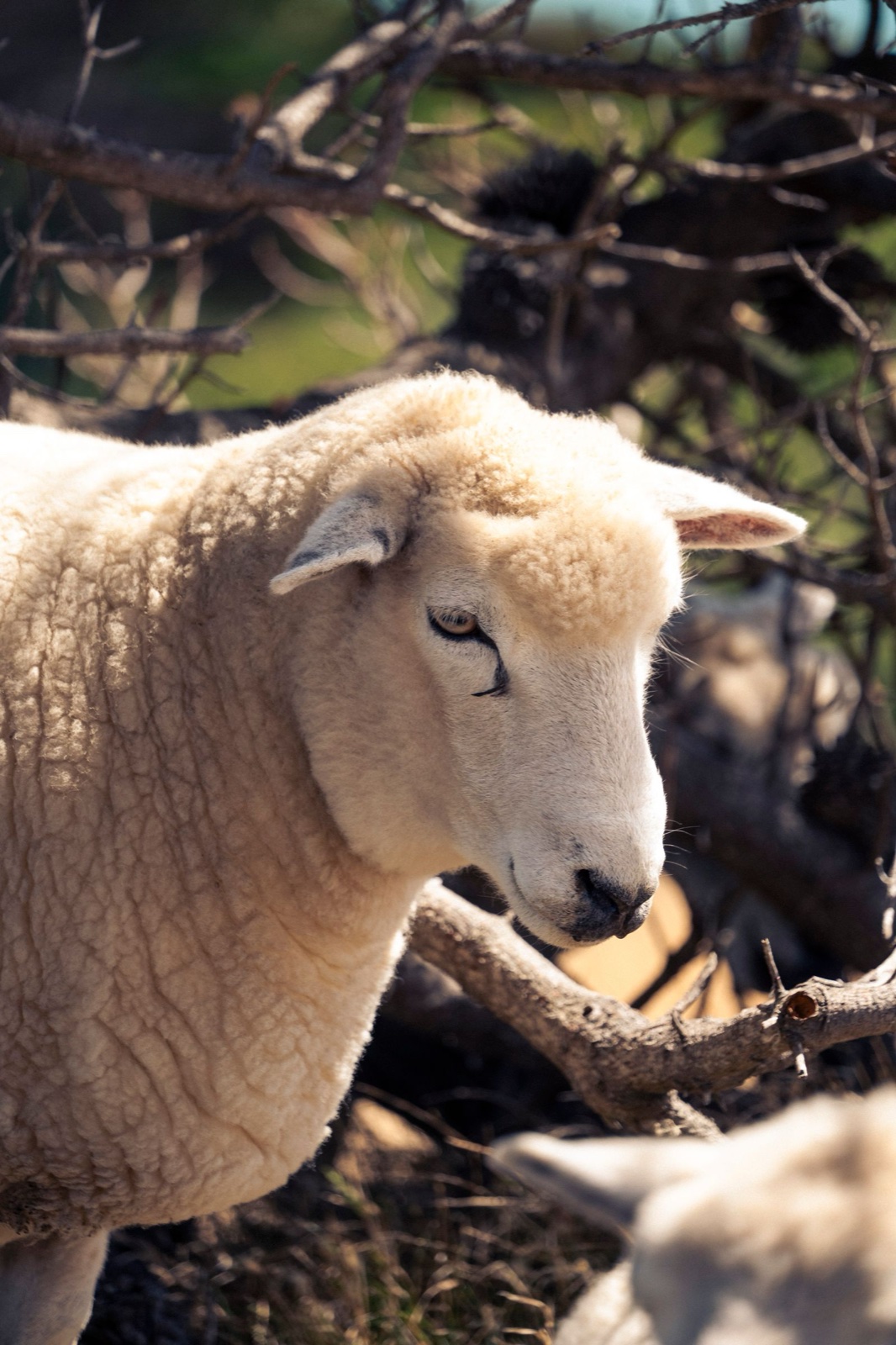
The Australian Wool Testing Authority runs fibre labs in Melbourne and Perth and keeps a public glossary of terms for the trade. Its entry for lamb’s wool is two sentences long. “The first clip of wool shorn from lambs up to eight months old. Merino lamb’s wool is soft, has a curly tip and used for fine grade fabrics.” Read that twice and you’ll notice the fight ending before it starts: the second sentence puts both words on one sheep.
Now the question that sent us there. It’s October, the knitwear walls are up, and one of the most-typed sweater searches in the autocomplete box is “lambswool vs merino wool,” with “which is warmer,” “which is softer,” and one storefront’s name attached.
The question assumes two rival fibres. The documents say otherwise, and so, quietly, do the sellers.
Here’s the short version we’ll spend the rest of this page earning: lambswool names an age. Merino names a breed. They sit on different axes, they can describe the same garment, and the one number that would actually settle softness appears on almost nobody’s product page.
Is lambswool the same as merino wool?
Lambswool is wool from a sheep’s first shearing, taken before roughly eight months of age, while merino is a breed of sheep, so the two words answer “when was it cut” and “from what animal” rather than competing on one scale. That’s the AWTA framing above, and the US labeling rules don’t rescue the versus either. We pulled the full text of 16 CFR Part 300, the wool labeling rules, from govinfo on October 5 and searched for “lamb.” It appears once, inside the definition of fur fiber. For US label purposes your lambswool jumper and your merino jumper are both just wool.
We’ve read merino composition lines before, and the habit holds here: the words on the front of the rack and the words in the composition field are doing different jobs. The rack word is telling you a story, and the composition field is making a legal disclosure.
Is lambswool or merino wool softer?
Softness has an owner, and it isn’t either word: Woolmark’s own fibre page says softness is measured by fibre diameter in microns, and that “the feeling of prickle and itch comes from fibres with coarse microns of any type of fibre.” So we went looking for who actually prints a micron figure. Eleven knitwear product pages, five storefronts, read on October 5, 2026, prices quoted from each store’s own catalog feed in its home currency.
| Storefront | Rack word | What the page prints about the fibre | Micron printed | Feed price |
|---|---|---|---|---|
| Unbound Merino (US) | Merino | “100% Merino Wool,” “Fiber micron: Superfine 17.5” | 17.5 | $198 boxy sweater |
| Sheep Inc. (UK) | Merino | ZQ-certified, “a luxurious 19.5 microns thick” | 19.5 | £240 hoodie |
| M&S (UK) | Extra fine lambswool | “premium 19.5 micron lambswool” | 19.5 | sold out |
| M&S (UK) | Merino | “100% merino wool” | none | £36 crew |
| M&S (UK) | Lambswool | “100% lambswool” | none | £40 crew |
| Paul James (UK) | Extra fine merino | “100% Italian spun extra fine merino wool, 12 gauge” | none | £125 crew |
| Paul James (UK) | Lambswool | “100% British Lambswool,” 221g, 7 gauge | none | £145 cardigan |
| Kiltane (UK) | Lambswool | “100% pure lambswool” | none | £19 scarf |
Three pages print a number. Two of them are merino specialists and the third is the one lambswool listing in our panel that borrowed merino’s favourite adjective, extra fine. The plain lambswool racks print a word and a percentage and stop there.
Is lambswool itchy?
Any wool is itchy when its fibres are thick, and no wool is itchy at the diameters the number-printing pages brag about, which is the whole Woolmark point about coarse microns belonging to no one fibre type. Notice what the table does to the question. M&S printed 19.5 microns on a lambswool jumper. Sheep Inc. prints 19.5 microns on a merino hoodie. Same number, opposite sides of the supposed fight. The itch question was never lambswool versus merino. It’s 19.5 versus 28, and the £40 crew neck won’t tell you which one you’re holding.
Is lambswool warmer than merino?
No seller in our panel prints a warmth measurement for either word, so the honest answer from the paper trail is that the warmth folklore can’t be checked at the rack. What the pages do print, when they’re being specific, is knit density. Paul James lists its extra fine merino crew at 12 gauge and its lambswool cardigan at 7 gauge and 221 grams, and that’s a real difference you can feel in your hands. It’s also a difference in the knitting, not the fibre. A chunky merino and a fine-gauge lambswool would swap places instantly. We’ve seen the same trick in ply counts and in shipping-field grams: the printed number usually describes the construction, and shoppers read it as the material.
And then there’s the quiet collapse. That Paul James lambswool page headlines “100% British Lambswool,” names its 1766 Yorkshire spinner, and a module further down says the yarn is spun from “carefully selected Geelong fibres.” Geelong is in Australia. The brand’s own journal page spells out what that means: their lambswool comes from “the first shear at approximately seven months from the merino breed of sheep.” The versus you were asked to adjudicate is, on this rack, one animal. British names the spinning. Merino names the sheep. Lambswool names its age.
Now the limits, because we have real ones. We’re a desk in Seoul reading product pages on October 5, not a hand inside a fitting room, and we haven’t worn, washed, or pilled any of these eleven garments. The storefront the autocomplete attaches to this question, Uniqlo, wouldn’t load from our routing at all, so its two racks go unread here rather than guessed at. Prices above come from each store’s own catalog feed in its base currency because the rendered pages localise. And nothing in this census is deception. First-shear clips are a real practice, the £19 scarf is honestly labelled, and Paul James prints more provenance than almost anyone, which is exactly why its pages could settle the question.
One document already had. The testing authority’s glossary needed seven words, “Merino lamb’s wool is soft, has a curly tip,” to show the two racks were never opponents. We read it on the way in as a definition. It reads on the way out as the verdict: the right answer to lambswool versus merino is sometimes a single sweater, and the number that decides how it feels is still sitting in a lab report nobody prints.