Why Is Quince Cashmere So Cheap? I Read the Footnote Under the $148
The $50 crewneck is back in every feed the week fall shopping starts, with 34,000 reviews and a crossed-out $148 beside it. I priced the fiber at the trade index rate, lined up what five sweater pages actually disclose, and found the sentence Quince prints under its own comparison price.
 · · Updated August 23, 2026
The ad found me again on Saturday, between a barn jacket and a recipe. Mongolian cashmere crewneck, $50, a small gray “$148” struck through beside it, and under that a review count that had grown since I last looked. It’s 34,359 as I write this, at 4.9 stars, up from the 27,700 a Who What Wear editor cited in January. Seven months, six and a half thousand new reviews, same $50. A review from November 2020 has the sweater at $50 too. Six years without a price change, on a fiber that gets called the most expensive wool on earth.
So the question people type into Google is the right one, and they type it a lot. “How is quince cashmere so cheap” and “why is quince cashmere so cheap” both autocomplete, next to “is quince cashmere real” and “is quince cashmere itchy” and, my favorite, “is quince cashmere legit,” which is a question you ask about a passport. This is a desk audit. I haven’t worn the sweater, so nothing below is about how it feels. It’s about what the product page says, what the fiber costs, and one footnote.
Is Quince cashmere real cashmere?
Quince’s crewneck page says 100 percent Grade A Mongolian cashmere, 12-gauge, fibers of 15.8 to 16.2 microns and 34 to 36 millimeters, which is a fiber spec, and a more detailed one than most sellers print. The page also says, in the FAQ, “Minor pilling is natural during the first few wears,” followed by a pitch for the comb that removes it. Care is hand wash or the wool cycle. Care is also the fewest words on the page.
Two of those numbers do the work. Micron is fineness. The Cashmere and Camel Hair Manufacturers Institute defines cashmere as goat undercoat with a mean diameter no greater than 19 microns, so 16 clears the bar comfortably. Where it stops being useful is “Grade A,” which sounds like a certificate and isn’t one. There’s no body that grades cashmere by letter, and the micron and length ranges attached to “Grade A” shift from one seller’s blog to the next. Quince’s numbers are Quince’s claim. I have no reason to doubt them, and no way to check them from a desk.
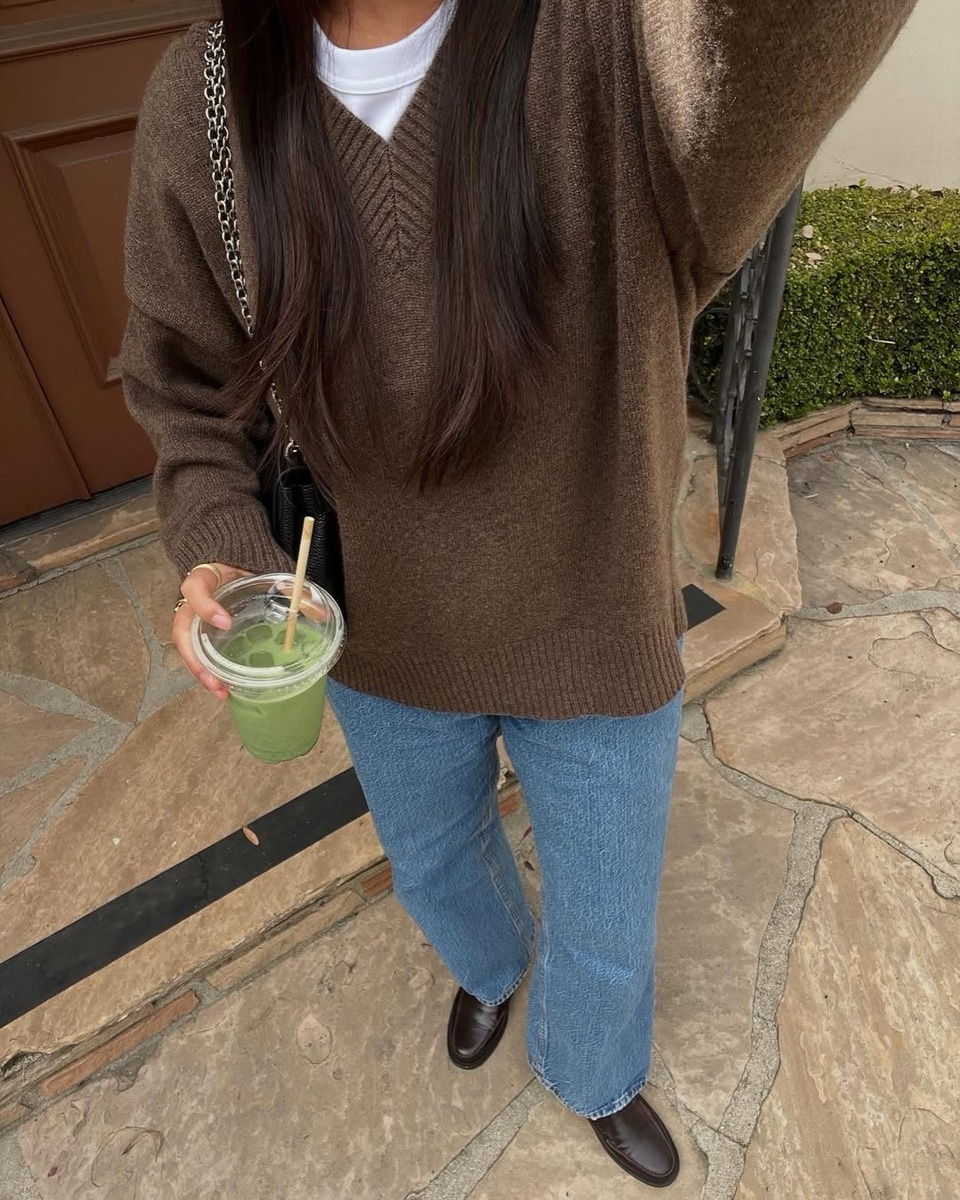
The other number is the gauge, and this is the one the ads never mention. Gauge is stitches per inch. Colhay’s, a Scottish knitwear label that publishes weights on its own product pages, puts it plainly: “The higher the gauge, the more densely you are knitting the garment, which is an indication that the yarn used is thinner, and in turn, indicates that the garment is overall likely to be a thinner garment.” Its 12-gauge pieces are its spring and summer pieces, around 260 to 300 grams. Its very thick cardigan is a 3-gauge. So a 12-gauge cashmere crew is, by construction, a light one, the kind Josephine Hadjiloucas, an assistant shopping editor at Who What Wear, called “rather lightweight” after wearing hers through a Manhattan winter commute, and the kind Shana at The Mom Edit, back in 2020, filed under “not, however, thick and luxurious cashmere,” the sort that competes with J.Crew and Everlane rather than Naadam or Jenni Kayne.
That’s the first half of the answer, and it’s the boring half. Cashmere is priced by weight, and Quince sells less of it per sweater than the brands it wants you to compare it to. It’s real and it’s thin, and both of those are true at once. Whether thin is a problem depends entirely on whether you were shopping for a layer or a coat.
How much does the cashmere in a $50 sweater cost?
At index prices for the year to July 2025, around $108.68 a kilo, the raw cashmere in a 250-gram crewneck comes to roughly $27, or a bit over half of Quince’s $50. The arithmetic is the half nobody runs next to the ad, so I ran it. Fibre2Fashion tracks a cashmere fiber index for Asia (FOB China), and from August 2024 to July 2025 it sat between $107 and $111 a kilo, averaging $108.68. Call it 11 cents a gram. If the crew weighs about 250 grams, which is a fair guess for a 12-gauge women’s crewneck given the Colhay’s figures above (Quince doesn’t publish weight, so this is my estimate, not theirs), the cashmere in it costs somewhere around $27 at index. Roughly half the sticker. Everything else, the spinning and dyeing and knitting and the boat and the returns and the ad that found me on Saturday, has to fit in the other $23.
That’s tight, and it’s also plausible. It’s plausible because the fiber cost is a floor, and the floor for a light sweater is low. Where the number stops working is the other direction: a $300 cashmere sweater doesn’t have $150 of fiber in it either. Past a point you’re paying for weight, then for finishing, then for the name, and no one publishes where one stops and the next starts.
This is what the sweater pages themselves are willing to say, as of this week. I couldn’t load J.Crew’s product page from where I sit, so its price is the one Who What Wear listed in January, and its disclosure column stays blank for honest reasons.
| Sweater | Price | Fiber origin stated | Micron / length stated | Gauge stated |
|---|---|---|---|---|
| Quince Mongolian Cashmere Crewneck | $50 | Inner Mongolia | 15.8 to 16.2 µ / 34 to 36 mm | 12 |
| Uniqlo Cashmere Sweater (women’s) | $99.90 | “100% Cashmere, Imported” | not stated | not stated |
| Naadam The Original Cashmere Sweater | $98 | Mongolia (brand-wide claim; the product page says “100% cashmere”) | not stated on the product page | not stated |
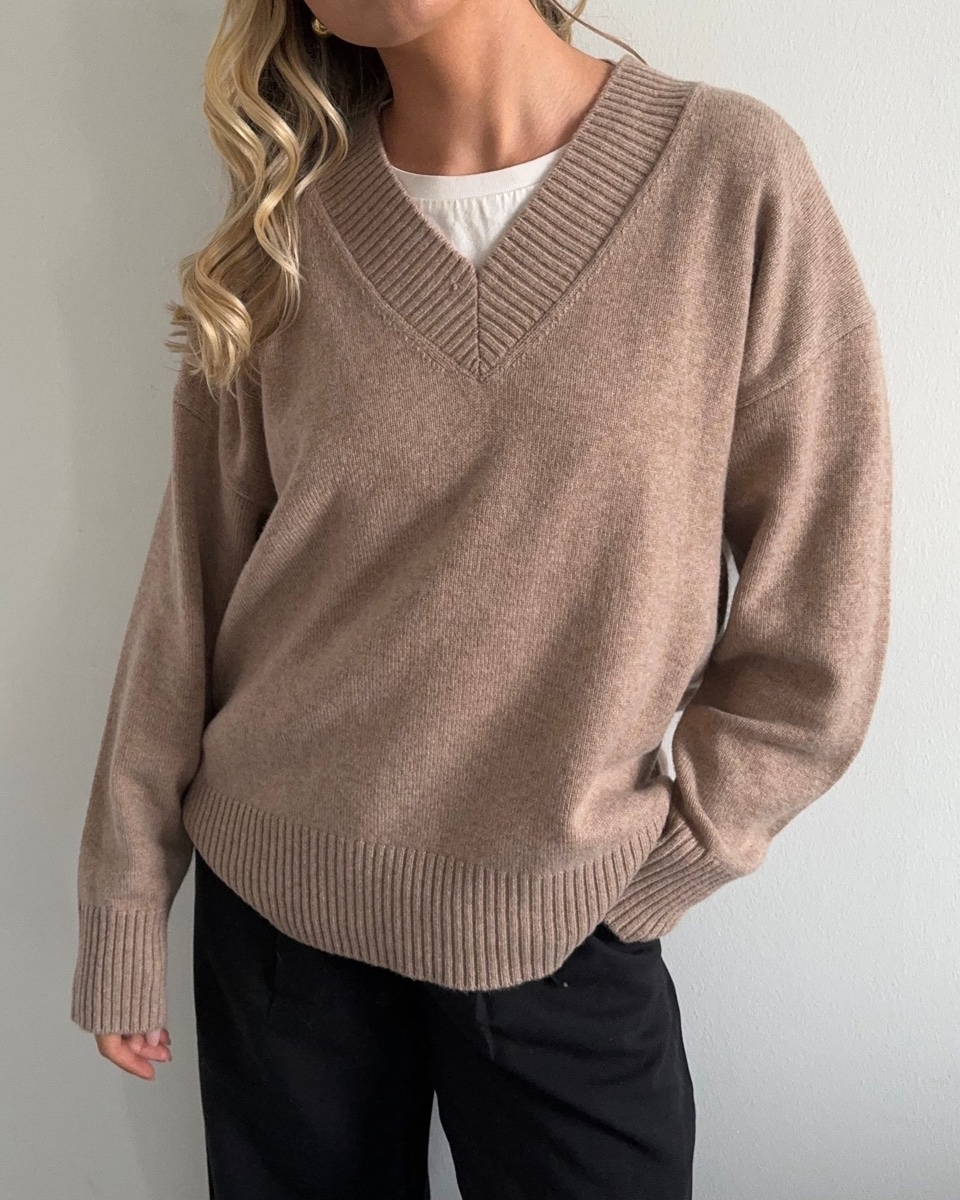
| J.Crew Cashmere High V-Neck | $148 (per WWW, Jan 2026) | page wouldn’t load for me | unknown | unknown |
| Banana Republic Lightweight Cashmere Crew | $160 (per WWW) | not checked | unknown | unknown |
Read the table sideways and the odd thing jumps out. The cheapest sweater on it is the only one that tells you what’s in it. Uniqlo’s page, at twice the price, says “100% Cashmere, Imported” and moves on. Naadam’s page sells “100% cashmere, under $100” and a fit note. That doesn’t make Quince’s yarn better than theirs, and I want to be careful here, since a spec is a claim until someone tests it. But if you’re the type who reads labels, and if you’re searching this phrase you are, only one of these brands has given you a label to read.
The footnote under the $148
Now the crossed-out number, because that’s the part I actually clicked through for. Beside “$50” the page says “$148 Traditional retail.” I went looking for where $148 came from, and I found it in the site’s own disclaimer text: “Traditional retailer costs are an approximation based on our knowledge of what it costs Quince to produce this product. Traditional retailer costs may vary and do not represent dollar-for-dollar costs of any specific third party.”
Read that once more. The $148 is not a price Quince observed a competitor charging. It’s Quince’s estimate of what a competitor would charge, working backward from Quince’s own production cost and an assumed markup. It’s a model, printed where a price goes. And it’s the same species of number as the “Comparable Value” tag I spent the start of this week reading outlet lawsuits about, only politer, and with the fine print one click closer to the surface.
Does that make the $148 wrong? Not exactly. J.Crew’s cashmere V-neck was $148 in January, and Uniqlo’s crew is $99.90 today, so the real market for a plain 100 percent cashmere crew runs from about a hundred dollars to about a hundred and fifty before anyone’s sale kicks in. What the footnote changes is what the “save $98” feeling is made of. The number you’re beating is an approximation, and the seller wrote it.
So is it worth $50?
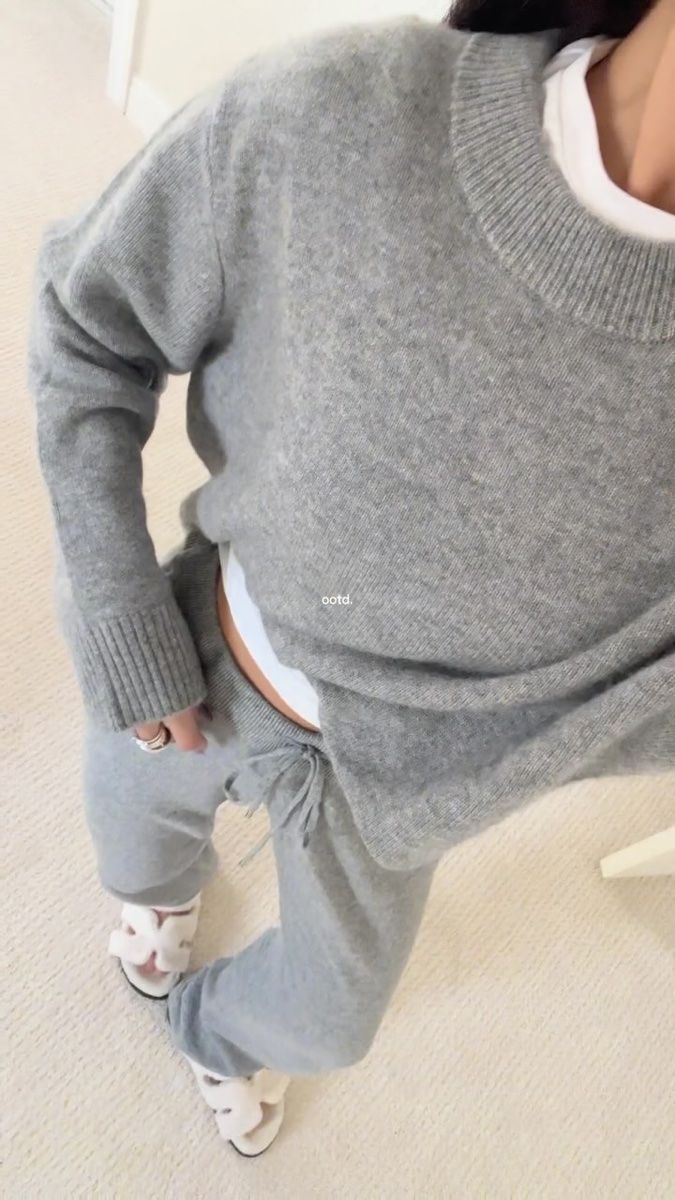
For a fall layer, the numbers say yes, with two conditions attached. The first is that you go in wanting 12-gauge: a sweater for September and April and the office, the one you wear under the barn jacket everyone’s buying, not the one you rely on in January. If you want the sweater that feels like a duvet, that’s a different gauge and, at every brand I looked at, a different price. The second condition is the one autocomplete already knows: pilling. Quince’s own FAQ concedes it. Fine, short-ish fibers knit light will pill where your bag strap sits, and $10 for the comb they’ll sell you at checkout is part of the real price.
And if you already own a plain cashmere crew, even an old one, even a Factory one, the honest move this week is the same as it was for the fall trend lists: the sweater in your drawer has already survived its pilling phase, and the ad will still be there in October, at $50, the way it was in 2020.