How Long Do Sweaters Last | Lifetime Warranty, Minus the Warranty
Five knitwear sellers answer the lifespan question with the word lifetime, and not one of them prints a number of years anywhere near it. One American document does print a number, because dry cleaners use it to settle up when they ruin your knit. I read both kinds of paper in one sitting, and the gap between them is the whole story.
 ·
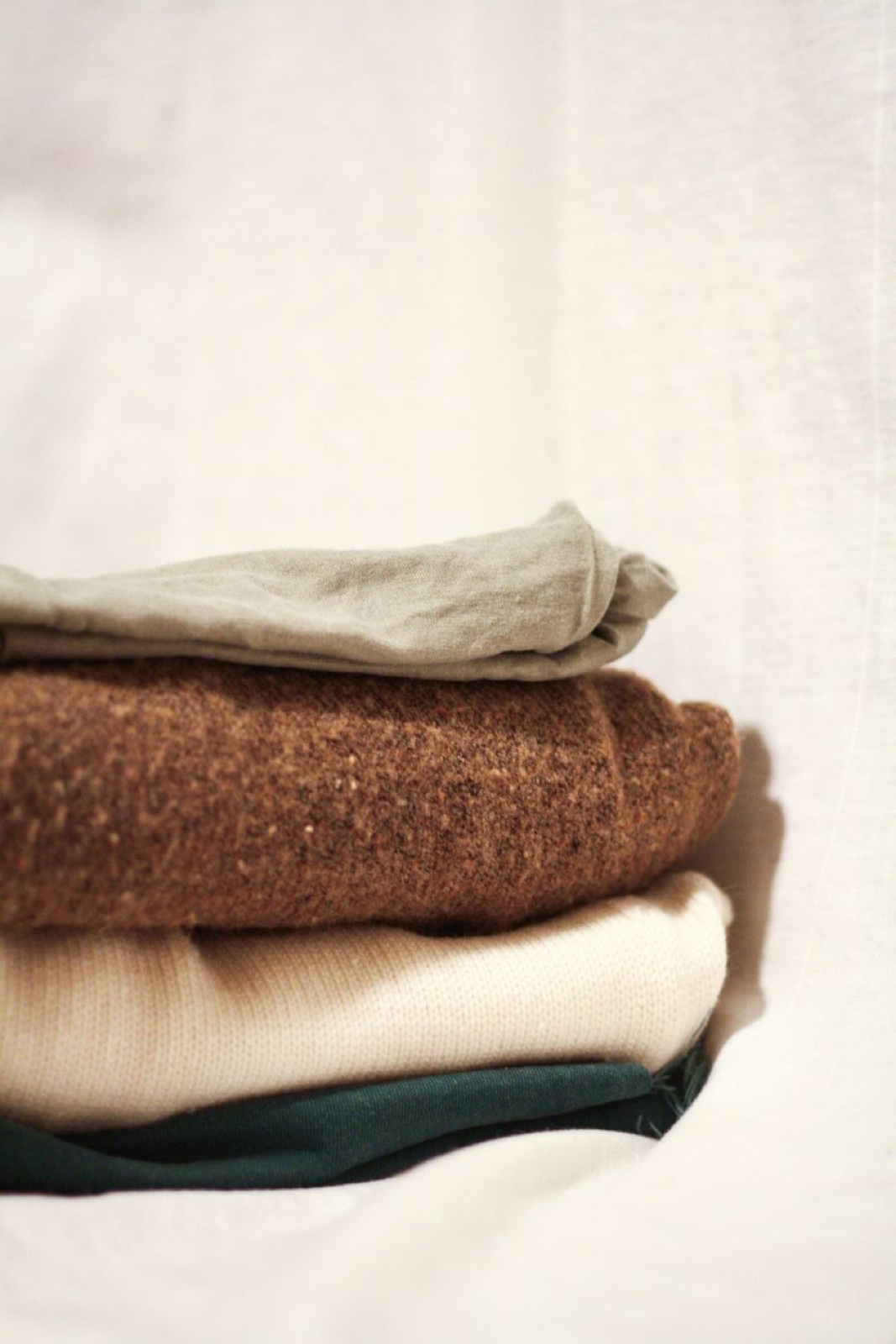
Late on a Monday night in October, with the knitwear season properly open, I typed “how long do sweaters last” into a search box and watched the autocomplete do something interesting. It didn’t just finish the sentence. It split it by fiber: how long do acrylic sweaters last, cotton sweaters, wool sweaters, cashmere sweaters. One suggestion even named a store. People don’t want a sweater number. They want a cashmere number and an acrylic number, because they’re deciding between the two.
So I went looking for who’s willing to print one. The first stop was the cashmere FAQ at Naadam, the New York label, where the lifespan answer lives in a paragraph I’ll be quoting again before this is over: Mongolian goats grow longer fur against the cold, and “it’s part of the reason our cashmere is extra soft and lasts a lifetime.”
A lifetime, no years, no months, no asterisk. Hold that sentence, because the good news comes first.
How long do sweaters actually last?
Three years is the number printed by the Drycleaning & Laundry Institute’s Fair Claims Guide, the table American cleaners use to pay you when they shrink something, and the average garment in the biggest wardrobe survey we’ve read beat that figure comfortably. The guide’s life-expectancy chart, which I read in reprint on October 5, is a three-column list pricing everything from bathing suits (2 years) to choir robes (6). Its knitwear entry is four words and a numeral: “Sweaters…3.”
That’s the pessimist’s document. The optimist’s document is the 46,857-garment wardrobe survey out of Consumption Research Norway, which we read closely for clothes in general back in August. The average garment there worked out to about a 5.2-year life and 80 total wears, and sweaters sit in wardrobes precisely because they survive. A knit you like has every statistical chance of outliving both the claims table and the return window of the store that sold it.
So the question has answers. The trouble starts when you ask the follow-up the autocomplete was already asking.
Do cashmere sweaters last longer than acrylic ones?
Not according to the life-expectancy chart, which files cashmere, lambswool, merino and acrylic into the same undivided row, “Sweaters, 3,” while splitting nearly every tailored category on the page by fiber. Blazers get three rows: cotton at 3 years, imitation suede at 3, wool at 4. Outerwear gets seven, from plastic at 2 to leather at 5 to fur at 10. Suits get five rows. Sport coats, dress shirts, even bathrobes are split by what they’re made of. The chart clearly believes fiber moves the number. Then it reaches knitwear and declines to say so.
I find that row more eloquent than any care guide. The one garment category where shoppers most reliably pay a fiber premium, where the rack word is the whole sales pitch, is the one category the settlement table refuses to split. When a cleaner ruins a $300 cashmere crewneck and a $30 acrylic one, the same three-year clock governs both claims.
The fiber question you typed into the search box is the question the money document won’t answer.
What is a sweater worth after three years?
Fifteen percent of its replacement cost, in average condition, by the adjustment chart printed beside the life-expectancy table. The mechanics deserve daylight. For a three-year-rated item, the chart runs: up to 4 months old, 100 percent. From 10 to 19 months, 60 percent in average condition. At 37 months and older, the floor: 20 percent if the sweater was in excellent shape, 15 percent average, 10 percent poor. A week past its third birthday, the knit you’d describe as just broken in has, for settlement purposes, spent 85 percent of itself.
Run the arithmetic once and it stings. A cashmere sweater that costs $200 to replace settles at $30 at month 37. The acrylic that costs $30 settles at $4.50. Condition buys you five points either way. Fiber buys you nothing.
Two fairnesses before the last section. The Fair Claims Guide is the cleaning trade’s own convention, written by the industry that writes the checks, and a smaller number serves the check writer. And it prices arguments, not knitwear. The survey data says a cared-for knit routinely outruns the chart, which is exactly why we track when replacements go on sale instead of treating year three as a funeral. The chart doesn’t tell you when your sweater dies. It tells you when your sweater stops being worth arguing about.
Why do brands say cashmere lasts a lifetime?
Because nothing happens to them if it doesn’t. I read five knitwear sellers’ lifespan language on October 5, side by side with the claims chart, and the pattern is grammatical. Here’s the panel, quoted exactly.
| Who printed it | The lifespan sentence | A number? | The condition |
|---|---|---|---|
| Naadam, cashmere FAQ | “our cashmere is extra soft and lasts a lifetime” | None | None stated |
| Cains Moore (Italian knitwear), blog | “if it is well kept, it will last for a lifetime” | None | “if it is well kept” |
| Sunspel (British), care guide | “very durable if looked after properly” | None | “if looked after properly” |
| Gobi (Mongolian), care page | sorts knits by washing method, no duration sentence at all | None | method rules only |
| Woolmark, mending page | “you should love your clothes for a lifetime” | None | the loving is assigned to you |
| DLI Fair Claims Guide | “Sweaters…3” | 3 years | none |
Four of the five put the lifespan inside a conditional clause, and the subject of that clause is you. The sweater doesn’t last a lifetime. The sweater lasts a lifetime if you hand wash, fold, comb and de-pill it, which quietly relocates the lifespan from the product to the owner. That conditional isn’t a lie. The wardrobe survey found garments washed after every wear logged 94 fewer wears than those washed every 30, so care genuinely moves the number. What the conditional does is make the claim unfalsifiable. A sweater that dies in year two didn’t disprove the lifetime, you did. And the one failure mode knitwear is actually famous for already has its own fine print carved out as not a defect.
Which brings back the sentence I asked you to hold. Naadam’s FAQ says their cashmere “lasts a lifetime,” with no condition attached, and I went looking for any document where someone would have to make that math good. I found exactly one table with money riding on the answer, and on that table your cashmere doesn’t get a lifetime. It gets thirty-seven months, a 15 percent residual, and the same row as acrylic.