Is Vegan Leather Real Leather | The FTC Guides That Cover Your Handbag and Stop at Your Jacket
One $395 skirt prints two material lines. The fur line is there because a federal rule demands it. The leather line is there because somebody felt like writing it, and across nineteen US product pages we read on October 5, the six words the FTC actually suggests for fake leather turned up zero times.
 ·

A midi skirt, wheat-coloured, with black tips flicked through the pile so the nap shifts when the model turns. Apparis calls it the Aspen Tipped Fox Midi Skirt and sells it for $395. Below the photographs, in small grey type, the page puts down two lines about what the thing actually is.
Body: 15% recycled polyester, 85% polyester.
Band: 50% recycled polyester, 50% polyurethane.
One of those lines a federal rule obliges the company to write. The other one nobody made them write at all. Which is which turns out to be the whole answer to the question the autocomplete box finishes for you every autumn, and the answer has almost nothing to do with the brand.
We read nineteen US product pages on October 5, 2026, plus three parts of the Code of Federal Regulations, to work out why the word on your coat changes depending on which animal it’s pretending to be.
What is vegan leather made of?
Polyurethane, usually, sprayed or laminated onto a woven backing. Apparis prints exactly that on its $395 Edie Croc Parka: “SANS Croc Leather. Body: 100% polyurethane. Lining: 100% polyester.” Angela Roi, whose bags run $95 to $295, writes “Pebble Textured Vegan Leather (EPUL)” and stops. Matt & Nat, reading from its Canadian storefront in Canadian dollars, puts “Made with Vegan leather” on the buy button and files the number one page away, on a materials index: “The outer body material of Theme collection is 100% Polyurethane.”
Three sellers, three depths of disclosure, and the thing being described is the same coated cloth each time. Nobody’s lying. The interesting part is that nobody’s obliged to say anything.
Does any federal rule define the words on these labels?
Three parts of Title 16 govern this corner of a closet, and we pulled all three from govinfo’s CFR archive rather than quoting a summary. The word “vegan” appears in none of them. Not once in the Leather Guides, not once in the Fur Rules, not once in the Textile Rules.
What Part 24 does contain is a vocabulary. Section 24.2(a) says that where part of a product is non-leather material that looks like leather, the general nature of that material should be disclosed, and then it offers examples: Not leather. Imitation leather. Simulated leather. Vinyl. Vinyl coated fabric. Plastic. Six phrases, written by the Commission in 1996, sitting there for thirty years.
Across all nineteen US pages in our panel, those six phrases appeared as a product disclosure zero times. The single literal hit was the word “Vinyl” on Angela Roi’s site, in a packaging menu, describing a biodegradable dust bag.
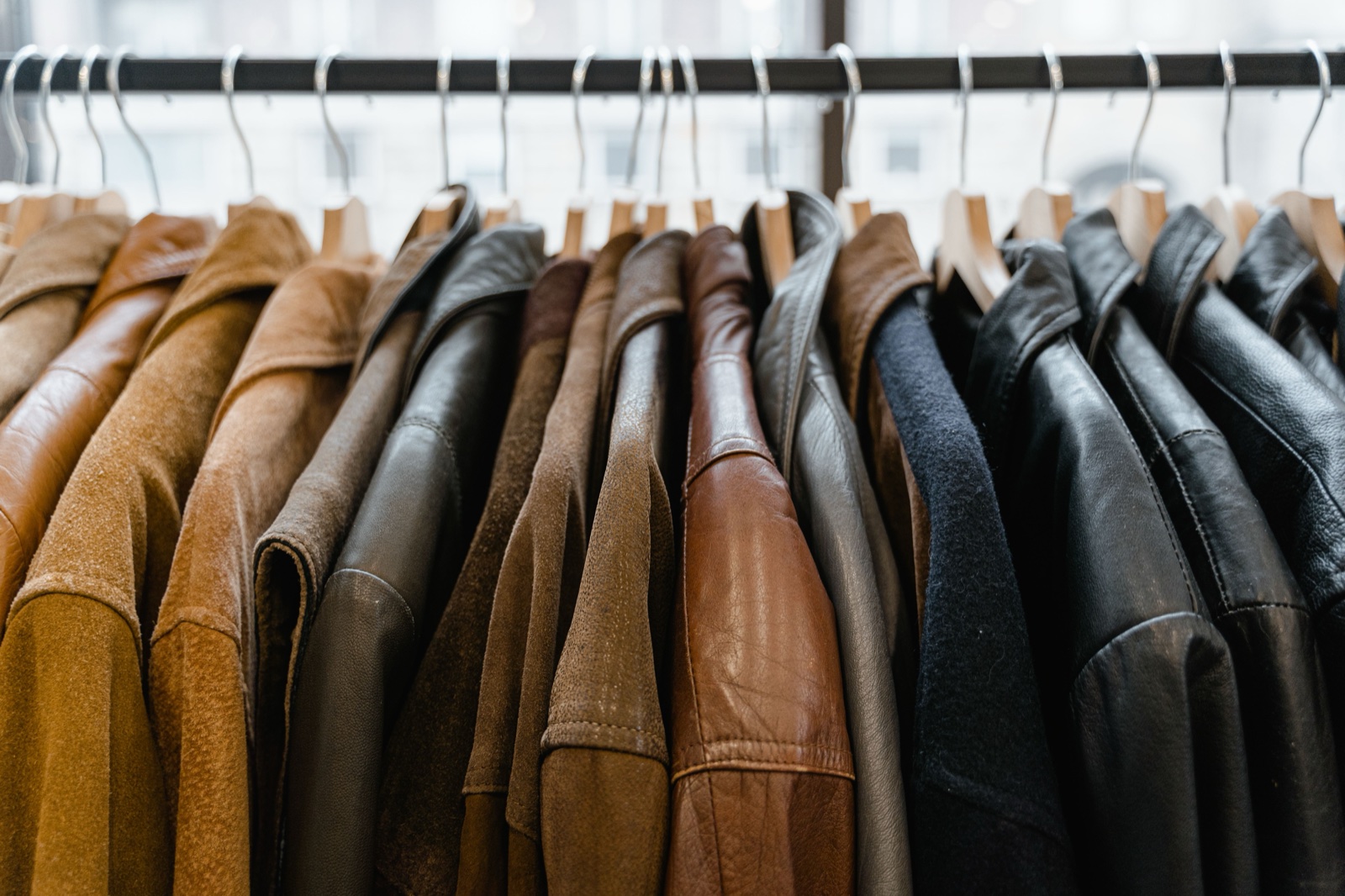
There’s a second catch, and it’s the bigger one. Part 24 is a Guide, which the Commission describes in its own text as an administrative interpretation offering “the basis for voluntary compliance.” Its verbs are “should,” never “shall.” And it only reaches an enumerated list of goods: trunks, suitcases, briefcases, billfolds, wallets, key cases, coin purses, handbags, shoulder bags, pocketbooks, footwear, and belts when they aren’t sold as part of a garment. The list closes with “and similar articles,” which leaves some room. A parka isn’t a similar article to a travel kit.
Why does faux fur print a fiber when vegan leather doesn’t?
Pile fabric stays inside the one mandatory rule, and coated fabric was carved out of it. The Textile Fiber Products Identification Act, implemented at 16 CFR Part 303, covers “articles of wearing apparel” and requires generic fiber names with percentages. Section 303.24 goes further and sets out how to split the disclosure between the face and the back of a pile fabric. A faux fur coat is squarely in.
Then you reach §303.45(b)(3), the exclusions, and find this: “Coated fabrics and those portions of textile fiber products made of coated fabrics.” Section 303.1(o) defines a coated fabric as one coated, filled, impregnated or laminated with a continuous film-forming polymeric composition adding at least 35 percent of the base fabric’s weight.
Vegan leather is a coated fabric. The rule that would have made your jacket name its polymer specifically says it doesn’t apply.
| Word printed on the product | US instrument that governs it | What it obliges the seller to print | What our panel printed |
|---|---|---|---|
| leather / imitation leather | 16 CFR Part 24, a Guide, bags and footwear and belts only | “should” disclose, using six suggested phrases | 0 of 19 pages used any of the six |
| faux fur, on apparel | 16 CFR Part 303, a Rule, all wearing apparel | generic fiber names with percentages | 11 of 11 Apparis pages printed percentages |
| vegan leather, on apparel | nothing; §303.45(b)(3) excludes coated fabrics | nothing at all | 1 of 11 printed “100% polyurethane” anyway |

Watch the animal names, not the adjectives
Here is where the asymmetry gets strange. The Fur Rules police vocabulary with real teeth. Section 301.11 bans “fictitious or non-existing animal designations.” Section 301.7 bans describing a fur by a breed name that belongs to another animal, and gives three worked examples of forbidden phrasings, the first of which is “Sable Mink.”
Apparis sells Robi Sable Gloves for $245. The page says “SANS Leather with sable faux fur cuff,” and the cuff is 85 percent recycled polyester and 15 percent polyester. No rule is broken, because Part 301 governs fur products, meaning actual fur. The regulation names the exact word and then declines to follow it onto the shelf where the word is doing the most work.
Is vegan leather just plastic?
Mostly polyurethane on polyester, which is a plastic skin on a plastic cloth, and calling it that explains the price far better than the ethics do. We’d rather not leave the brands carrying the whole weight of this, though, because the reading doesn’t support it.
Apparis prints “100% polyurethane” on a parka where no US instrument requires a single word about composition. Angela Roi coins an acronym but puts the word “vegan” where you can’t miss it. Nisolo, selling actual leather, names the part and the certifying body, “Leather Working Group Certified tannery upper leather,” and skips the kind and type of hide that §24.2(b) contemplates. The rack in a shop isn’t where this goes wrong.
What goes wrong sits one level up, in a rulebook that defined the word your grandmother used and left the word you use undefined. If you want to know what you’re buying, the same gap shows up in sherpa and shearling, and it moves the price of a jacket around in ways that have very little to do with the hide.
What this desk did not do
We didn’t touch any of it. No wear test, no hand feel, no washing, no tannery visit. Everything above is a reading of documents and product pages from a desk in Korea on October 5, and we checked each storefront’s declared currency before quoting a price, which is why Matt & Nat appears here in Canadian dollars and why the Apparis and Angela Roi and Nisolo figures are US. An Australian faux fur catalogue we’d collected got dropped for the same reason.
Six domains refused us. REI returns 403 to everything.
Old Navy’s search results don’t render to a reader, so we’ve got no count from the largest seller in the category, and we won’t pretend otherwise.
One more thing we couldn’t read. Section 303.7, the list of generic fiber names your label is required to use, establishes some names in its own text and then incorporates ISO 2076:2013 by reference for the rest. “Polyurethane” never appears in §303.7’s own enumerated list except inside the definition of spandex. So the operative list lives in the ISO document, and the Estonian Centre for Standardisation’s record shows that edition was withdrawn on 1 November 2021, superseded by ISO 2076:2021, while 16 CFR still points at the 2013 text.
You can buy the withdrawn one. PDF or paper, English, single-user licence, 89.37 euros including tax.